
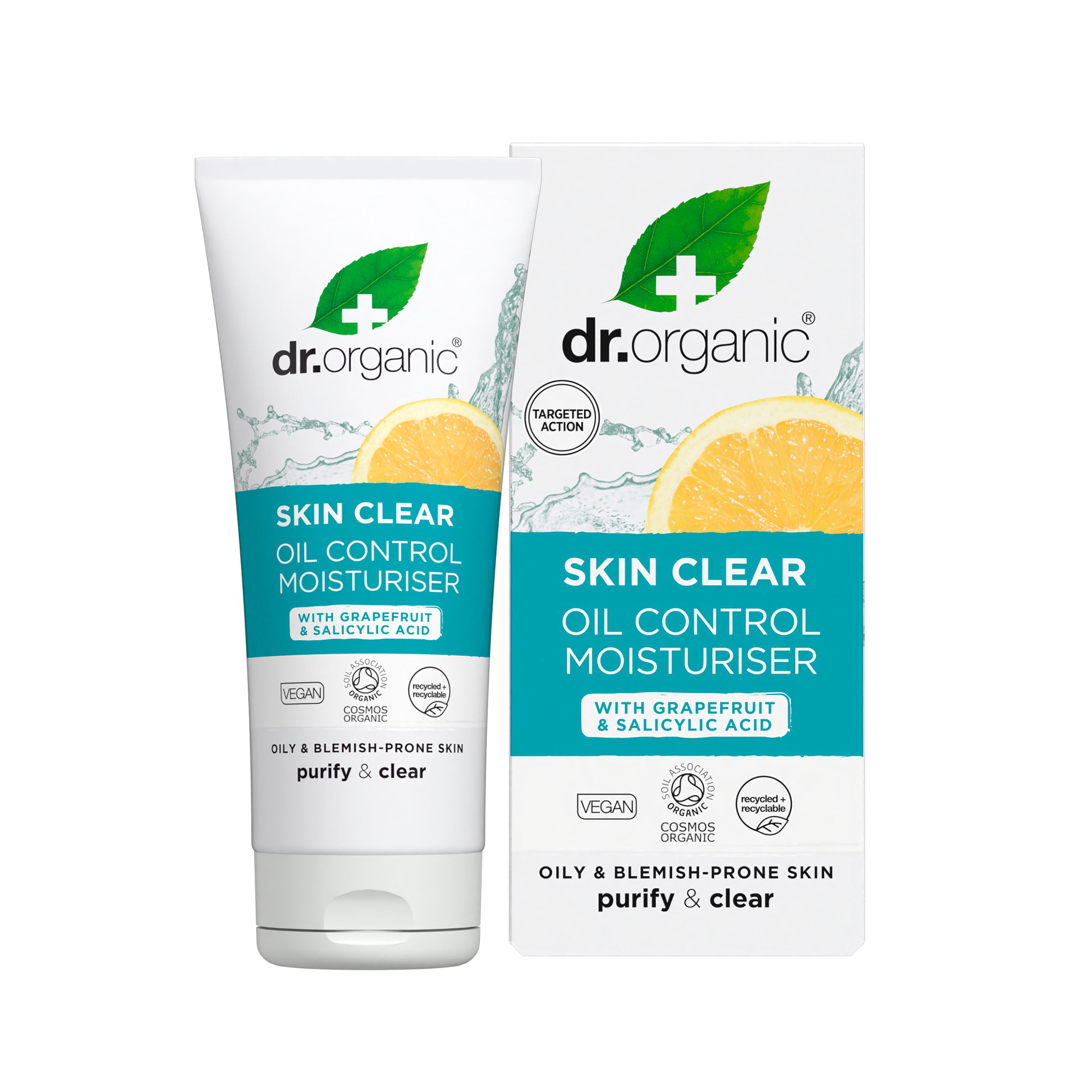

Dr. Organic Bioactive Skincare Skin Clear Tea Tree Oil Control Moisturiser 50ml
Analysis updated August 2026 · How Scout scores
At a glance
Summary
This moisturizer contains a variety of beneficial natural ingredients such as aloe vera, tea tree oil, and chamomile extract, which are known for their soothing and anti-inflammatory properties. However, the presence of denatured alcohol, which can be drying and irritating, detracts from the overall safety and quality of the product. The formulation is a mix of natural and synthetic components, leading to a moderate processing level.
Key ingredients 12
Aloe barbadensis leaf juiceVery Good
Aloe vera is known for its soothing and moisturizing properties. It helps to calm irritated skin and provides hydration. It is a beneficial ingredient in skincare products.
Risks
There are minimal risks associated with aloe vera, though some individuals may experience allergic reactions.
Benefits
Aloe vera is excellent for soothing and hydrating the skin, making it ideal for sensitive or dry skin types.
Chamomilla recutita (Matricaria) flower extractVery Good
Chamomile extract is known for its calming and anti-inflammatory properties. It helps to soothe irritated skin and reduce redness. It is an excellent ingredient for sensitive skin.
Risks
Rare allergic reactions may occur in individuals sensitive to chamomile.
Benefits
It provides soothing and anti-inflammatory benefits, making it ideal for sensitive skin.
Citrus paradisi (Grapefruit) peel oilGood
Grapefruit peel oil is rich in antioxidants and has a refreshing scent. It can help to tone and brighten the skin. It is a beneficial addition to skincare formulations.
Risks
Grapefruit oil can increase photosensitivity, so sun protection is advised.
Benefits
It provides antioxidant benefits and can help improve skin tone and texture.
Salicylic acidGood
Salicylic acid is a beta hydroxy acid that helps to exfoliate the skin and clear pores. It is effective in treating acne and improving skin texture. It is a valuable ingredient in acne-fighting products.
Risks
Overuse can lead to skin irritation and dryness.
Benefits
It helps to reduce acne and improve skin clarity by exfoliating and unclogging pores.
Vaccinium myrtillus (Bilberry) extractGood
Bilberry extract is rich in antioxidants and helps to protect the skin from environmental damage. It can improve skin elasticity and reduce signs of aging. It is a beneficial ingredient for maintaining healthy skin.
Risks
There are minimal risks, though allergic reactions are possible.
Benefits
It provides antioxidant protection and can help improve skin elasticity and reduce aging signs.
Rosmarinus officinalis (Rosemary) leaf oilGood
Rosemary oil has antimicrobial and antioxidant properties. It can help to improve circulation and promote healthy skin. It is a beneficial ingredient for skin health.
Risks
May cause irritation in sensitive skin types.
Benefits
It helps to protect the skin from environmental damage and promotes circulation.
Melaleuca alternifolia (Tea tree) leaf oilGood
Tea tree oil is known for its antibacterial and anti-inflammatory properties. It is effective in treating acne and reducing skin irritation. It is a valuable ingredient in skincare for acne-prone skin.
Risks
Can cause irritation or allergic reactions in some individuals.
Benefits
It helps to reduce acne and soothe irritated skin due to its antibacterial properties.
Echinacea purpurea extractGood
Echinacea extract is known for its immune-boosting and anti-inflammatory properties. It can help to reduce skin inflammation and promote healing. It is a beneficial ingredient for maintaining healthy skin.
Risks
May cause allergic reactions in some individuals.
Benefits
It helps to reduce inflammation and promote skin healing.
GlycerinGood
Glycerin is a humectant that helps to draw moisture into the skin. It is effective in keeping the skin hydrated and soft. It is a beneficial ingredient in moisturizers.
Risks
Generally safe, but overuse can lead to a sticky feeling on the skin.
Benefits
It helps to maintain skin hydration and softness by attracting moisture.
Cucumis sativus (Cucumber) fruit extractGood
Cucumber extract is known for its soothing and hydrating properties. It helps to calm irritated skin and reduce puffiness. It is a beneficial ingredient for refreshing and soothing the skin.
Risks
Minimal risks, though allergic reactions are possible.
Benefits
It provides soothing and hydrating benefits, making it ideal for calming irritated skin.
Sodium benzoateBad
Synthetic preservative that can form benzene in the presence of vitamin C.
Risks
High concentrations can cause skin irritation.
Benefits
It helps to preserve the product and prevent microbial contamination.
Alcohol denat.Very Bad
Denatured alcohol is used as a solvent and can help other ingredients penetrate the skin. However, it can be drying and irritating to the skin. It is generally considered a less favorable ingredient in skincare.
Risks
Can cause dryness and irritation, especially in sensitive skin.
Benefits
It helps to enhance the penetration of other ingredients.
Get the full breakdown in the Scout appTake Scout shopping
Scan any product to see lab results, healthy alternatives, and your personalized analysis.
Download on theApp Store GET IT ONGoogle PlayAmazon pricing & content
Amazon price as of . Product prices and availability are accurate as of the date/time indicated and are subject to change. Any price and availability information displayed on Amazon.com at the time of purchase will apply to the purchase of this product.
CERTAIN CONTENT THAT APPEARS ON THIS SITE COMES FROM AMAZON. THIS CONTENT IS PROVIDED “AS IS” AND IS SUBJECT TO CHANGE OR REMOVAL AT ANY TIME.