
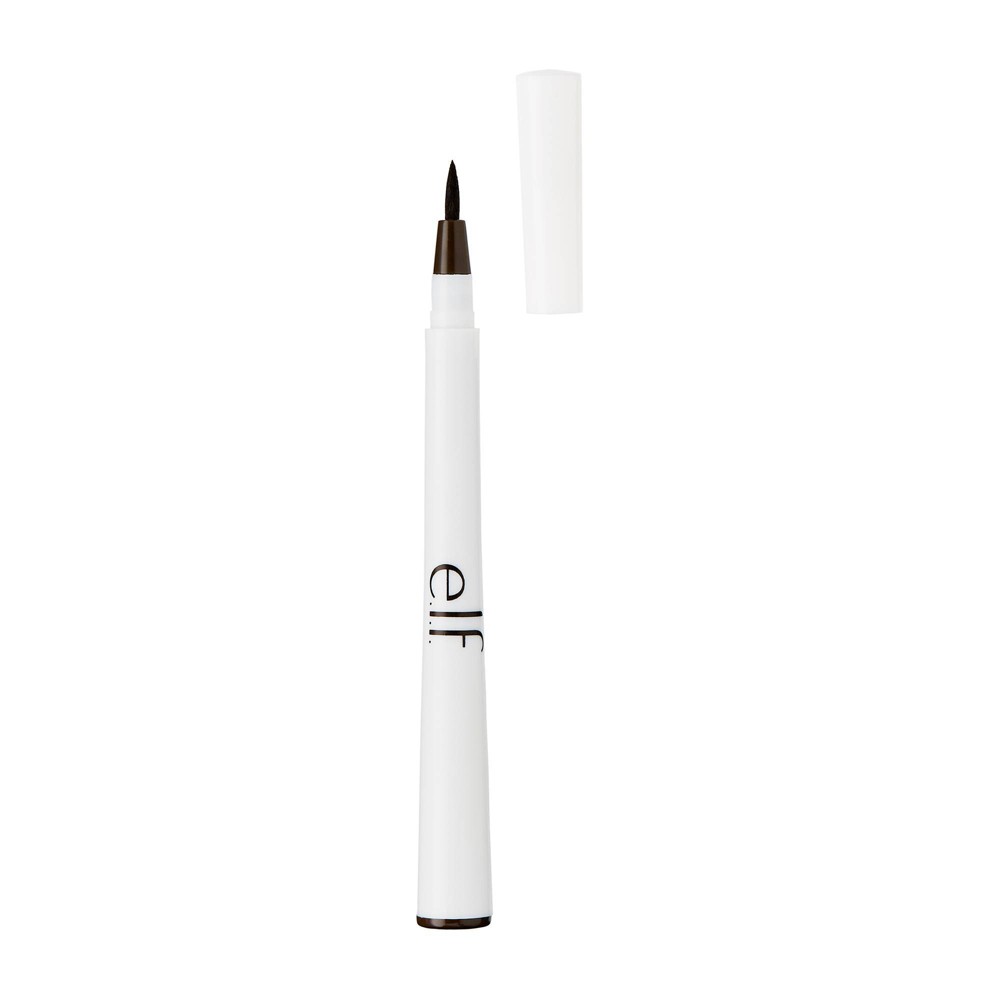
e.l.f. Waterproof Eyeliner Pen - Coffee - 0.05fl oz: Paraben-Free, Vegan, Suitable For Sensitive Skin, Normal Skin
Summary
This eyeliner pen is formulated without parabens and is suitable for sensitive skin, which are positive attributes. However, it is a processed product and may contain synthetic ingredients typical of cosmetics, which slightly lowers its score. The absence of harsh chemicals like SLS and synthetic fragrances contributes to a safer profile, making it a relatively good choice for those seeking a vegan and paraben-free option.
At a glance
Key ingredients 9
Water
Water is a universal solvent used to dissolve other ingredients. It helps in forming the base of the product. It is generally considered safe and non-irritating.
Risks
There are no significant risks associated with water in cosmetics.
Benefits
Water helps in maintaining the desired consistency and texture of the product.
Styrene/Acrylates/Ammonium Methacrylate Copolymer
This copolymer is used as a film-forming agent to provide long-lasting wear. It helps in adhering the product to the skin. It is generally considered safe for use in cosmetics.
Risks
There may be a risk of skin irritation in sensitive individuals.
Benefits
It enhances the durability and water-resistance of the eyeliner.
Polysorbate 20
Polysorbate 20 is an emulsifier that helps blend oil and water-based ingredients. It stabilizes the formulation. It is generally recognized as safe for use in cosmetics.
Risks
There is a potential risk of skin irritation, especially in sensitive skin.
Benefits
It improves the texture and consistency of the product.
Ethylhexyl Palmitate
Ethylhexyl Palmitate is used as an emollient to provide a smooth application. It helps in conditioning the skin. It is generally considered safe for use in cosmetics.
Risks
There is a low risk of skin irritation or acne in some individuals.
Benefits
It enhances the glide and feel of the product on the skin.
PEG-40 Hydrogenated Castor Oil
This ingredient acts as an emulsifier and surfactant in cosmetics. It helps in mixing oil and water components. It is generally considered safe but can be irritating to some.
Risks
There is a potential risk of skin irritation and allergic reactions.
Benefits
It improves the stability and texture of the product.
Xanthan Gum
Xanthan Gum is used as a thickening agent to stabilize the formulation. It helps in maintaining the desired consistency. It is generally considered safe for use in cosmetics.
Risks
There are minimal risks associated with its use in cosmetics.
Benefits
It provides a smooth and even application of the product.
Benzyl Alcohol
Benzyl Alcohol is used as a preservative and solvent in cosmetics. It helps in preventing microbial growth. It is generally considered safe but can be irritating to some.
Risks
There is a risk of skin irritation and allergic reactions, especially in sensitive individuals.
Benefits
It extends the shelf life of the product by preventing spoilage.
Methylchloroisothiazolinone
Methylchloroisothiazolinone is a preservative used to prevent microbial growth. It is effective in low concentrations. However, it is known to be a strong sensitizer.
Risks
There is a significant risk of skin irritation and allergic reactions.
Benefits
It helps in maintaining the product's integrity by preventing contamination.
Methylisothiazolinone
Methylisothiazolinone is a preservative used to inhibit microbial growth. It is effective in small amounts. However, it is associated with a high risk of sensitization.
Risks
There is a significant risk of skin irritation and allergic reactions.
Benefits
It helps in preserving the product by preventing microbial contamination.
Processing
Processed Foods
Get the full breakdown in the Scout app
Scan any product to see lab results, healthy alternatives, and your personalized analysis.
Download on theApp Store