
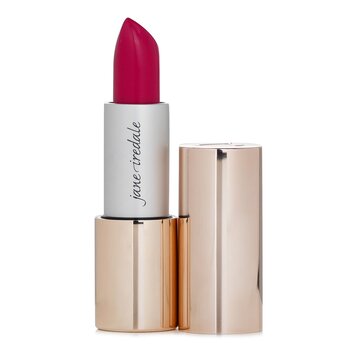

jane iredale Triple Luxe Long Lasting Naturally Moist Lipstick Natalie 0.12 oz
Analysis updated October 2026 · How Scout scores
At a glance
Summary
This lipstick features a blend of natural oils and waxes, such as castor seed oil, avocado oil, and candelilla wax, which provide moisturizing and conditioning benefits. The inclusion of beneficial extracts like green tea and grape seed further enhances its nourishing properties. However, the presence of synthetic colorants and some processing agents slightly detracts from its overall ingredient safety profile.
Key ingredients 29
Ricinus Communis (Castor) Seed OilVery Good
Castor seed oil is a natural emollient that helps to moisturize and condition the skin. It is rich in ricinoleic acid, which has anti-inflammatory properties.
Risks
There is a low risk of allergic reactions, but it is generally considered safe for topical use.
Benefits
It provides deep hydration and can help soothe dry, chapped lips.
Persea Gratissima (Avocado) OilVery Good
Avocado oil is rich in fatty acids and vitamins A, D, and E, which nourish and protect the skin. It is known for its excellent moisturizing properties.
Risks
Rarely, it may cause allergic reactions in sensitive individuals.
Benefits
It helps to improve skin elasticity and provides a protective barrier against environmental damage.
Jojoba EstersVery Good
Jojoba esters are derived from jojoba oil and are known for their moisturizing and skin-conditioning properties. They mimic the skin's natural oils.
Risks
Generally considered safe with minimal risk of irritation.
Benefits
They help to lock in moisture and provide a smooth, non-greasy feel.
Moringa Pterygosperma (Moringa) Seed OilVery Good
Moringa seed oil is rich in antioxidants and fatty acids, which help to nourish and protect the skin. It is known for its anti-aging properties.
Risks
It is generally safe, but may cause mild irritation in sensitive individuals.
Benefits
It helps to rejuvenate and hydrate the skin, reducing the appearance of fine lines.
Helianthus Annuus (Sunflower) Seed OilVery Good
Sunflower seed oil is rich in vitamin E and fatty acids, which help to nourish and protect the skin. It has anti-inflammatory properties.
Risks
It is generally safe, but may cause allergic reactions in some individuals.
Benefits
It helps to maintain the skin's natural barrier and improve hydration.
Camellia Sinensis (Green Tea) Leaf ExtractVery Good
Green tea leaf extract is rich in antioxidants, which help to protect the skin from free radical damage. It has anti-inflammatory properties.
Risks
It is generally safe with a low risk of irritation.
Benefits
It helps to soothe and calm the skin, reducing redness and irritation.
Vitis Vinifera (Grape) Seed ExtractVery Good
Grape seed extract is rich in antioxidants and fatty acids, which help to protect and nourish the skin. It has anti-aging properties.
Risks
It is generally safe, but may cause mild irritation in sensitive individuals.
Benefits
It helps to improve skin elasticity and reduce the appearance of fine lines.
TocopherolVery Good
Tocopherol, also known as vitamin E, is a powerful antioxidant that helps to protect the skin from free radical damage. It is known for its moisturizing properties.
Risks
It is generally safe, but may cause mild irritation in some individuals.
Benefits
It helps to improve skin hydration and reduce signs of aging.
Copernicia Cerifera CeraGood
Also known as carnauba wax, it is a natural wax that provides a glossy finish and helps to thicken cosmetic products.
Risks
It is generally safe with a low risk of irritation.
Benefits
It enhances the texture and longevity of lipsticks.
Caprylic/Capric TriglycerideGood
This ingredient is derived from coconut oil and glycerin, providing a lightweight and non-greasy emollient effect. It helps to improve the spreadability of products.
Risks
It is considered safe with a low risk of irritation.
Benefits
It helps to moisturize and soften the skin without clogging pores.
Brassica Alba (White Mustard) Sprout ExtractGood
White mustard sprout extract is known for its antioxidant properties, which help to protect the skin from environmental stressors.
Risks
There is a low risk of irritation, but it is generally considered safe.
Benefits
It helps to improve skin resilience and reduce signs of aging.
Zingiber Officinale (Ginger) Root ExtractGood
Ginger root extract has anti-inflammatory and antioxidant properties, which help to soothe and protect the skin.
Risks
It may cause mild irritation in sensitive individuals.
Benefits
It helps to improve circulation and provides a warming sensation.
Rubus Fruticosus (Blackberry) Fruit ExtractGood
Blackberry fruit extract is rich in vitamins and antioxidants, which help to protect and nourish the skin. It has anti-inflammatory properties.
Risks
It is generally safe with a low risk of irritation.
Benefits
It helps to improve skin tone and texture, providing a radiant appearance.
Ascorbyl PalmitateGood
Ascorbyl palmitate is a stable form of vitamin C that provides antioxidant benefits. It helps to protect the skin from environmental damage.
Risks
It is generally safe with a low risk of irritation.
Benefits
It helps to brighten the skin and improve its overall appearance.
MicaGood
Beneficial ingredient — whole-food or functional value in this product class.
Risks
There is a low risk of irritation, but it is generally considered safe.
Benefits
It helps to enhance the visual appeal and finish of the product.
Euphorbia Cerifera (Candelilla) WaxNeutral
Standard formulation ingredient — neither beneficial nor harmful at typical use.
Risks
There are minimal risks associated with its use, as it is non-toxic and hypoallergenic.
Benefits
It helps to create a smooth application and adds a glossy finish to lip products.
Vanilla Tahitensis Fruit ExtractNeutral
Vanilla extract is used for its fragrance and potential antioxidant properties. It adds a pleasant scent to cosmetic products.
Risks
It may cause allergic reactions in sensitive individuals.
Benefits
It provides a natural fragrance and may offer some antioxidant benefits.
Isononyl IsononanoateNeutral
Isononyl isononanoate is an emollient that provides a smooth, silky feel to cosmetic products. It helps to improve the texture and spreadability.
Risks
It is generally considered safe with a low risk of irritation.
Benefits
It helps to enhance the application and feel of the product on the skin.
Isopropyl MyristateNeutral
Isopropyl myristate is an emollient that helps to improve the texture and absorption of cosmetic products. It provides a smooth, non-greasy feel.
Risks
It may cause mild irritation in sensitive individuals.
Benefits
It helps to enhance the spreadability and feel of the product on the skin.
Isopropyl Titanium TriisostearateNeutral
Isopropyl titanium triisostearate is used as a pigment dispersant in cosmetics. It helps to improve the color and texture of products.
Risks
It is generally considered safe with a low risk of irritation.
Benefits
It helps to enhance the color payoff and consistency of the product.
Polyhydroxystearic AcidNeutral
Polyhydroxystearic acid is used as a thickening agent in cosmetics. It helps to stabilize and improve the texture of products.
Risks
It is generally considered safe with a low risk of irritation.
Benefits
It helps to enhance the consistency and stability of the product.
Stearalkonium HectoriteNeutral
Stearalkonium hectorite is used as a thickening and suspending agent in cosmetics. It helps to improve the texture and stability of products.
Risks
It is generally considered safe with a low risk of irritation.
Benefits
It helps to enhance the consistency and application of the product.
Propylene CarbonateNeutral
Propylene carbonate is used as a solvent and viscosity regulator in cosmetics. It helps to improve the texture and spreadability of products.
Risks
It is generally considered safe with a low risk of irritation.
Benefits
It helps to enhance the application and feel of the product on the skin.
Titanium Dioxide (CI 77891)Neutral
Titanium dioxide is used as a pigment and sunscreen agent in cosmetics. It provides opacity and UV protection.
Risks
Inhalation of fine particles may pose a risk, but it is generally safe in topical applications.
Benefits
It helps to provide coverage and protect the skin from UV damage.
Iron Oxides (CI 77489, CI 77491, CI 77492, CI 77499)Neutral
Iron oxides are used as pigments in cosmetics to provide color. They are stable and non-toxic.
Risks
They are generally considered safe with a low risk of irritation.
Benefits
They help to provide natural-looking color and coverage.
Red 6 Lake (CI 15850)(Aka 201)Neutral
Red 6 Lake is a synthetic dye used to provide color in cosmetics. It is approved for use in lip products.
Risks
There is a low risk of irritation, but it is generally considered safe.
Benefits
It helps to provide vibrant color to the product.
Red 7 Lake (CI 15850)(Aka 202)Neutral
Red 7 Lake is a synthetic dye used to provide color in cosmetics. It is approved for use in lip products.
Risks
There is a low risk of irritation, but it is generally considered safe.
Benefits
It helps to provide vibrant color to the product.
Red 27 Lake (CI 45410)Neutral
Red 27 Lake is a synthetic dye used to provide color in cosmetics. It is approved for use in lip products.
Risks
There is a low risk of irritation, but it is generally considered safe.
Benefits
It helps to provide vibrant color to the product.
Red 30 Lake (CI 73360)Neutral
Red 30 Lake is a synthetic dye used to provide color in cosmetics. It is approved for use in lip products.
Risks
There is a low risk of irritation, but it is generally considered safe.
Benefits
It helps to provide vibrant color to the product.
Get the full breakdown in the Scout appTake Scout shopping
Scan any product to see lab results, healthy alternatives, and your personalized analysis.
Download on theApp Store GET IT ONGoogle Play