
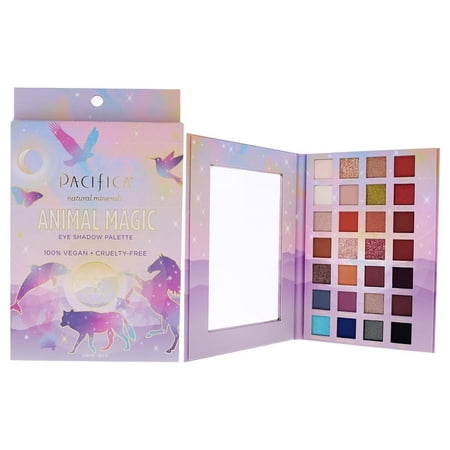

Pacifica Animal Magic Eyeshadow Palette for Women 0.89 oz
Summary
This eyeshadow palette contains a mix of synthetic and natural ingredients. While it avoids some of the most harmful chemicals like parabens and formaldehyde releasers, it does include synthetic fragrance, which can be a skin irritant and is penalized. The presence of some natural oils and botanicals helps improve its safety profile, but the overall processing level and inclusion of synthetic components prevent a higher score.
At a glance
Key ingredients 11
mica
Mica is a naturally occurring mineral used in cosmetics for its shimmering appearance. It is generally considered safe for use in makeup products. However, concerns about ethical sourcing and potential contamination with heavy metals exist.
Risks
Potential contamination with heavy metals and ethical sourcing issues.
Benefits
Provides a shimmering effect and is generally safe for cosmetic use.
magnesium myristate
Magnesium myristate is a salt of myristic acid used as a binding agent in cosmetics. It helps improve the texture and adherence of makeup products. It is generally considered safe for use in cosmetics.
Risks
Rarely, it may cause skin irritation in sensitive individuals.
Benefits
Improves texture and adherence of makeup products.
caprylic/capric triglyceride
Caprylic/capric triglyceride is derived from coconut oil and glycerin, used as an emollient and texture enhancer. It is known for its skin-conditioning properties and is generally considered safe. It helps to improve the spreadability of products.
Risks
Minimal risk of skin irritation, generally considered safe.
Benefits
Acts as an emollient and improves product spreadability.
silica
Silica is a mineral used in cosmetics for its oil-absorbing properties and to improve the texture of products. It is generally considered safe for use in cosmetics. However, inhalation of fine silica particles can pose health risks.
Risks
Inhalation of fine particles can pose respiratory risks.
Benefits
Improves texture and absorbs excess oil.
titanium dioxide (CI 77891)
Titanium dioxide is a mineral used as a pigment and sunscreen agent in cosmetics. It provides opacity and UV protection. It is generally considered safe, though inhalation of fine particles can be a concern.
Risks
Inhalation of fine particles can pose respiratory risks.
Benefits
Provides opacity and UV protection.
iron oxides (CI 77491, CI 77492, CI 77499)
Iron oxides are pigments used to provide color in cosmetics. They are considered safe and are commonly used in a variety of makeup products. They are stable and non-toxic when used in cosmetics.
Risks
Generally considered safe with minimal risks.
Benefits
Provides stable and non-toxic pigmentation.
manganese violet (CI 77742)
Manganese violet is a synthetic pigment used to provide purple color in cosmetics. It is considered safe for use in cosmetics. It is stable and non-toxic when used in makeup products.
Risks
Generally considered safe with minimal risks.
Benefits
Provides stable and non-toxic purple pigmentation.
ultramarines (CI 77007)
Ultramarines are pigments used to provide blue color in cosmetics. They are considered safe for use in cosmetics. They are stable and non-toxic when used in makeup products.
Risks
Generally considered safe with minimal risks.
Benefits
Provides stable and non-toxic blue pigmentation.
red 40 lake (CI 16035)
Red 40 lake is a synthetic dye used to provide red color in cosmetics. It is approved for use in cosmetics but can cause allergic reactions in some individuals. It is stable and provides vibrant color.
Risks
Potential for allergic reactions in sensitive individuals.
Benefits
Provides stable and vibrant red color.
blue 1 lake (CI 42090)
Blue 1 lake is a synthetic dye used to provide blue color in cosmetics. It is approved for use in cosmetics but can cause allergic reactions in some individuals. It is stable and provides vibrant color.
Risks
Potential for allergic reactions in sensitive individuals.
Benefits
Provides stable and vibrant blue color.
yellow 5 lake (CI 19140)
Yellow 5 lake is a synthetic dye used to provide yellow color in cosmetics. It is approved for use in cosmetics but can cause allergic reactions in some individuals. It is stable and provides vibrant color.
Risks
Potential for allergic reactions in sensitive individuals.
Benefits
Provides stable and vibrant yellow color.
Processing
Processed Foods
Get the full breakdown in the Scout app
Scan any product to see lab results, healthy alternatives, and your personalized analysis.
Download on theApp Store