
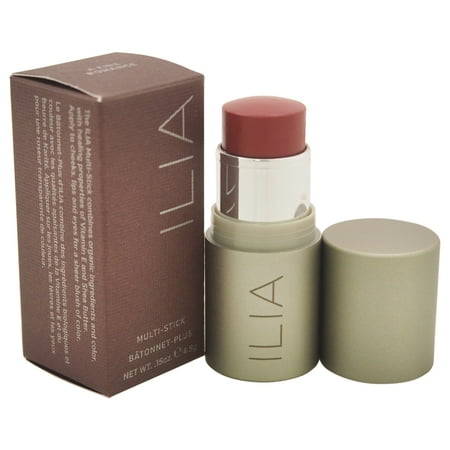

Multi-Stick - A Fine Romance by ILIA Beauty for Women - 0.14 oz Multi-Stick
Analysis updated August 2026 · How Scout scores
At a glance
Summary
This product features a blend of natural oils and butters, such as sunflower seed oil, castor seed oil, and cocoa seed butter, which are known for their moisturizing and nourishing properties. The inclusion of beeswax and candelilla wax enhances the product's texture and moisture retention. The ingredient list is predominantly composed of natural and minimally processed components, contributing to its high rating.
Key ingredients 19
Helianthus Annuus (Sunflower) Seed OilVery Good
Sunflower seed oil is a natural oil rich in essential fatty acids and vitamin E. It is known for its moisturizing properties and ability to improve skin barrier function. This makes it beneficial for maintaining skin hydration and health.
Risks
There are minimal risks associated with sunflower seed oil, though some individuals may experience mild allergic reactions.
Benefits
It provides excellent moisturizing benefits and helps to soothe and protect the skin.
Ricinus Communis (Castor) Seed OilVery Good
Castor seed oil is a natural emollient that helps to lock in moisture and provide a protective barrier on the skin. It is also known for its anti-inflammatory properties. This makes it a beneficial ingredient for soothing and hydrating the skin.
Risks
Some individuals may experience allergic reactions or irritation from castor oil.
Benefits
It is highly moisturizing and can help soothe irritated skin.
Theobroma Cacao (Cocoa) Seed ButterVery Good
Cocoa seed butter is a rich natural fat that provides deep hydration and nourishment to the skin. It is high in antioxidants, which help protect the skin from environmental stressors. This makes it an excellent ingredient for maintaining skin elasticity and smoothness.
Risks
Cocoa butter can potentially clog pores in some individuals, leading to acne.
Benefits
It deeply moisturizes and helps improve skin texture and elasticity.
Beeswax (Cera Alba)Very Good
Beeswax is a natural wax that forms a protective barrier on the skin, helping to lock in moisture. It also has anti-inflammatory and antibacterial properties. This makes it beneficial for soothing and protecting the skin.
Risks
Beeswax can cause allergic reactions in individuals sensitive to bee products.
Benefits
It provides a protective barrier and helps retain skin moisture.
Sesamum Indicum (Sesame) Seed OilVery Good
Sesame seed oil is rich in antioxidants and essential fatty acids, providing excellent moisturizing and nourishing properties. It also has anti-inflammatory benefits, making it suitable for soothing irritated skin. This makes it a beneficial ingredient for maintaining healthy skin.
Risks
Sesame oil can cause allergic reactions in individuals with sesame allergies.
Benefits
It deeply nourishes and moisturizes the skin while providing antioxidant protection.
Butyrospermum Parkii (Shea Butter) FruitVery Good
Shea butter is a natural fat extracted from the nuts of the shea tree, known for its rich moisturizing and anti-inflammatory properties. It is high in vitamins A and E, which help to soothe and protect the skin. This makes it an excellent ingredient for improving skin hydration and elasticity.
Risks
Shea butter is generally safe, but it may cause allergic reactions in individuals with nut allergies.
Benefits
It provides deep hydration and helps improve skin elasticity and smoothness.
Tocopherol Acetate (Natural Vitamin E)Very Good
Tocopherol acetate is a form of vitamin E, a powerful antioxidant that helps protect the skin from environmental damage. It also has moisturizing properties, making it beneficial for maintaining skin health. This makes it an excellent ingredient for enhancing the protective and moisturizing qualities of cosmetics.
Risks
There are minimal risks associated with tocopherol acetate, though it may cause irritation in sensitive individuals.
Benefits
It provides antioxidant protection and helps to moisturize the skin.
Citrus Aurantium Dulcis (Orange) Fruit ButterGood
Orange fruit butter is derived from orange peel oil and provides moisturizing and antioxidant benefits. It helps to soften and smooth the skin while imparting a pleasant citrus scent. This makes it a beneficial ingredient for enhancing the sensory experience of cosmetic products.
Risks
Orange fruit butter may cause irritation in individuals with citrus allergies or sensitive skin.
Benefits
It moisturizes and provides antioxidant protection while adding a pleasant scent.
Glycine Soja (Soybean) OilGood
Soybean oil is a natural oil rich in essential fatty acids and vitamin E, providing moisturizing and antioxidant benefits. It helps to improve skin barrier function and maintain hydration. This makes it a beneficial ingredient for nourishing and protecting the skin.
Risks
Soybean oil can cause allergic reactions in individuals with soy allergies.
Benefits
It moisturizes and provides antioxidant protection to the skin.
MicaGood
Beneficial ingredient — whole-food or functional value in this product class.
Risks
Inhalation of mica particles can pose respiratory risks, though this is more relevant in occupational settings.
Benefits
It adds shimmer and enhances the visual appeal of cosmetics.
Euphorbia Cerifera (Candelilla) WaxNeutral
Standard formulation ingredient — neither beneficial nor harmful at typical use.
Risks
There are minimal risks associated with candelilla wax, though it may cause irritation in sensitive individuals.
Benefits
It helps to lock in moisture and provides a smooth application.
Manihot Esculenta (Tapioca) StarchNeutral
Tapioca starch is used as a thickening agent and to provide a smooth texture in cosmetic formulations. It helps to absorb excess oil and improve the feel of the product on the skin. This makes it a useful ingredient for enhancing the texture and application of cosmetics.
Risks
There are minimal risks associated with tapioca starch, though it may cause irritation in sensitive individuals.
Benefits
It helps to improve product texture and absorb excess oil.
Titanium DioxideNeutral
Titanium dioxide is a mineral used as a pigment and UV filter in cosmetics. It provides opacity and sun protection benefits. This makes it a useful ingredient for enhancing the coverage and protective qualities of makeup products.
Risks
Inhalation of titanium dioxide particles can pose respiratory risks, though this is more relevant in occupational settings.
Benefits
It provides pigmentation and UV protection in cosmetics.
Iron Oxide (Ci 77499)Neutral
Iron oxide is a mineral pigment used to provide color in cosmetics. It is considered safe for use in cosmetic formulations. This makes it a common ingredient for adding color to makeup products.
Risks
There are minimal risks associated with iron oxides, though they may cause irritation in sensitive individuals.
Benefits
It provides color and pigmentation to cosmetics.
Iron Oxide (Ci 77492)Neutral
Iron oxide is a mineral pigment used to provide color in cosmetics. It is considered safe for use in cosmetic formulations. This makes it a common ingredient for adding color to makeup products.
Risks
There are minimal risks associated with iron oxides, though they may cause irritation in sensitive individuals.
Benefits
It provides color and pigmentation to cosmetics.
Iron Oxide (Ci 77491)Neutral
Iron oxide is a mineral pigment used to provide color in cosmetics. It is considered safe for use in cosmetic formulations. This makes it a common ingredient for adding color to makeup products.
Risks
There are minimal risks associated with iron oxides, though they may cause irritation in sensitive individuals.
Benefits
It provides color and pigmentation to cosmetics.
Red 7 Ci15850Neutral
Red 7 is a synthetic pigment used to provide color in cosmetics. It is approved for use in cosmetic formulations by regulatory agencies. This makes it a common ingredient for adding vibrant color to makeup products.
Risks
There are minimal risks associated with Red 7, though it may cause irritation in sensitive individuals.
Benefits
It provides vibrant color to cosmetics.
Red 28 Ci45410Neutral
Red 28 is a synthetic pigment used to provide color in cosmetics. It is approved for use in cosmetic formulations by regulatory agencies. This makes it a common ingredient for adding vibrant color to makeup products.
Risks
There are minimal risks associated with Red 28, though it may cause irritation in sensitive individuals.
Benefits
It provides vibrant color to cosmetics.
Yellow 5 Ci19140Neutral
Yellow 5 is a synthetic pigment used to provide color in cosmetics. It is approved for use in cosmetic formulations by regulatory agencies. This makes it a common ingredient for adding vibrant color to makeup products.
Risks
There are minimal risks associated with Yellow 5, though it may cause irritation in sensitive individuals.
Benefits
It provides vibrant color to cosmetics.
Get the full breakdown in the Scout appTake Scout shopping
Scan any product to see lab results, healthy alternatives, and your personalized analysis.
Download on theApp Store GET IT ONGoogle Play