Seventh Generation Fabric Softener Sheets Free & Clear - 80ct
Seventh Generation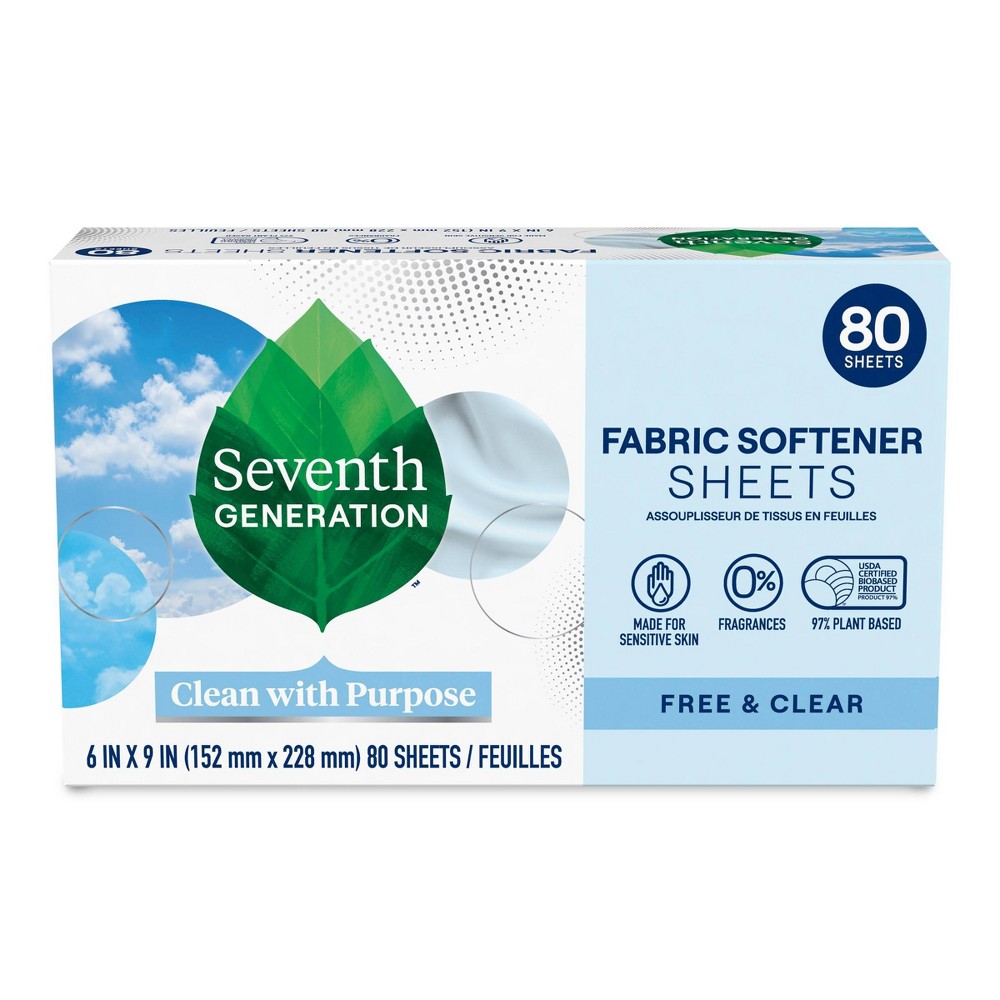
At a glance
Summary
This product uses a plant-based sheet made from rayon, which is biodegradable and derived from renewable resources, making it more environmentally friendly than synthetic fibers. However, the presence of chemical compounds like Di-(Palm Carboxyethyl) Hydroxyethyl Methylammonium Methyl Sulfates, which are used for softening, indicates a moderate level of processing. While these ingredients are not the most harmful, they do not align with the highest standards of natural or organic materials.
Key ingredients 4
Rayon (plant-based sheet)Good
Rayon is a plant-based fiber used as a substrate for fabric softener sheets. It is biodegradable and derived from renewable resources. This makes it a more environmentally friendly option compared to synthetic fibers.
Risks
The production process of rayon can involve chemicals that may be harmful if not managed properly.
Benefits
Rayon is biodegradable and derived from renewable plant sources, making it environmentally preferable.
C16-18 GlyceridesNeutral
C16-18 Glycerides are fatty acid esters used as emollients and conditioning agents. They are generally considered safe and non-toxic for use in fabric softeners. However, they do not provide significant environmental benefits.
Risks
There are no significant risks associated with C16-18 Glycerides in this application.
Benefits
They help to soften fabrics and reduce static cling.
Di-(Palm Carboxyethyl) Hydroxyethyl Methylammonium Methyl SulfatesNeutral
This compound is a quaternary ammonium compound used as a fabric softener. It is effective in reducing static and softening fabrics. However, it is not biodegradable and can accumulate in the environment.
Risks
Potential environmental accumulation and aquatic toxicity are concerns.
Benefits
It effectively softens fabrics and reduces static cling.
C16-18 Fatty AcidsNeutral
C16-18 Fatty Acids are naturally occurring fatty acids used as conditioning agents. They are generally safe and non-toxic for use in household products. However, they do not offer significant environmental benefits.
Risks
There are no significant risks associated with C16-18 Fatty Acids in this application.
Benefits
They contribute to the softening effect on fabrics.
Processing
Processed Culinary Ingredients
Get the full breakdown in the Scout appTake Scout shopping
Scan any product to see lab results, healthy alternatives, and your personalized analysis.
Are you Seventh Generation? Fix an error Get the badge Get tested
Amazon pricing & content
Amazon price as of . Product prices and availability are accurate as of the date/time indicated and are subject to change. Any price and availability information displayed on Amazon.com at the time of purchase will apply to the purchase of this product.
CERTAIN CONTENT THAT APPEARS ON THIS SITE COMES FROM AMAZON. THIS CONTENT IS PROVIDED “AS IS” AND IS SUBJECT TO CHANGE OR REMOVAL AT ANY TIME.