
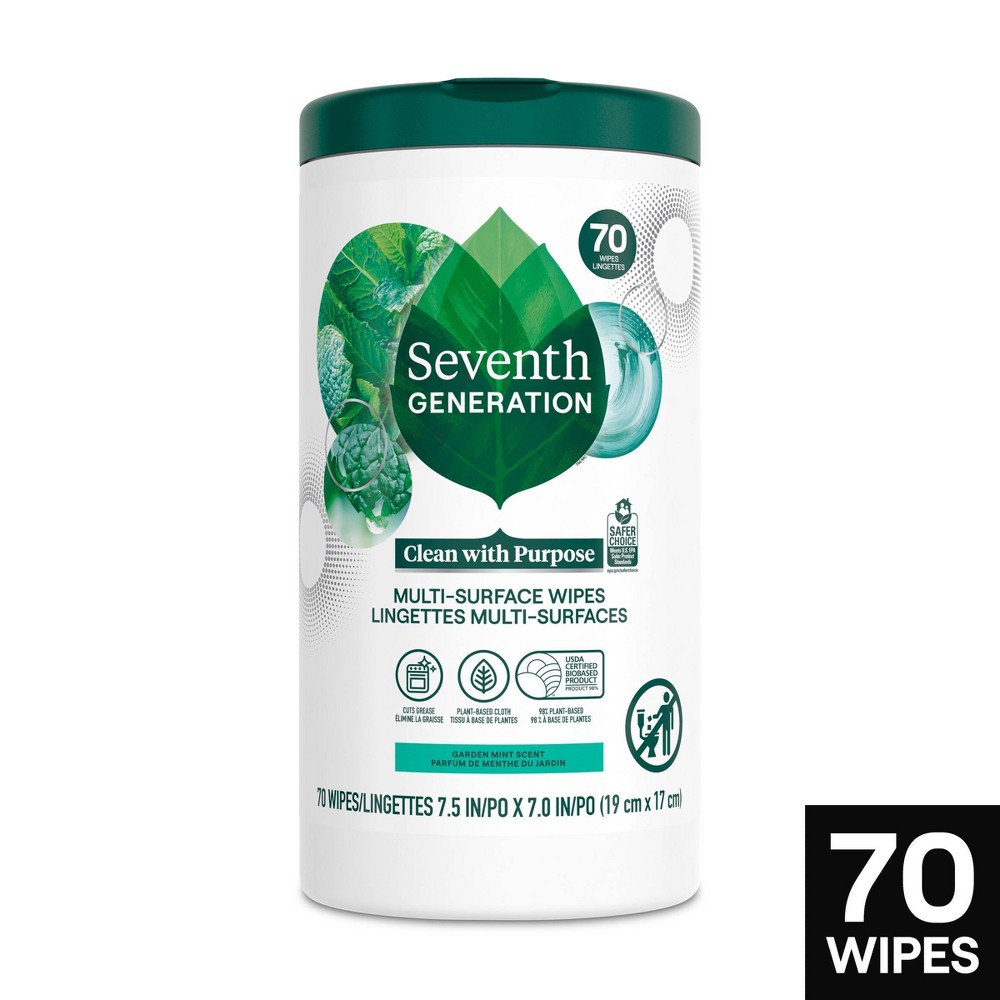

Seventh Generation Garden Mint Multi-Surface Cleaning Wipes - 70ct
Summary
Seventh Generation Garden Mint Multi-Surface Cleaning Wipes are primarily plant-based and contain biodegradable ingredients, which are positive for both indoor safety and environmental impact. However, the presence of synthetic fragrance slightly detracts from its overall score, as it can pose potential health risks and environmental concerns. Despite this, the product remains a strong choice due to its minimal processing and eco-friendly formulation.
At a glance
Key ingredients 8
Water
Water is a universal solvent used to dissolve other ingredients and facilitate cleaning. It helps in spreading the cleaning agents evenly across surfaces. It is essential for the formulation of most cleaning products.
Risks
There are no significant risks associated with water in cleaning products.
Benefits
Water is safe, non-toxic, and environmentally friendly.
Decyl Glucoside
Decyl glucoside is a plant-derived surfactant used for its mildness and effectiveness in cleaning. It is derived from glucose and coconut oil, making it biodegradable. It is often used in eco-friendly cleaning products.
Risks
There are minimal risks associated with decyl glucoside, though it may cause mild irritation in sensitive individuals.
Benefits
It is gentle on the skin and environmentally friendly, making it a preferred choice for green cleaning products.
Sodium Citrate
Sodium citrate is used as a buffering agent to maintain the pH balance of the cleaning solution. It helps in stabilizing the formula and enhancing the effectiveness of other ingredients. It is derived from citric acid, which is naturally occurring.
Risks
Sodium citrate is generally considered safe with no significant risks in cleaning products.
Benefits
It is biodegradable and helps in reducing the environmental impact of cleaning products.
Citric Acid
Citric acid is a natural acid used for its ability to break down stains and remove limescale. It is derived from citrus fruits and is biodegradable. It is commonly used in eco-friendly cleaning products.
Risks
Citric acid can cause mild irritation if it comes into contact with the skin or eyes.
Benefits
It is effective in cleaning and is environmentally friendly, making it a popular choice in green cleaning formulations.
Laureth-6
Laureth-6 is a surfactant used to enhance the cleaning power of the product. It helps in emulsifying oils and dirt, making them easier to rinse away. It is a synthetic compound but is considered mild compared to harsher surfactants.
Risks
There is a potential risk of skin irritation, especially in sensitive individuals.
Benefits
It is effective in cleaning and is less irritating than other harsher surfactants.
Sodium Benzoate
Sodium benzoate is used as a preservative to prevent microbial growth in the product. It helps in extending the shelf life of the cleaning wipes. It is a widely used preservative in both food and cleaning products.
Risks
There are minimal risks associated with sodium benzoate in cleaning products.
Benefits
It is effective in preserving the product and is considered safe for use in cleaning formulations.
Potassium Sorbate
Potassium sorbate is another preservative used to inhibit the growth of mold and yeast. It is effective in maintaining the product's integrity over time. It is commonly used in both food and cleaning products.
Risks
Potassium sorbate is generally safe, but it can cause mild irritation in some individuals.
Benefits
It is effective in preserving the product and is considered safe for use in cleaning formulations.
Eucalyptus Globulus Leaf Oil
Eucalyptus globulus leaf oil is used for its natural fragrance and antimicrobial properties. It is derived from the leaves of the eucalyptus tree and is biodegradable. It adds a pleasant scent to the cleaning product.
Risks
There is a potential risk of skin irritation or allergic reactions in sensitive individuals.
Benefits
It provides a natural fragrance and has antimicrobial properties, enhancing the cleaning effectiveness of the product.
Processing
Unprocessed or Minimally Processed Foods
Get the full breakdown in the Scout app
Scan any product to see lab results, healthy alternatives, and your personalized analysis.
Download on theApp Store