
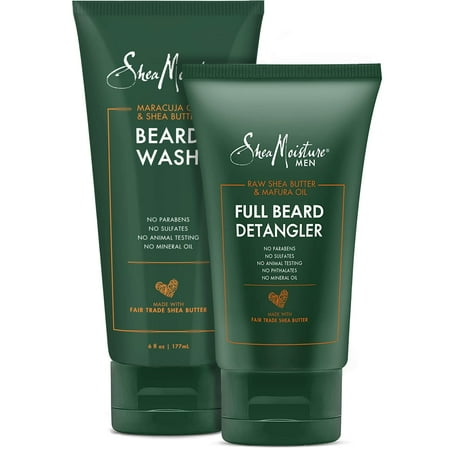

Shea Moisture Beard Wash and Detangler Set Maracuja Oil & Shea Butter Beard Wash Deep Clean & Refresh 6 Ounce Full Beard Detangler Soften Hair And Ease Out Knots 4 Ounce.
Summary
This beard wash and detangler set contains beneficial natural ingredients like maracuja oil and shea butter, which are known for their moisturizing and softening properties. However, the presence of synthetic fragrance and other processed ingredients slightly lowers its score, as these can pose potential irritation risks and indicate a moderate level of processing. Overall, the product balances natural oils with some processed components, making it a mostly safe choice for personal care.
At a glance
Key ingredients 19
Water
Water is a universal solvent and is used as a base in many cosmetic formulations. It helps dissolve other ingredients and provides hydration. It is essential for the consistency and application of the product.
Risks
There are no significant risks associated with water in cosmetics.
Benefits
Water hydrates the skin and helps in the absorption of other beneficial ingredients.
Glycerin (Vegetable)
Glycerin is a humectant that attracts moisture to the skin, helping to keep it hydrated. It is derived from vegetable oils and is commonly used in skincare products. It improves skin barrier function and provides a smooth texture.
Risks
In rare cases, glycerin can cause irritation if used in high concentrations.
Benefits
Glycerin helps maintain skin moisture and improves skin texture.
Caprylic/Capric Triglyceride
Caprylic/Capric Triglyceride is an emollient derived from coconut oil and glycerin. It helps to smooth and soften the skin. It is lightweight and non-greasy, making it ideal for cosmetic formulations.
Risks
There are minimal risks associated with this ingredient, though it may cause mild irritation in sensitive individuals.
Benefits
It provides a silky feel and helps to lock in moisture without clogging pores.
Cetearyl Alcohol
Cetearyl Alcohol is a fatty alcohol used as an emollient and thickening agent in cosmetics. It helps to stabilize formulations and improve texture. It is derived from natural sources like coconut and palm oils.
Risks
It is generally safe, but can cause mild irritation in sensitive skin types.
Benefits
It softens the skin and enhances the product's texture and stability.
Glyceryl Stearate
Glyceryl Stearate is an emulsifier that helps blend water and oil components in formulations. It is derived from glycerin and stearic acid. It provides a smooth and creamy texture to products.
Risks
It is generally considered safe, with low risk of irritation.
Benefits
It helps to maintain skin hydration and improves the texture of the product.
Butyrospermum Parkii (Shea) Butter
Shea Butter is a natural fat extracted from the nuts of the shea tree. It is rich in vitamins and fatty acids, making it an excellent moisturizer. It helps to soothe and nourish dry skin.
Risks
There is a low risk of allergic reactions, particularly for those with nut allergies.
Benefits
Shea Butter deeply moisturizes and provides anti-inflammatory benefits.
Cocos Nucifera (Coconut) Oil
Coconut Oil is a natural oil known for its moisturizing and antibacterial properties. It is rich in fatty acids that nourish and protect the skin. It is widely used in skincare for its hydrating effects.
Risks
It may clog pores in some individuals, leading to breakouts.
Benefits
Coconut Oil hydrates and protects the skin, providing a natural glow.
Cetyl Alcohol
Cetyl Alcohol is a fatty alcohol used as an emollient and thickener in cosmetics. It helps to soften the skin and improve the texture of formulations. It is derived from natural sources like coconut and palm oils.
Risks
It is generally safe, but can cause mild irritation in sensitive skin types.
Benefits
It enhances the texture and stability of the product while providing moisturizing benefits.
Behentrimonium Methosulfate
Behentrimonium Methosulfate is a mild conditioning agent derived from rapeseed oil. It helps to detangle hair and reduce static. It is known for its gentle nature and effectiveness in hair care products.
Risks
It is generally considered safe, with low risk of irritation.
Benefits
It conditions and detangles hair without causing buildup.
Passiflora Edulis (Passion Fruit) Seed Oil
Passion Fruit Seed Oil is rich in essential fatty acids and vitamins. It provides nourishment and hydration to the skin and hair. It is known for its lightweight texture and quick absorption.
Risks
There are minimal risks associated with this ingredient.
Benefits
It nourishes and hydrates the skin and hair, providing a healthy shine.
Argania Spinosa (Argan) Kernel Oil
Argan Oil is a natural oil rich in antioxidants, fatty acids, and vitamin E. It is known for its moisturizing and anti-aging properties. It helps to improve skin elasticity and reduce inflammation.
Risks
There is a low risk of allergic reactions, particularly for those with nut allergies.
Benefits
Argan Oil deeply moisturizes and protects the skin, promoting a youthful appearance.
Hydrolyzed Rice Protein
Hydrolyzed Rice Protein is a plant-derived protein that strengthens and volumizes hair. It helps to improve hair elasticity and moisture retention. It is commonly used in hair care products for its conditioning benefits.
Risks
There are minimal risks associated with this ingredient.
Benefits
It strengthens and conditions hair, improving its overall health and appearance.
Aloe Barbadensis Leaf Juice
Aloe Vera Juice is known for its soothing and hydrating properties. It contains vitamins, minerals, and antioxidants that benefit the skin. It is widely used in skincare for its calming effects on irritated skin.
Risks
There are minimal risks, though some individuals may experience mild irritation.
Benefits
Aloe Vera hydrates and soothes the skin, reducing redness and irritation.
Allantoin
Allantoin is a compound known for its skin-soothing and healing properties. It helps to protect the skin and promote cell regeneration. It is commonly used in skincare products for its calming effects.
Risks
It is generally considered safe, with low risk of irritation.
Benefits
Allantoin soothes and protects the skin, promoting healing and reducing irritation.
Panthenol
Panthenol, also known as provitamin B5, is a moisturizing agent that improves skin hydration. It helps to soothe and repair the skin barrier. It is widely used in skincare for its hydrating and healing properties.
Risks
There are minimal risks associated with this ingredient.
Benefits
Panthenol hydrates and repairs the skin, enhancing its softness and elasticity.
Potassium Sorbate
Potassium Sorbate is a preservative used to prevent the growth of mold and bacteria in cosmetics. It is considered a safer alternative to parabens. It helps to extend the shelf life of products.
Risks
It may cause mild irritation in sensitive individuals.
Benefits
It effectively preserves the product, ensuring safety and longevity.
Glyceryl Undecylenate
Glyceryl Undecylenate is an antimicrobial agent used to protect products from microbial contamination. It is derived from castor oil and undecylenic acid. It helps to maintain the integrity and safety of cosmetic formulations.
Risks
There are minimal risks associated with this ingredient.
Benefits
It provides antimicrobial protection, ensuring product safety.
Citric Acid
Citric Acid is used to adjust the pH of cosmetic formulations. It is derived from citrus fruits and helps to maintain product stability. It also acts as a mild exfoliant, promoting skin renewal.
Risks
In high concentrations, it may cause irritation or sensitivity.
Benefits
It balances the pH and provides mild exfoliation, enhancing skin texture.
Fragrance
Fragrance is added to cosmetics to provide a pleasant scent. It is a mixture of aromatic compounds that enhance the sensory experience of the product. However, it is a common allergen and can cause irritation.
Risks
Fragrance can cause allergic reactions and skin irritation, especially in sensitive individuals.
Benefits
It enhances the sensory appeal of the product, though benefits are primarily aesthetic.
Processing
Processed Foods
Get the full breakdown in the Scout app
Scan any product to see lab results, healthy alternatives, and your personalized analysis.
Download on theApp Store