
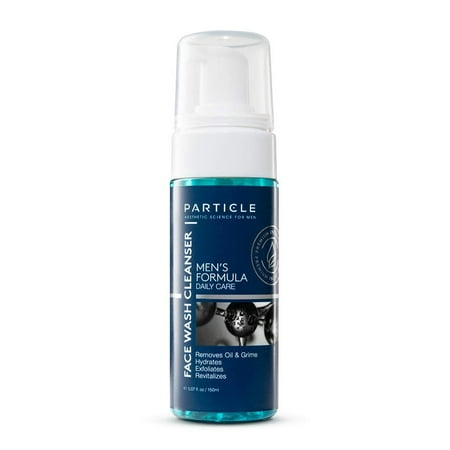

Particle Face Wash Skin Cleanser for Men - Revitalizes Hydrates & Soothes Skin (5.07 Oz)
Analysis updated October 2026 · How Scout scores
At a glance
Summary
This face wash contains beneficial ingredients like glycerin, niacinamide, and aloe vera, which provide hydration and soothing properties. However, the presence of fragrance, which can cause irritation and allergic reactions, along with artificial dyes, slightly lowers its safety profile. The product is mostly composed of safe and effective ingredients, but the inclusion of fragrance and dyes prevents it from achieving a higher score.
Key ingredients 27
Aloe Barbadensis ExtractVery Good
Aloe Vera is known for its soothing and hydrating properties, making it ideal for calming irritated skin. It also provides antioxidant benefits.
Risks
There are minimal risks, though some individuals may experience allergic reactions.
Benefits
It soothes and hydrates the skin, providing relief from irritation.
Chamomilla Recutita (Matricaria) Flower ExtractVery Good
Chamomile extract is known for its anti-inflammatory and soothing properties, making it beneficial for sensitive skin. It also provides antioxidant protection.
Risks
There are minimal risks, though some individuals may experience allergic reactions.
Benefits
It calms and soothes the skin, reducing redness and irritation.
GlycerinGood
Glycerin is a humectant that attracts moisture to the skin, helping to keep it hydrated. It is well-tolerated by most skin types and enhances the skin's natural barrier function.
Risks
There are minimal risks associated with glycerin, though it may cause irritation in very sensitive individuals.
Benefits
Glycerin helps maintain skin hydration and improves skin barrier function.
Lactobacillus/Punica Granatum Fruit Ferment ExtractGood
This ingredient is a probiotic ferment that can help balance the skin's microbiome. It also provides antioxidant benefits from pomegranate extract.
Risks
There are minimal risks, though some individuals may experience sensitivity.
Benefits
It supports skin health by balancing the microbiome and providing antioxidants.
NiacinamideGood
Niacinamide is a form of Vitamin B3 that improves skin elasticity, enhances the skin barrier, and evens skin tone. It is well-tolerated by most skin types.
Risks
There are minimal risks, though high concentrations may cause irritation.
Benefits
It improves skin texture, reduces redness, and strengthens the skin barrier.
Sodium HyaluronateGood
Sodium Hyaluronate is a form of hyaluronic acid that deeply hydrates the skin by attracting and retaining moisture. It is suitable for all skin types and helps reduce the appearance of fine lines.
Risks
There are minimal risks associated with its use.
Benefits
It provides intense hydration and plumps the skin, reducing the appearance of fine lines.
Leuconostoc/Radish Root Ferment FiltrateGood
This ingredient is a natural preservative with antimicrobial properties, derived from fermented radish root. It helps protect the product from microbial contamination.
Risks
There are minimal risks, though some individuals may experience sensitivity.
Benefits
It acts as a natural preservative and provides antimicrobial benefits.
Oryza Sativa (Rice) Bran ExtractGood
Rice bran extract is rich in antioxidants and helps to nourish and protect the skin. It also has moisturizing properties.
Risks
There are minimal risks associated with its use.
Benefits
It provides antioxidant protection and helps to moisturize the skin.
Juniperus Virginiana OilGood
Juniperus Virginiana Oil, or cedarwood oil, is used for its aromatic properties and potential skin benefits. It has antiseptic and anti-inflammatory properties.
Risks
There are minimal risks, though it may cause irritation in sensitive individuals.
Benefits
It provides a pleasant scent and has antiseptic and anti-inflammatory properties.
Water/AquaNeutral
Water is a universal solvent and is used as a base in many cosmetic formulations. It helps dissolve other ingredients and provides hydration. It is generally safe and non-irritating.
Risks
There are no significant risks associated with water in cosmetics.
Benefits
Water helps to hydrate the skin and acts as a carrier for other beneficial ingredients.
Cocamidopropyl BetaineNeutral
Cocamidopropyl Betaine is a mild surfactant derived from coconut oil, used to create foam and cleanse the skin. It is generally considered safe and non-irritating.
Risks
It may cause irritation in some individuals, particularly those with sensitive skin.
Benefits
It provides gentle cleansing and helps to create a rich lather.
Butylene GlycolNeutral
Butylene Glycol is a solvent and conditioning agent that helps to improve the texture of the product. It is generally considered safe for use in cosmetics.
Risks
It may cause irritation in sensitive individuals.
Benefits
It enhances the texture and spreadability of the product.
Heptyl GlucosideNeutral
Heptyl Glucoside is a mild surfactant and emulsifier used to stabilize formulations. It is derived from natural sources and is considered safe.
Risks
There are minimal risks associated with its use.
Benefits
It helps to stabilize the formulation and improve product texture.
Sodium ChlorideNeutral
Sodium Chloride, or table salt, is used to thicken and stabilize cosmetic formulations. It is generally safe and non-irritating.
Risks
Excessive use may lead to dryness or irritation.
Benefits
It helps to thicken the product and improve its stability.
Octenidine HClNeutral
Octenidine HCl is an antimicrobial agent used to preserve cosmetic products. It is effective in preventing microbial contamination.
Risks
There are minimal risks, though it may cause irritation in sensitive individuals.
Benefits
It helps to preserve the product by preventing microbial growth.
Citric AcidNeutral
Citric Acid is used to adjust the pH of cosmetic formulations and has mild exfoliating properties. It is generally safe when used in appropriate concentrations.
Risks
High concentrations may cause irritation or sensitivity.
Benefits
It helps to maintain the pH balance of the product and provides mild exfoliation.
EthylhexylglycerinNeutral
Ethylhexylglycerin is a conditioning agent and preservative enhancer used in cosmetics. It is considered safe and effective in low concentrations.
Risks
There are minimal risks, though it may cause irritation in sensitive individuals.
Benefits
It enhances the preservation of the product and conditions the skin.
Sodium LaurateNeutral
Sodium Laurate is a surfactant used to cleanse the skin and create foam. It is considered milder than SLS but can still be drying.
Risks
It may cause dryness or irritation in sensitive skin.
Benefits
It effectively cleanses the skin and helps to create a rich lather.
Sodium GlycolateNeutral
Sodium Glycolate is used as a buffering agent in cosmetics to maintain pH balance. It is generally considered safe for use.
Risks
There are minimal risks associated with its use.
Benefits
It helps to maintain the pH balance of the product.
Sodium HydroxideNeutral
Sodium Hydroxide is used to adjust the pH of cosmetic formulations. It is effective in small amounts but can be irritating in higher concentrations.
Risks
High concentrations can cause irritation or burns.
Benefits
It helps to maintain the pH balance of the product.
Blue 1 (CI 42090)Neutral
Blue 1 is a synthetic dye used to impart color to cosmetic products. It is approved for use in cosmetics but can cause allergic reactions in some individuals.
Risks
It may cause allergic reactions or irritation in sensitive individuals.
Benefits
It provides a vibrant color to the product.
Tetramethyl AcetyloctahydronaphthalenesNeutral
This ingredient is a fragrance compound used to impart scent to cosmetic products. It is generally considered safe but can cause irritation in sensitive individuals.
Risks
It may cause irritation or allergic reactions, particularly in sensitive individuals.
Benefits
It provides a pleasant scent to the product.
Sodium Lauroyl SarcosinateBad
Processed additive flagged under Scout's ingredient doctrine.
Risks
It may cause mild irritation in sensitive individuals.
Benefits
It effectively cleanses the skin while being gentle and maintaining moisture.
PhenoxyethanolBad
Processed additive flagged under Scout's ingredient doctrine.
Risks
It may cause irritation or allergic reactions, particularly in sensitive individuals.
Benefits
It helps to preserve the product by preventing microbial contamination.
LimoneneBad
Processed additive flagged under Scout's ingredient doctrine.
Risks
Oxidized limonene can cause skin irritation or allergic reactions.
Benefits
It provides a fresh, citrus scent to the product.
Fragrance/ParfumVery Bad
Fragrance is used to impart scent to cosmetic products but can cause irritation and allergic reactions. It is often a mixture of various chemicals, some of which may be sensitizing.
Risks
It can cause skin irritation and allergic reactions, especially in sensitive individuals.
Benefits
It provides a pleasant scent to the product.
Yellow 5 (CI 19140)Very Bad
Heavily flagged ingredient class under Scout's doctrine.
Risks
It may cause allergic reactions or irritation in sensitive individuals.
Benefits
It provides a vibrant color to the product.
Get the full breakdown in the Scout appTake Scout shopping
Scan any product to see lab results, healthy alternatives, and your personalized analysis.
Download on theApp Store GET IT ONGoogle PlayAmazon pricing & content
Amazon price as of . Product prices and availability are accurate as of the date/time indicated and are subject to change. Any price and availability information displayed on Amazon.com at the time of purchase will apply to the purchase of this product.
CERTAIN CONTENT THAT APPEARS ON THIS SITE COMES FROM AMAZON. THIS CONTENT IS PROVIDED “AS IS” AND IS SUBJECT TO CHANGE OR REMOVAL AT ANY TIME.