
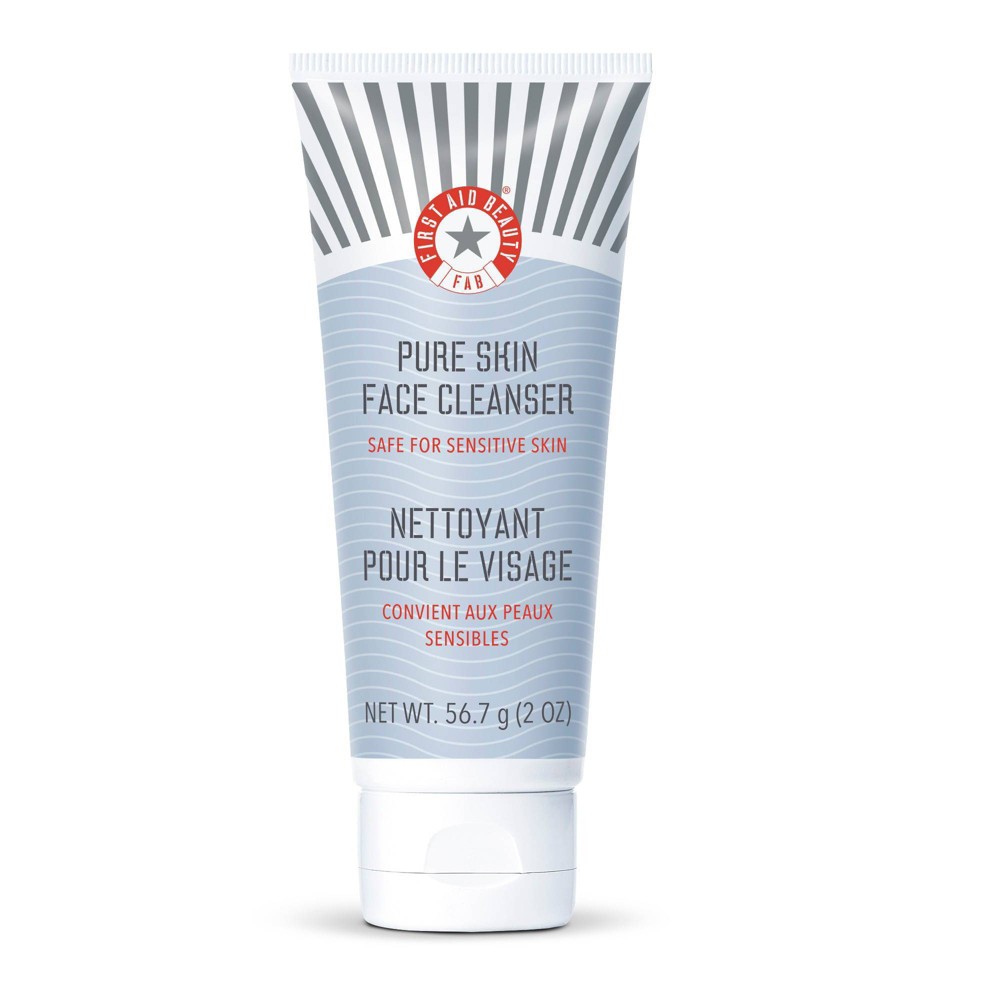

FIRST AID BEAUTY Gentle Hydrating Facial Cleanser for Normal to Dry Skin, Fragrance Free - 2oz - Ulta Beauty
Analysis updated July 2026 · How Scout scores
At a glance
Summary
This facial cleanser contains a mix of natural extracts like aloe vera and licorice root, which are beneficial for the skin. However, it also includes synthetic preservatives such as phenoxyethanol and disodium EDTA, which are common in processed skincare products. The absence of harsh surfactants like SLS is positive, but the presence of these synthetic ingredients prevents it from achieving a higher score.
Key ingredients 27
AllantoinVery Good
Allantoin is known for its soothing and skin-conditioning properties. It helps to calm irritated skin and promote healing.
Risks
There are minimal risks associated with allantoin, making it suitable for sensitive skin.
Benefits
Allantoin helps to soothe and protect the skin, promoting a healthy skin barrier.
Camellia Sinensis Leaf ExtractVery Good
Camellia Sinensis Leaf Extract, commonly known as green tea extract, is rich in antioxidants. It helps to protect the skin from free radical damage and has anti-inflammatory properties.
Risks
There are minimal risks, though it may cause irritation in very sensitive skin.
Benefits
Green tea extract helps to soothe the skin and reduce signs of aging.
Glycyrrhiza Glabra (Licorice) Root ExtractVery Good
Licorice root extract is known for its skin-brightening and anti-inflammatory properties. It helps to reduce hyperpigmentation and soothe irritated skin.
Risks
There is a low risk of irritation, particularly for those with sensitive skin.
Benefits
It helps to even out skin tone and reduce redness.
Aloe Barbadensis Leaf JuiceVery Good
Aloe Vera is renowned for its soothing and hydrating properties. It helps to calm irritated skin and provide moisture.
Risks
There are minimal risks, though it may cause irritation in rare cases.
Benefits
Aloe Vera helps to soothe and hydrate the skin, promoting healing.
TocopherolVery Good
Tocopherol, or Vitamin E, is a powerful antioxidant that helps to protect the skin from free radical damage. It also has moisturizing properties.
Risks
There are minimal risks, though it may cause irritation in rare cases.
Benefits
Vitamin E helps to protect and nourish the skin, improving its overall health.
Sodium Cocoyl IsethionateGood
Sodium Cocoyl Isethionate is a mild surfactant derived from coconut oil. It is known for its gentle cleansing properties and ability to produce a creamy lather.
Risks
It may cause mild irritation in very sensitive skin types.
Benefits
It effectively cleanses the skin without stripping natural oils, making it suitable for sensitive skin.
GlycerinGood
Glycerin is a humectant that attracts moisture to the skin, helping to keep it hydrated. It is widely used in skincare for its moisturizing properties.
Risks
There are minimal risks associated with glycerin, though it may cause irritation in rare cases.
Benefits
Glycerin helps maintain skin hydration and improves skin barrier function.
Chrysanthemum Parthenium (Feverfew) ExtractGood
Feverfew extract is known for its anti-inflammatory and antioxidant properties. It helps to reduce redness and irritation in the skin.
Risks
There is a potential for allergic reactions in individuals sensitive to the Asteraceae family.
Benefits
It helps to calm and protect the skin from environmental stressors.
Sodium PCAGood
Sodium PCA is a natural component of the skin's natural moisturizing factor. It helps to maintain skin hydration by attracting moisture.
Risks
There are minimal risks associated with Sodium PCA.
Benefits
It helps to keep the skin hydrated and improve its overall texture.
Coco-GlucosideGood
Coco-Glucoside is a mild, non-ionic surfactant derived from coconut oil and glucose. It is known for its gentle cleansing properties and is suitable for sensitive skin.
Risks
There are minimal risks, though it may cause irritation in very sensitive skin.
Benefits
It provides gentle cleansing and helps to maintain the skin's natural moisture balance.
Aqua/Water/EauNeutral
Water is a common solvent used in cosmetics to dissolve other ingredients. It is essential for the formulation but does not provide direct skin benefits.
Risks
There are no known risks associated with water in cosmetic formulations.
Benefits
Water helps to hydrate the skin by providing moisture.
Stearic AcidNeutral
Stearic Acid is a fatty acid used as an emulsifier and thickener in cosmetics. It helps to stabilize formulations and improve texture.
Risks
It can cause mild irritation in sensitive individuals.
Benefits
Stearic Acid helps to maintain the consistency and stability of cosmetic products.
Hydrogenated Coconut AcidNeutral
Hydrogenated Coconut Acid is used as a surfactant and emulsifier in skincare products. It helps to cleanse the skin by breaking down oils and dirt.
Risks
There is a low risk of irritation, particularly for those with coconut allergies.
Benefits
It provides gentle cleansing properties and helps to maintain product stability.
Sodium IsethionateNeutral
Sodium Isethionate is a surfactant that helps to cleanse the skin by removing dirt and oil. It is often used in mild cleansing formulations.
Risks
It may cause mild irritation in sensitive skin types.
Benefits
It provides effective cleansing without being overly harsh on the skin.
Stearyl AlcoholNeutral
Stearyl Alcohol is a fatty alcohol used as an emollient and thickener in cosmetics. It helps to improve the texture and feel of products.
Risks
It is generally considered safe, though it may cause irritation in sensitive individuals.
Benefits
Stearyl Alcohol helps to soften and smooth the skin, enhancing the product's texture.
Hydrogenated Palm Glycerides CitrateNeutral
This ingredient is used as an emulsifier and stabilizer in cosmetic formulations. It helps to maintain the consistency and stability of the product.
Risks
There are minimal risks associated with this ingredient.
Benefits
It helps to improve the texture and stability of cosmetic products.
Disodium CocoamphodiacetateNeutral
Disodium Cocoamphodiacetate is a mild surfactant used in cleansing products. It helps to cleanse the skin without causing irritation.
Risks
There are minimal risks, though it may cause irritation in very sensitive skin.
Benefits
It provides gentle cleansing properties suitable for sensitive skin.
Hydroxypropyl MethylcelluloseNeutral
This ingredient is used as a thickener and film-former in cosmetics. It helps to improve the texture and application of products.
Risks
There are minimal risks, though it may cause irritation in rare cases.
Benefits
It helps to enhance the texture and stability of cosmetic formulations.
Glyceryl OleateNeutral
Glyceryl Oleate is an emulsifier and skin-conditioning agent. It helps to stabilize formulations and improve skin feel.
Risks
There are minimal risks, though it may cause irritation in rare cases.
Benefits
It helps to improve the texture and moisturizing properties of cosmetic products.
Sodium ChlorideNeutral
Sodium Chloride, or table salt, is used as a thickener and stabilizer in cosmetics. It helps to improve the texture and consistency of products.
Risks
In high concentrations, it can be drying to the skin.
Benefits
It helps to enhance the texture and stability of formulations.
Citric AcidNeutral
Citric Acid is used to adjust the pH of cosmetic formulations. It helps to maintain the stability and efficacy of products.
Risks
In high concentrations, it can be irritating to the skin.
Benefits
It helps to balance the pH and improve the stability of formulations.
MaltodextrinNeutral
Maltodextrin is used as a binding and stabilizing agent in cosmetics. It helps to improve the texture and consistency of products.
Risks
There are minimal risks, though it may cause irritation in rare cases.
Benefits
It helps to enhance the texture and stability of formulations.
Tetrasodium EDTANeutral
Tetrasodium EDTA is a chelating agent used to improve the stability and efficacy of cosmetic formulations. It helps to bind metal ions and prevent product degradation.
Risks
There are minimal risks, though it may cause irritation in rare cases.
Benefits
It helps to maintain the stability and effectiveness of cosmetic products.
PhenoxyethanolBad
Phenoxyethanol is a preservative used to prevent microbial growth in cosmetics. It is considered safe in low concentrations but can be irritating to the skin.
Risks
It may cause irritation and allergic reactions, particularly in sensitive individuals.
Benefits
It helps to preserve the product and extend its shelf life.
Disodium EDTABad
Processed additive flagged under Scout's ingredient doctrine.
Risks
There are minimal risks, though it may cause irritation in rare cases.
Benefits
It helps to maintain the stability and effectiveness of cosmetic products.
Potassium SorbateBad
Synthetic preservative — flagged in daily-use products.
Risks
It may cause irritation and allergic reactions in sensitive individuals.
Benefits
It helps to preserve the product and extend its shelf life.
Sodium BenzoateBad
Synthetic preservative that can form benzene in the presence of vitamin C.
Risks
It may cause irritation and allergic reactions in sensitive individuals.
Benefits
It helps to preserve the product and extend its shelf life.
Get the full breakdown in the Scout appTake Scout shopping
Scan any product to see lab results, healthy alternatives, and your personalized analysis.
Download on theApp Store GET IT ONGoogle Play