
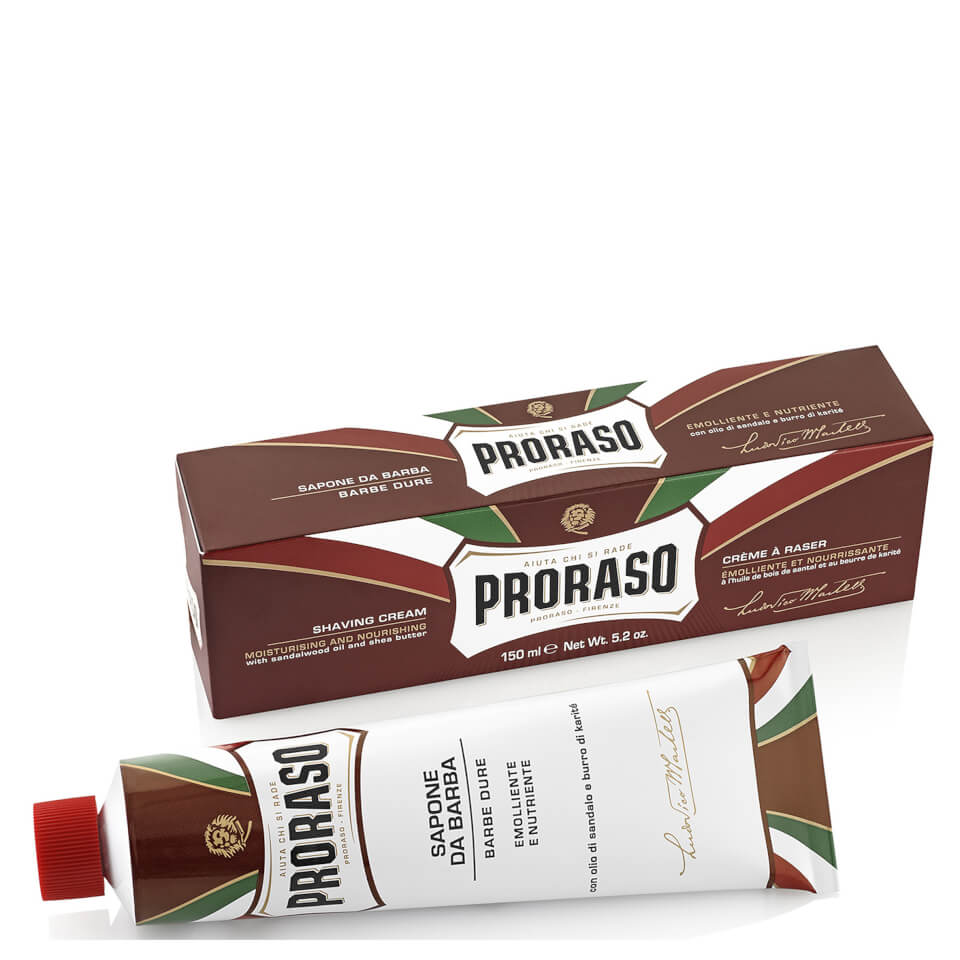


Proraso Shaving Cream - Nourishing Formula for Coarse Beards, 5.2oz
Summary
This shaving cream contains beneficial ingredients like coconut oil, shea butter, and cocoa butter, which provide moisturizing and nourishing benefits. However, it also includes several fragrance components such as parfum, citronellol, and geraniol, which are known allergens and can cause skin irritation. The presence of these synthetic fragrances and potential allergens impacts the overall safety and healthiness of the product.
At a glance
Key ingredients 23
WaterNeutral
Water is a common solvent used in many cosmetic products. It helps dissolve other ingredients and provides a base for the formulation. It is generally considered safe and non-reactive.
Risks
There are no significant risks associated with water in cosmetic formulations.
Benefits
Water helps in hydrating the skin and acts as a carrier for other beneficial ingredients.
Stearic AcidNeutral
Stearic Acid is a fatty acid used as an emulsifier and thickener in cosmetics. It helps stabilize formulations and provides a creamy texture. It is generally considered safe for use in personal care products.
Risks
There are minimal risks associated with Stearic Acid, though it may cause irritation in sensitive individuals.
Benefits
Stearic Acid helps to soften and smooth the skin, enhancing the product's texture.
Cocos Nucifera (Coconut) OilVery Good
Coconut Oil is a natural oil known for its moisturizing and conditioning properties. It is rich in fatty acids that help nourish and hydrate the skin. It is widely used in personal care products for its emollient benefits.
Risks
Coconut Oil may cause breakouts in acne-prone skin due to its comedogenic nature.
Benefits
Coconut Oil provides deep hydration and helps to maintain the skin's natural barrier.
Potassium HydroxideNeutral
Potassium Hydroxide is used to adjust the pH of cosmetic formulations. It is a strong alkaline compound that helps in saponification processes. It is used in small amounts to ensure product stability.
Risks
In high concentrations, Potassium Hydroxide can be irritating to the skin and eyes.
Benefits
When used appropriately, it helps maintain the desired pH level of the product.
GlycerinGood
Glycerin is a humectant that attracts moisture to the skin, helping to keep it hydrated. It is a common ingredient in skincare products due to its moisturizing properties. It is considered safe and effective for all skin types.
Risks
There are minimal risks associated with Glycerin, though it may cause irritation in very sensitive skin.
Benefits
Glycerin helps to maintain skin hydration and improve skin barrier function.
Lactic AcidNeutral
Lactic Acid is an alpha hydroxy acid (AHA) used for its exfoliating properties. It helps to remove dead skin cells and improve skin texture. It is commonly used in skincare products for its mild exfoliating effects.
Risks
Lactic Acid can cause irritation and sensitivity, especially in higher concentrations.
Benefits
It promotes smoother, more radiant skin by gently exfoliating the surface.
ParfumBad
Parfum, or fragrance, is used to impart scent to cosmetic products. It is often a blend of various aromatic compounds. However, it can be a source of allergens and irritants for sensitive individuals.
Risks
Fragrances can cause allergic reactions and skin irritation in sensitive individuals.
Benefits
It provides a pleasant scent to the product, enhancing the user experience.
Sodium HydroxideNeutral
Sodium Hydroxide is used to adjust the pH of cosmetic formulations. It is a strong alkaline compound that helps in saponification processes. It is used in small amounts to ensure product stability.
Risks
In high concentrations, Sodium Hydroxide can be irritating to the skin and eyes.
Benefits
When used appropriately, it helps maintain the desired pH level of the product.
Butyrospermum Parkii (Shea) ButterVery Good
Shea Butter is a natural fat extracted from the nuts of the shea tree. It is known for its moisturizing and anti-inflammatory properties. It is widely used in skincare products for its ability to nourish and protect the skin.
Risks
There are minimal risks associated with Shea Butter, though it may cause allergic reactions in individuals with nut allergies.
Benefits
Shea Butter deeply moisturizes and soothes the skin, providing long-lasting hydration.
Theobroma Cacao (Cocoa) Seed ButterVery Good
Cocoa Butter is a natural fat derived from cocoa beans. It is rich in fatty acids and antioxidants, making it an excellent moisturizer. It is commonly used in skincare products for its emollient properties.
Risks
Cocoa Butter may cause breakouts in acne-prone skin due to its comedogenic nature.
Benefits
Cocoa Butter helps to hydrate and improve skin elasticity, leaving it soft and smooth.
Sodium Lauroyl SarcosinateNeutral
Sodium Lauroyl Sarcosinate is a mild surfactant used for its cleansing properties. It is derived from sarcosine, a natural amino acid. It is considered gentle and suitable for sensitive skin.
Risks
There are minimal risks associated with Sodium Lauroyl Sarcosinate, though it may cause irritation in very sensitive skin.
Benefits
It provides gentle cleansing without stripping the skin of its natural oils.
Pentaerythrityl Tetra-Di-T-Butyl HydroxyhydrocinnamateNeutral
This ingredient is an antioxidant used to stabilize formulations and prevent oxidation. It helps extend the shelf life of cosmetic products. It is generally considered safe for use in personal care products.
Risks
There are minimal risks associated with this antioxidant, though it may cause irritation in sensitive individuals.
Benefits
It helps protect the product from degradation, maintaining its efficacy over time.
Sodium MetasilicateNeutral
Sodium Metasilicate is used as a buffering agent and corrosion inhibitor in cosmetic formulations. It helps maintain product stability and integrity. It is generally considered safe for use in personal care products.
Risks
In high concentrations, Sodium Metasilicate can be irritating to the skin and eyes.
Benefits
It helps maintain the stability and effectiveness of the product.
Tetrasodium EDTANeutral
Tetrasodium EDTA is a chelating agent used to improve the stability and efficacy of cosmetic formulations. It binds to metal ions, preventing them from affecting the product. It is generally considered safe for use in personal care products.
Risks
There are minimal risks associated with Tetrasodium EDTA, though it may cause irritation in sensitive individuals.
Benefits
It enhances the stability and performance of the product by binding metal ions.
HydroxyethylcelluloseNeutral
Hydroxyethylcellulose is a thickening agent used to improve the texture and consistency of cosmetic products. It is derived from cellulose and is considered safe for use in personal care products. It helps create a smooth, gel-like texture.
Risks
There are minimal risks associated with Hydroxyethylcellulose, though it may cause irritation in sensitive individuals.
Benefits
It provides a smooth texture and enhances the application experience of the product.
CitronellolBad
Citronellol is a fragrance component used to impart a floral scent to cosmetic products. It is naturally found in essential oils such as rose and geranium. However, it is a known allergen and can cause skin irritation in sensitive individuals.
Risks
Citronellol can cause allergic reactions and skin irritation in sensitive individuals.
Benefits
It provides a pleasant floral scent to the product, enhancing the user experience.
GeraniolBad
Geraniol is a fragrance component used to impart a rose-like scent to cosmetic products. It is naturally found in essential oils such as rose and citronella. However, it is a known allergen and can cause skin irritation in sensitive individuals.
Risks
Geraniol can cause allergic reactions and skin irritation in sensitive individuals.
Benefits
It provides a pleasant rose-like scent to the product, enhancing the user experience.
Alpha-Isomethyl IononeBad
Alpha-Isomethyl Ionone is a fragrance component used to impart a floral scent to cosmetic products. It is a synthetic compound that can cause allergic reactions in sensitive individuals. It is commonly used in personal care products for its scent-enhancing properties.
Risks
Alpha-Isomethyl Ionone can cause allergic reactions and skin irritation in sensitive individuals.
Benefits
It provides a pleasant floral scent to the product, enhancing the user experience.
LimoneneBad
Limonene is a fragrance component used to impart a citrus scent to cosmetic products. It is naturally found in the peels of citrus fruits. However, it is a known allergen and can cause skin irritation in sensitive individuals.
Risks
Limonene can cause allergic reactions and skin irritation in sensitive individuals.
Benefits
It provides a fresh citrus scent to the product, enhancing the user experience.
LinaloolBad
Linalool is a fragrance component used to impart a floral scent to cosmetic products. It is naturally found in essential oils such as lavender and coriander. However, it is a known allergen and can cause skin irritation in sensitive individuals.
Risks
Linalool can cause allergic reactions and skin irritation in sensitive individuals.
Benefits
It provides a pleasant floral scent to the product, enhancing the user experience.
CoumarinBad
Coumarin is a fragrance component used to impart a sweet scent to cosmetic products. It is a naturally occurring compound found in many plants. However, it is a known allergen and can cause skin irritation in sensitive individuals.
Risks
Coumarin can cause allergic reactions and skin irritation in sensitive individuals.
Benefits
It provides a sweet scent to the product, enhancing the user experience.
Sodium HydroxymethylglycinateNeutral
Sodium Hydroxymethylglycinate is a preservative used to prevent microbial growth in cosmetic products. It is considered effective in maintaining product safety and shelf life. It is generally considered safe for use in personal care products.
Risks
There are minimal risks associated with Sodium Hydroxymethylglycinate, though it may cause irritation in sensitive individuals.
Benefits
It helps preserve the product, ensuring its safety and longevity.
Santalum Album (Sandalwood) OilVery Good
Sandalwood Oil is an essential oil known for its soothing and anti-inflammatory properties. It is used in skincare products for its calming effects on the skin. It is considered beneficial for sensitive and irritated skin.
Risks
There are minimal risks associated with Sandalwood Oil, though it may cause allergic reactions in sensitive individuals.
Benefits
Sandalwood Oil helps to soothe and calm the skin, reducing redness and irritation.
Processing
Processed Foods
Get the full breakdown in the Scout app
Scan any product to see lab results, healthy alternatives, and your personalized analysis.
Download on theApp Store