
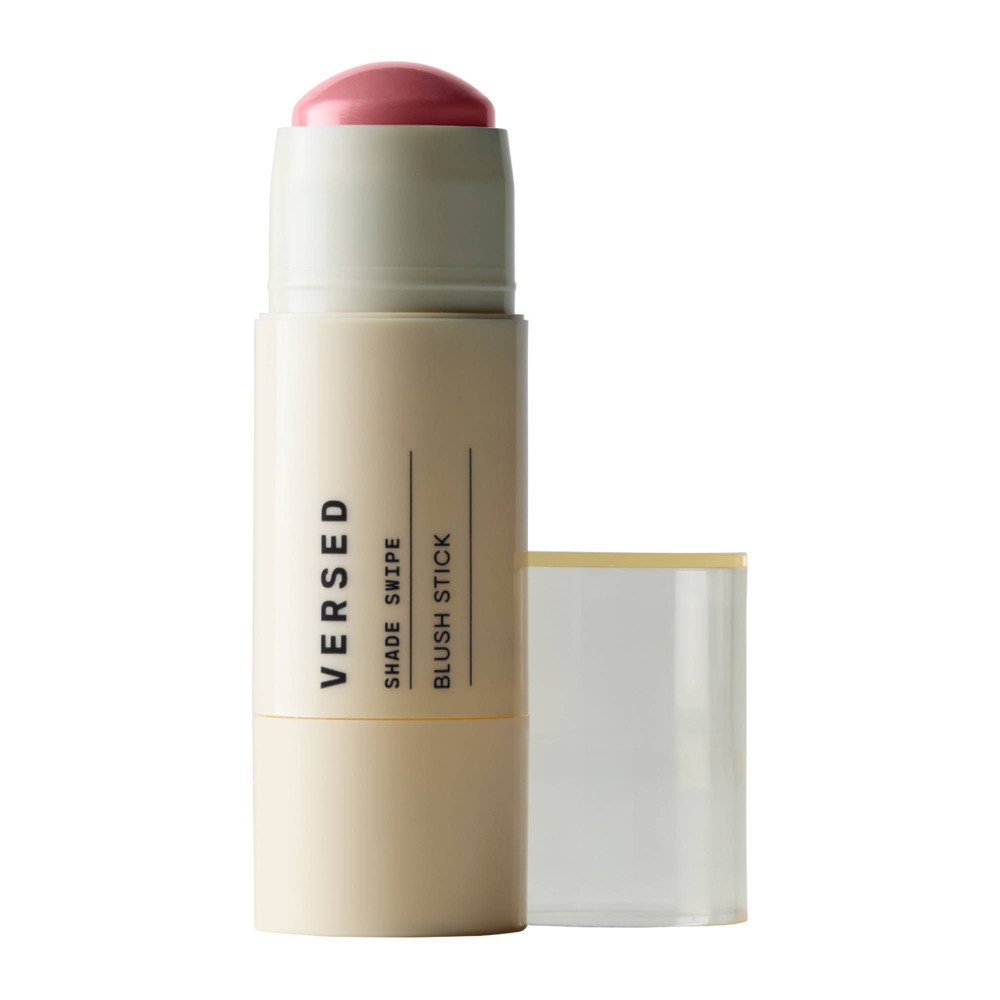


Versed Shade Swipe Blush Stick - Bloom - 0.19oz: No Fragrance, Silicone-Free, Contains Jojoba Oil, Buildable Coverage
Summary
This blush stick contains jojoba oil, a natural and beneficial ingredient, and is free from synthetic fragrances and silicones, which are often associated with skin irritation. The product's clean label and absence of harsh chemicals or known endocrine disruptors contribute to its favorable rating, despite being processed.
At a glance
Key ingredients 22
Coco-Caprylate/Caprate
Coco-Caprylate/Caprate is an emollient derived from coconut oil and caprylic acid. It is used to improve the spreadability and texture of cosmetic products. It is considered safe and non-irritating for most skin types.
Risks
There are minimal risks associated with this ingredient, primarily limited to rare allergic reactions.
Benefits
It provides a lightweight, non-greasy feel and enhances the skin's smoothness.
Diisostearyl Malate
Diisostearyl Malate is an ester used as a skin conditioning agent and emollient. It helps to improve the texture and application of cosmetic products. It is generally considered safe for use in cosmetics.
Risks
There are no significant risks associated with this ingredient.
Benefits
It enhances the smoothness and spreadability of products, providing a silky feel.
Caprylic/Capric Triglyceride
Caprylic/Capric Triglyceride is derived from coconut oil and glycerin. It is used as an emollient and helps to improve the spreadability of products. It is well-tolerated by most skin types.
Risks
There are minimal risks, with rare cases of skin irritation reported.
Benefits
It provides a lightweight, non-greasy moisturizing effect and enhances product stability.
Octyldodecanol
Octyldodecanol is a fatty alcohol used as an emollient and emulsifier in cosmetics. It helps to improve the texture and spreadability of products. It is considered safe for use in cosmetics.
Risks
There are minimal risks, primarily limited to rare allergic reactions.
Benefits
It provides a smooth application and helps to retain moisture in the skin.
Caprylic/Capric/Myristic/Stearic Triglyceride
This ingredient is a blend of triglycerides used as an emollient and thickening agent. It helps to improve the texture and stability of cosmetic products. It is generally considered safe for use in cosmetics.
Risks
There are minimal risks, with rare cases of skin irritation reported.
Benefits
It provides a creamy texture and enhances the moisturizing properties of products.
Helianthus Annuus (Sunflower) Seed Wax
Sunflower Seed Wax is a natural wax derived from sunflower seeds. It is used as a thickening agent and emollient in cosmetics. It is considered safe and non-irritating for most skin types.
Risks
There are minimal risks associated with this ingredient.
Benefits
It provides a smooth texture and helps to lock in moisture.
C10-18 Triglycerides
C10-18 Triglycerides are used as emollients and skin conditioning agents in cosmetics. They help to improve the texture and spreadability of products. They are considered safe for use in cosmetics.
Risks
There are minimal risks, primarily limited to rare allergic reactions.
Benefits
They provide a smooth application and enhance the moisturizing properties of products.
Polyhydroxystearic Acid
Polyhydroxystearic Acid is used as a thickening agent and emulsifier in cosmetics. It helps to stabilize formulations and improve texture. It is considered safe for use in cosmetics.
Risks
There are minimal risks associated with this ingredient.
Benefits
It enhances the stability and consistency of cosmetic products.
Stearyl Behenate
Stearyl Behenate is used as an emollient and thickening agent in cosmetics. It helps to improve the texture and spreadability of products. It is considered safe for use in cosmetics.
Risks
There are minimal risks, primarily limited to rare allergic reactions.
Benefits
It provides a smooth application and enhances the moisturizing properties of products.
Simmondsia Chinensis (Jojoba) Seed Oil
Jojoba Seed Oil is a natural oil used as an emollient and moisturizer in cosmetics. It is known for its skin-conditioning properties and is similar to the skin's natural sebum. It is considered very good for skin health.
Risks
There are minimal risks, with rare cases of allergic reactions reported.
Benefits
It provides excellent moisturizing properties and helps to balance oil production in the skin.
Dicalcium Phosphate
Dicalcium Phosphate is used as a bulking agent and abrasive in cosmetics. It helps to improve the texture and consistency of products. It is considered safe for use in cosmetics.
Risks
There are minimal risks associated with this ingredient.
Benefits
It provides a smooth texture and enhances the stability of formulations.
Stearalkonium Hectorite
Stearalkonium Hectorite is used as a thickening agent and stabilizer in cosmetics. It helps to improve the texture and consistency of products. It is considered safe for use in cosmetics.
Risks
There are minimal risks associated with this ingredient.
Benefits
It enhances the stability and spreadability of cosmetic products.
Silica
Silica is used as an absorbent and anti-caking agent in cosmetics. It helps to improve the texture and mattify the skin. It is considered safe for use in cosmetics.
Risks
There are minimal risks, primarily limited to inhalation concerns in powder form.
Benefits
It provides a smooth, matte finish and helps to control oil and shine.
Polyglyceryl-2 Triisostearate
Polyglyceryl-2 Triisostearate is used as an emulsifier and skin conditioning agent in cosmetics. It helps to stabilize formulations and improve texture. It is considered safe for use in cosmetics.
Risks
There are minimal risks associated with this ingredient.
Benefits
It enhances the stability and consistency of cosmetic products.
Sorbitan Isostearate
Sorbitan Isostearate is used as an emulsifier and surfactant in cosmetics. It helps to stabilize formulations and improve texture. It is considered safe for use in cosmetics.
Risks
There are minimal risks associated with this ingredient.
Benefits
It enhances the stability and consistency of cosmetic products.
Silica Silylate
Silica Silylate is used as a thickening agent and anti-caking agent in cosmetics. It helps to improve the texture and mattify the skin. It is considered safe for use in cosmetics.
Risks
There are minimal risks, primarily limited to inhalation concerns in powder form.
Benefits
It provides a smooth, matte finish and helps to control oil and shine.
Propylene Carbonate
Propylene Carbonate is used as a solvent and viscosity regulator in cosmetics. It helps to improve the texture and consistency of products. It is considered safe for use in cosmetics.
Risks
There are minimal risks associated with this ingredient.
Benefits
It enhances the spreadability and stability of cosmetic products.
Isostearic Acid
Isostearic Acid is used as an emollient and emulsifier in cosmetics. It helps to improve the texture and spreadability of products. It is considered safe for use in cosmetics.
Risks
There are minimal risks associated with this ingredient.
Benefits
It provides a smooth application and enhances the moisturizing properties of products.
Lecithin
Lecithin is a natural emulsifier and skin conditioning agent used in cosmetics. It helps to stabilize formulations and improve texture. It is considered safe and beneficial for skin health.
Risks
There are minimal risks, primarily limited to rare allergic reactions.
Benefits
It provides moisturizing properties and helps to improve skin barrier function.
Polyglyceryl-3 Polyricinoleate
Polyglyceryl-3 Polyricinoleate is used as an emulsifier and skin conditioning agent in cosmetics. It helps to stabilize formulations and improve texture. It is considered safe for use in cosmetics.
Risks
There are minimal risks associated with this ingredient.
Benefits
It enhances the stability and consistency of cosmetic products.
Blakeslea Trispora Mycelium Extract
Blakeslea Trispora Mycelium Extract is used as a colorant and antioxidant in cosmetics. It is derived from a natural source and is considered safe for use in cosmetics. It provides color and potential antioxidant benefits.
Risks
There are minimal risks associated with this ingredient.
Benefits
It provides natural color and may offer antioxidant properties.
Titanium Dioxide (Ci 77891)
Titanium Dioxide is used as a pigment and UV filter in cosmetics. It provides opacity and sun protection. It is considered safe for use in cosmetics when not in nanoparticle form.
Risks
There are minimal risks, primarily related to inhalation concerns in powder form.
Benefits
It provides effective sun protection and enhances product opacity.
Processing
Processed Foods
Get the full breakdown in the Scout app
Scan any product to see lab results, healthy alternatives, and your personalized analysis.
Download on theApp Store