
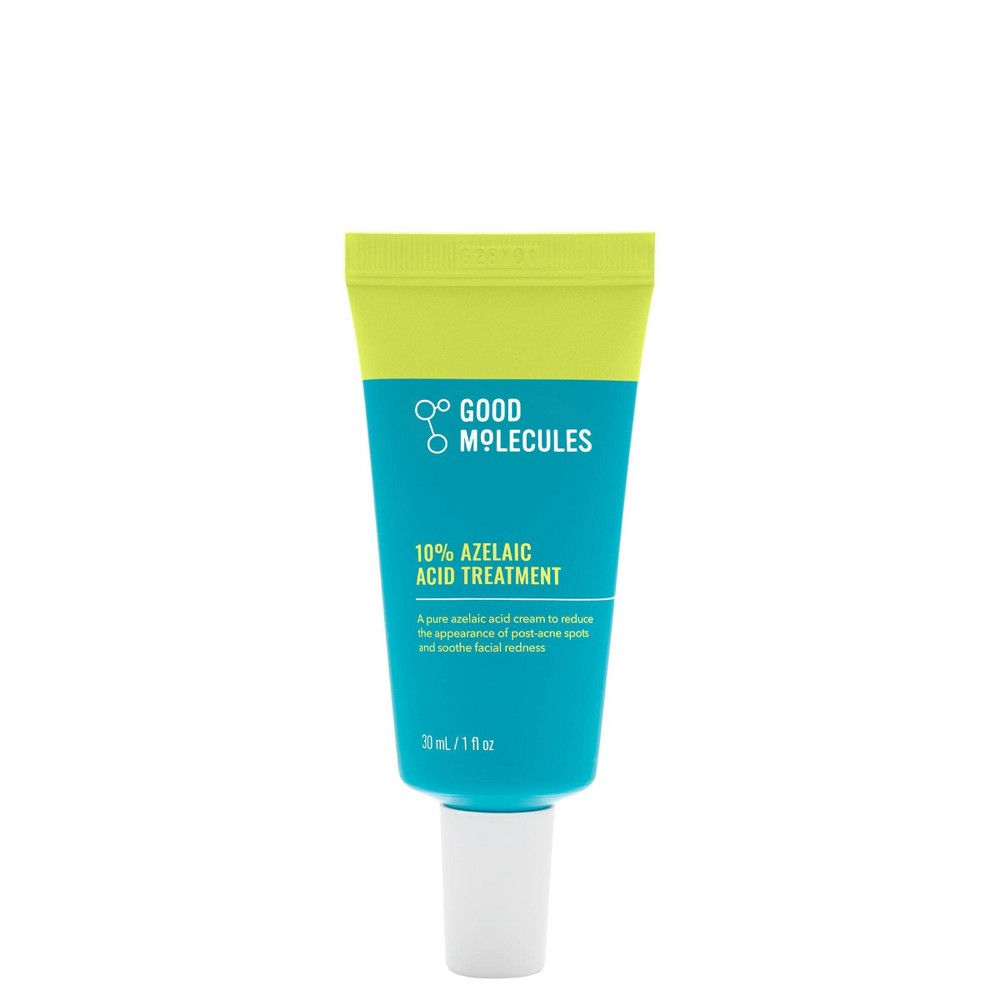

Good Molecules 10% Azelaic Acid Face Treatment - 30ml: Skin Tone Improvement, Unscented, Liquid Form
Analysis updated July 2026 · How Scout scores
At a glance
Summary
This face treatment contains azelaic acid, a beneficial ingredient known for improving skin tone and reducing inflammation. The product is unscented, which avoids the use of synthetic fragrances that can be irritating or harmful. The formulation appears to be clean with no mention of harmful preservatives or endocrine disruptors, contributing to its favorable rating.
Key ingredients 19
Azelaic AcidVery Good
Azelaic Acid is a well-known active ingredient for treating acne and rosacea. It helps to reduce inflammation and clear pores.
Risks
Some users may experience mild irritation or dryness when first using azelaic acid.
Benefits
It is effective in reducing acne, improving skin tone, and reducing redness.
BisabololVery Good
Bisabolol is a natural compound known for its soothing and anti-inflammatory properties. It helps to calm irritated skin.
Risks
There are no significant risks associated with bisabolol.
Benefits
It helps to soothe and calm the skin, reducing redness and irritation.
Centella Asiatica Leaf VesiclesVery Good
Centella Asiatica is known for its healing and anti-inflammatory properties. It helps to soothe and repair the skin.
Risks
There are no significant risks associated with Centella Asiatica.
Benefits
It helps to calm and repair the skin, promoting a healthy complexion.
TocopherolVery Good
Tocopherol, or Vitamin E, is a powerful antioxidant that helps to protect the skin from free radical damage. It also has moisturizing properties.
Risks
There are no significant risks associated with tocopherol.
Benefits
It helps to protect the skin from oxidative stress and improve skin hydration.
Caprylic/Capric/Succinic TriglycerideGood
This ingredient is an emollient that helps to moisturize and soften the skin. It is derived from coconut oil and glycerin, making it a stable and non-greasy ingredient.
Risks
There are minimal risks associated with this ingredient, though it may cause mild irritation in very sensitive skin.
Benefits
It provides a lightweight, non-greasy feel and helps to improve the texture of the skin.
GlycerinGood
Glycerin is a powerful humectant that draws moisture into the skin, helping to keep it hydrated. It is a natural component of the skin's own moisturizing factor.
Risks
There are no significant risks associated with glycerin.
Benefits
It helps to maintain skin hydration and improve skin barrier function.
Passiflora Edulis Seed OilGood
This natural oil is rich in essential fatty acids and antioxidants. It helps to nourish and moisturize the skin.
Risks
There are minimal risks, though it may cause mild irritation in very sensitive skin.
Benefits
It provides nourishment and helps to improve skin elasticity and hydration.
ArginineGood
Arginine is an amino acid that helps to improve skin hydration and elasticity. It is also involved in collagen production.
Risks
There are minimal risks, though it may cause mild irritation in very sensitive skin.
Benefits
It helps to improve skin hydration and supports collagen production for firmer skin.
Zingiber Officinale (Ginger) Root ExtractGood
Ginger Root Extract is known for its antioxidant and anti-inflammatory properties. It helps to protect the skin from environmental stressors.
Risks
There are minimal risks, though it may cause mild irritation in very sensitive skin.
Benefits
It helps to protect the skin and reduce inflammation, promoting a healthy complexion.
Aqua/Water/EauNeutral
Water is a common solvent used in cosmetic formulations. It helps dissolve other ingredients and provides a base for the product. It is generally considered safe and non-irritating.
Risks
There are no significant risks associated with water in cosmetic products.
Benefits
Water helps in hydrating the skin and acts as a carrier for other beneficial ingredients.
Sorbitan LaurateNeutral
Sorbitan Laurate is an emulsifier that helps to stabilize and blend ingredients in a formulation. It is derived from sorbitol and lauric acid.
Risks
There are minimal risks, though it may cause mild irritation in sensitive individuals.
Benefits
It helps to maintain the consistency and stability of the product.
C18-20 Glycol IsostearateNeutral
This ingredient acts as an emulsifier and thickener in cosmetic formulations. It helps to improve the texture and spreadability of the product.
Risks
There are no significant risks associated with this ingredient.
Benefits
It enhances the texture and application of the product, making it more pleasant to use.
Pentylene GlycolNeutral
Standard formulation ingredient — neither beneficial nor harmful at typical use.
Risks
There are minimal risks, though it may cause mild irritation in sensitive skin.
Benefits
It helps to hydrate the skin and improve the shelf life of the product.
Glycol DistearateNeutral
Glycol Distearate is used as an opacifying agent and emollient in cosmetic formulations. It helps to improve the appearance and feel of the product.
Risks
There are no significant risks associated with this ingredient.
Benefits
It provides a creamy texture and enhances the visual appeal of the product.
Behenyl AlcoholNeutral
Behenyl Alcohol is a fatty alcohol used as an emollient and thickener. It helps to improve the texture and stability of the product.
Risks
There are minimal risks, though it may cause mild irritation in very sensitive skin.
Benefits
It provides a smooth, velvety feel and helps to stabilize emulsions.
Butylene GlycolNeutral
Butylene Glycol is a common solvent and humectant in cosmetics. It helps to improve the texture and spreadability of the product.
Risks
There are minimal risks, though it may cause mild irritation in sensitive skin.
Benefits
It helps to keep the skin hydrated and enhances the penetration of other ingredients.
Polyacrylate Crosspolymer-11Neutral
This ingredient is used as a thickener and stabilizer in cosmetic formulations. It helps to improve the texture and consistency of the product.
Risks
There are no significant risks associated with this ingredient.
Benefits
It provides a smooth, gel-like texture and helps to stabilize emulsions.
Sodium Polyacryloyldimethyl TaurateNeutral
This ingredient is used as a thickener and emulsifier in cosmetic formulations. It helps to improve the texture and stability of the product.
Risks
There are no significant risks associated with this ingredient.
Benefits
It enhances the texture and stability of the product, making it more pleasant to use.
EthylhexylglycerinNeutral
Ethylhexylglycerin is used as a preservative and skin conditioning agent. It helps to enhance the efficacy of other preservatives.
Risks
There are minimal risks, though it may cause mild irritation in very sensitive skin.
Benefits
It helps to preserve the product and improve skin feel.
Get the full breakdown in the Scout appTake Scout shopping
Scan any product to see lab results, healthy alternatives, and your personalized analysis.
Download on theApp Store GET IT ONGoogle PlayAmazon pricing & content
Amazon price as of . Product prices and availability are accurate as of the date/time indicated and are subject to change. Any price and availability information displayed on Amazon.com at the time of purchase will apply to the purchase of this product.
CERTAIN CONTENT THAT APPEARS ON THIS SITE COMES FROM AMAZON. THIS CONTENT IS PROVIDED “AS IS” AND IS SUBJECT TO CHANGE OR REMOVAL AT ANY TIME.