
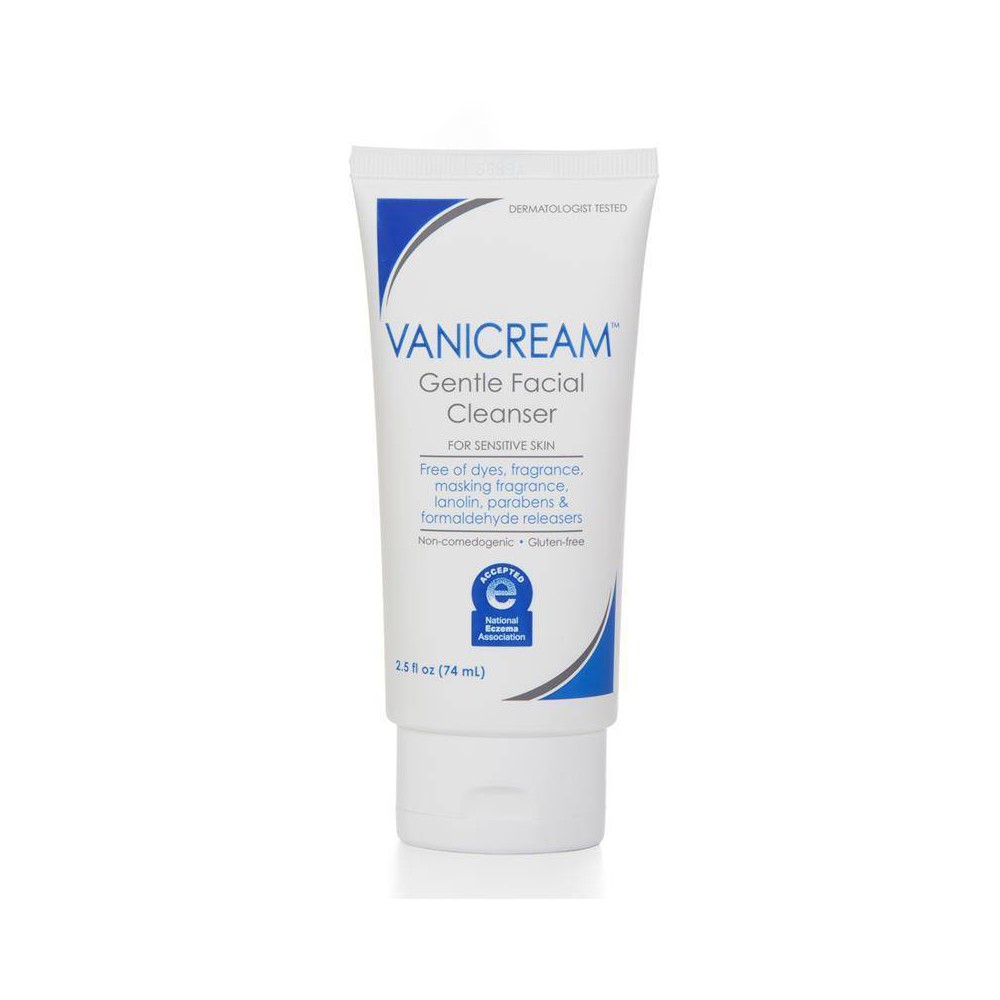

Vanicream Gentle Facial Cleanser for Sensitive Skin - Travel Friendly - Unscented - 2.5 fl oz: Hypoallergenic, Paraben-Free, Oil-Free
Analysis updated August 2026 · How Scout scores
At a glance
Summary
This facial cleanser is formulated without parabens, sulfates, or synthetic fragrances, which are common irritants and potential endocrine disruptors. Its hypoallergenic and oil-free formulation makes it suitable for sensitive skin, although it lacks some of the beneficial active ingredients found in higher-scoring products. The absence of harsh surfactants and a clean ingredient list contribute positively to its rating.
Key ingredients 18
Ceramide APVery Good
Ceramide AP is a type of ceramide that helps maintain the skin's barrier function and hydration. It is crucial for preventing moisture loss and protecting the skin.
Risks
There are minimal risks associated with ceramides.
Benefits
It enhances the skin's barrier and helps retain moisture.
Ceramide EOPVery Good
Ceramide EOP is a lipid that plays a key role in maintaining the skin's barrier and hydration levels. It is beneficial for skin health and protection.
Risks
There are minimal risks associated with ceramides.
Benefits
It supports the skin barrier and improves moisture retention.
GlycerinGood
Glycerin is a humectant that attracts moisture to the skin, helping to keep it hydrated. It is well-tolerated by most skin types and enhances the skin's natural barrier function.
Risks
There are minimal risks associated with glycerin, though in rare cases it may cause irritation.
Benefits
Glycerin helps maintain skin hydration and improves the skin's barrier function.
Sodium Cocoyl IsethionateGood
Sodium Cocoyl Isethionate is a mild surfactant that helps cleanse the skin without causing dryness. It is derived from coconut oil and is suitable for sensitive skin.
Risks
There are minimal risks, though it may cause irritation in very sensitive individuals.
Benefits
It provides effective cleansing while maintaining skin moisture.
Sodium Lauroyl Methyl IsethionateGood
Sodium Lauroyl Methyl Isethionate is a gentle surfactant that cleanses the skin without stripping it of moisture. It is derived from coconut oil and is suitable for sensitive skin.
Risks
There are minimal risks associated with this ingredient.
Benefits
It provides mild cleansing and helps maintain skin hydration.
Hyaluronic AcidGood
Hyaluronic Acid is a powerful humectant that attracts and retains moisture in the skin. It is highly beneficial for maintaining skin hydration and plumpness.
Risks
There are minimal risks associated with hyaluronic acid.
Benefits
It significantly improves skin hydration and elasticity.
Ceramide NPGood
Ceramide NP is a lipid that helps restore the skin's natural barrier and retain moisture. It is essential for healthy skin function and protection.
Risks
There are minimal risks associated with ceramides.
Benefits
It strengthens the skin barrier and improves moisture retention.
PhytosphingosineGood
Phytosphingosine is a lipid that helps maintain the skin's barrier and has anti-inflammatory properties. It is beneficial for soothing and protecting the skin.
Risks
There are minimal risks associated with phytosphingosine.
Benefits
It supports skin barrier function and reduces inflammation.
CholesterolGood
Cholesterol is a lipid that helps maintain the skin's barrier and hydration. It is essential for healthy skin function and protection.
Risks
There are minimal risks associated with cholesterol in skincare.
Benefits
It enhances the skin's barrier and helps retain moisture.
TocopherolGood
Tocopherol, or Vitamin E, is an antioxidant that helps protect the skin from free radical damage. It is beneficial for maintaining skin health and preventing signs of aging.
Risks
There are minimal risks associated with tocopherol.
Benefits
It provides antioxidant protection and supports skin health.
WaterNeutral
Water is a common solvent used in cosmetic formulations. It helps dissolve other ingredients and provides a base for the formulation. It does not have any direct benefits or risks in skincare products.
Risks
There are no significant risks associated with water in skincare products.
Benefits
Water helps in dissolving other ingredients and acts as a carrier in the formulation.
Cocamidopropyl BetaineNeutral
Cocamidopropyl Betaine is a mild surfactant derived from coconut oil, used to create foam and cleanse the skin. It is generally considered safe for most skin types.
Risks
In some individuals, it may cause skin irritation or allergic reactions.
Benefits
It provides gentle cleansing without stripping the skin of its natural oils.
Cocamidopropyl HydroxysultaineNeutral
Cocamidopropyl Hydroxysultaine is a surfactant and foam booster derived from coconut oil. It is used to enhance the texture and cleansing ability of formulations.
Risks
It may cause irritation in sensitive individuals.
Benefits
It improves the texture and foaming properties of the cleanser.
Sodium ChlorideNeutral
Sodium Chloride, or table salt, is used to thicken formulations and stabilize emulsions. It is generally safe in cosmetic products.
Risks
Excessive use may lead to dryness or irritation.
Benefits
It helps in thickening the product and stabilizing the formulation.
Citric AcidNeutral
Citric Acid is used to adjust the pH of cosmetic formulations. It is generally safe and well-tolerated in skincare products.
Risks
In high concentrations, it may cause irritation or sensitivity.
Benefits
It helps maintain the stability and effectiveness of the formulation.
Butylated HydroxytolueneBad
Butylated Hydroxytoluene (BHT) is a synthetic antioxidant used to preserve the product. It has been associated with potential health concerns, including skin irritation and endocrine disruption.
Risks
BHT may cause skin irritation and has potential endocrine-disrupting effects.
Benefits
It helps in preserving the product by preventing oxidation.
Potassium SorbateBad
Synthetic preservative — flagged in daily-use products.
Risks
In rare cases, it may cause skin irritation.
Benefits
It helps extend the shelf life of the product by preventing microbial growth.
Sodium BenzoateBad
Synthetic preservative that can form benzene in the presence of vitamin C.
Risks
In rare cases, it may cause skin irritation.
Benefits
It helps preserve the product by preventing microbial contamination.
Get the full breakdown in the Scout appTake Scout shopping
Scan any product to see lab results, healthy alternatives, and your personalized analysis.
Download on theApp Store GET IT ONGoogle PlayAmazon pricing & content
Amazon price as of . Product prices and availability are accurate as of the date/time indicated and are subject to change. Any price and availability information displayed on Amazon.com at the time of purchase will apply to the purchase of this product.
CERTAIN CONTENT THAT APPEARS ON THIS SITE COMES FROM AMAZON. THIS CONTENT IS PROVIDED “AS IS” AND IS SUBJECT TO CHANGE OR REMOVAL AT ANY TIME.