
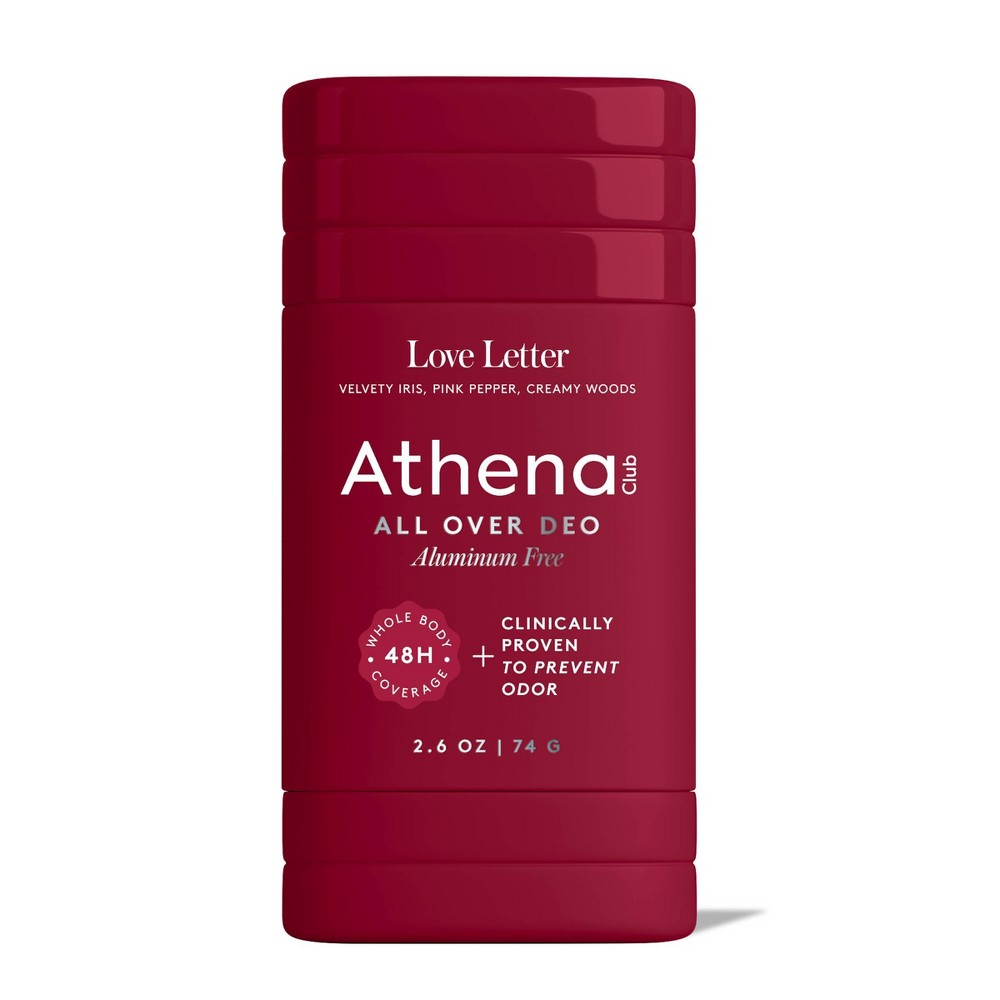

Athena Club All Over Deodorant Stick - Love Letter - 2.6oz: Whole Body, Fresh Scent
Summary
This deodorant contains a mix of natural and synthetic ingredients, which places it in the middle range for ingredient safety. While it avoids aluminum and parabens, it includes synthetic fragrance, which can be a concern for some users. The presence of beneficial natural ingredients like coconut oil and shea butter helps to balance the formulation, but the processing level and inclusion of synthetic components prevent it from achieving a top-tier score.
At a glance
Key ingredients 7
HYDROFLUOROCARBON 152A
Hydrofluorocarbon 152A is a propellant used in aerosol products. It helps to dispense the product evenly. It is generally considered safe for use in cosmetics.
Risks
There are environmental concerns as it is a greenhouse gas.
Benefits
It provides effective product delivery without contributing to ozone depletion.
PROPYLENE GLYCOL
Propylene glycol is used as a humectant and solvent in cosmetics. It helps to retain moisture and improve product texture. However, it is petroleum-derived.
Risks
It can cause skin irritation in sensitive individuals.
Benefits
It effectively hydrates the skin and enhances product absorption.
ALCOHOL DENAT.
Denatured alcohol is used as an astringent and antimicrobial agent. It helps to dry quickly and reduce bacteria on the skin. However, it can be drying.
Risks
Excessive use can lead to skin dryness and irritation.
Benefits
It provides a quick-drying effect and helps to sanitize the skin.
ORYZA SATIVA (RICE) STARCH
Rice starch is used for its absorbent properties. It helps to absorb moisture and reduce shine. It is a natural ingredient.
Risks
There are minimal risks associated with rice starch.
Benefits
It effectively absorbs moisture and provides a smooth feel.
FRAGRANCE (PARFUM)
Fragrance is added to provide a pleasant scent. It enhances the sensory experience of the product. However, it can contain undisclosed chemicals.
Risks
It may cause allergic reactions or skin irritation.
Benefits
It improves the overall user experience with a pleasant aroma.
TRIETHYL CITRATE
Triethyl citrate is used as a deodorizing agent. It helps to control odor by inhibiting the enzymatic breakdown of sweat. It is considered safe for use in cosmetics.
Risks
There are minimal risks associated with triethyl citrate.
Benefits
It effectively reduces body odor without blocking sweat glands.
Sodium Hydroxide
Sodium hydroxide is used to adjust the pH of cosmetic products. It helps to maintain product stability and effectiveness. It is used in very small amounts.
Risks
In high concentrations, it can be corrosive and cause skin irritation.
Benefits
It ensures the product remains at an optimal pH for skin compatibility.
Processing
Processed Foods
Get the full breakdown in the Scout app
Scan any product to see lab results, healthy alternatives, and your personalized analysis.
Download on theApp Store