
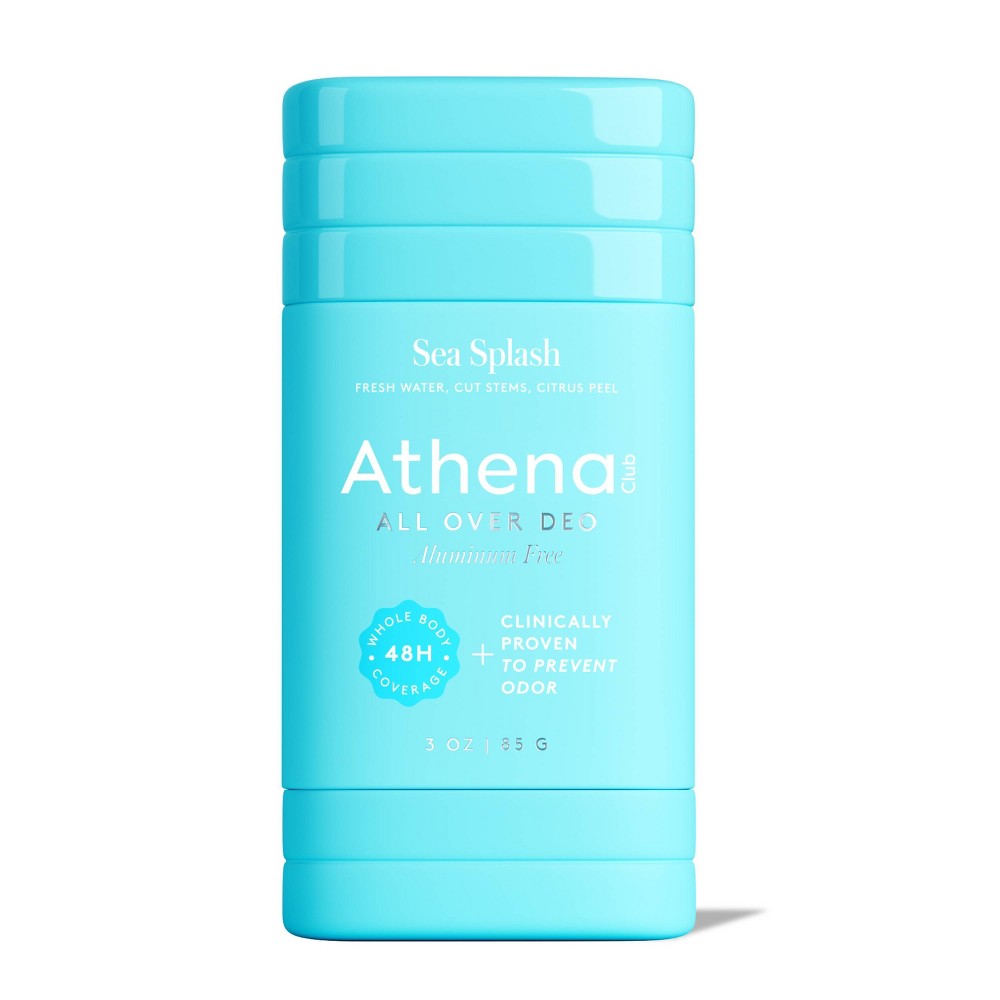
Athena Club All Over Solid Deodorant Sea Splash - 3oz
Analysis updated August 2026 · How Scout scores
At a glance
Summary
This deodorant is aluminum-free but contains both propylene glycol and synthetic fragrance, which are common concerns in personal care products. While it includes beneficial natural ingredients like jojoba seed oil, coconut oil, and chamomile extract, the presence of these synthetic components limits its overall safety profile. The combination of these factors results in a moderate score, reflecting a balance between natural and synthetic elements.
Key ingredients 22
GlycerinGood
Glycerin is a humectant that attracts moisture to the skin. It helps to keep the skin hydrated and soft. It is derived from natural sources and is well-tolerated by most skin types.
Risks
Very low risk of irritation.
Benefits
Hydrates and softens the skin.
Saccharomyces Ferment FiltrateGood
Saccharomyces ferment filtrate is a probiotic ingredient that can help balance the skin's microbiome. It may improve skin health and reduce odor-causing bacteria. It is considered beneficial for skin care.
Risks
Minimal risk of irritation.
Benefits
Supports skin microbiome and reduces odor.
Diatomaceous EarthGood
Diatomaceous earth is a natural absorbent that helps control moisture. It is made from fossilized algae and is considered safe for use in cosmetics. It can help keep the underarm area dry.
Risks
Inhalation of fine particles can be harmful, but this is not a concern in solid products.
Benefits
Absorbs moisture and keeps skin dry.
Simmondsia Chinensis (Jojoba) Seed OilGood
Jojoba seed oil is a natural moisturizer that mimics the skin's natural oils. It is rich in vitamins and minerals that nourish the skin. It is well-tolerated and beneficial for maintaining skin health.
Risks
Very low risk of irritation.
Benefits
Moisturizes and nourishes the skin.
Cocos Nucifera (Coconut) Liquid EndospermGood
Coconut liquid endosperm is a nourishing ingredient derived from coconut. It provides hydration and nutrients to the skin. It is considered beneficial for skin health and is well-tolerated.
Risks
Very low risk of irritation.
Benefits
Hydrates and nourishes the skin.
Chamomilla Recutita (Matricaria) Flower ExtractGood
Chamomile flower extract is known for its soothing and anti-inflammatory properties. It helps to calm irritated skin and reduce redness. It is a beneficial ingredient for sensitive skin.
Risks
Very low risk of irritation.
Benefits
Soothes and calms the skin.
Cocos Nucifera (Coconut) OilGood
Coconut oil is a natural moisturizer that nourishes and hydrates the skin. It has antimicrobial properties that can help reduce odor-causing bacteria. It is well-tolerated and beneficial for skin health.
Risks
Very low risk of irritation.
Benefits
Moisturizes and has antimicrobial properties.
Camellia Sinensis Leaf ExtractGood
Green tea extract is rich in antioxidants that protect the skin from damage. It has anti-inflammatory properties that soothe and calm the skin. It is beneficial for maintaining healthy skin.
Risks
Very low risk of irritation.
Benefits
Protects and soothes the skin.
Cocos Nucifera (Coconut) Fruit JuiceGood
Coconut fruit juice is hydrating and rich in nutrients. It helps to keep the skin moisturized and healthy. It is considered a beneficial ingredient for skin care.
Risks
Very low risk of irritation.
Benefits
Hydrates and nourishes the skin.
Water (Aqua)Neutral
Water is a common solvent used in many cosmetic products. It helps to dissolve other ingredients and provides a base for the formulation. It is generally considered safe and non-irritating.
Benefits
Acts as a solvent and provides hydration.
Sodium StearateNeutral
Sodium stearate is a salt derived from stearic acid, used as a thickener and stabilizer. It helps to form the solid structure of deodorant sticks. It is generally considered safe for use in cosmetics.
Risks
May cause mild irritation in very sensitive skin.
Benefits
Provides structure and stability to the deodorant.
SilicaNeutral
Silica is used as an absorbent and anti-caking agent in cosmetics. It helps to control moisture and improve the texture of the product. It is generally considered safe for topical use.
Risks
Inhalation of silica dust can be harmful, but this is not a concern in solid deodorants.
Benefits
Improves texture and moisture control.
PropanediolNeutral
Propanediol is a glycol used as a solvent and skin-conditioning agent. It is derived from corn sugar and is considered a safer alternative to propylene glycol. It is generally well-tolerated by the skin.
Risks
Low risk of irritation.
Benefits
Acts as a solvent and skin conditioner.
Polyglyceryl-10 CaprylateNeutral
Polyglyceryl-10 caprylate is an emulsifier that helps blend ingredients. It is derived from natural sources and is considered safe for use in cosmetics. It helps to stabilize the product formulation.
Risks
Low risk of irritation.
Benefits
Stabilizes and blends ingredients.
Polyglyceryl-4 Laurate/SuccinateNeutral
This ingredient is used as an emulsifier and surfactant. It helps to mix oil and water components in the formulation. It is derived from natural sources and is generally considered safe.
Risks
Low risk of irritation.
Benefits
Helps blend and stabilize the formulation.
EthylhexylglycerinNeutral
Ethylhexylglycerin is used as a preservative and skin-conditioning agent. It enhances the efficacy of other preservatives and is considered safe for use in cosmetics. It helps to keep the product fresh.
Risks
Low risk of irritation.
Benefits
Preserves product freshness and conditions skin.
Tapioca StarchNeutral
Standard formulation ingredient — neither beneficial nor harmful at typical use.
Risks
Minimal risk of irritation.
Benefits
Absorbs moisture and keeps skin dry.
Sorbitan Oleate Decylglucoside CrosspolymerNeutral
This ingredient is used as an emulsifier and surfactant. It helps to blend oil and water components in the formulation. It is derived from natural sources and is generally considered safe.
Risks
Low risk of irritation.
Benefits
Helps blend and stabilize the formulation.
Sorbitan OleateNeutral
Sorbitan oleate is an emulsifier that helps blend ingredients. It is derived from natural sources and is considered safe for use in cosmetics. It helps to stabilize the product formulation.
Risks
Low risk of irritation.
Benefits
Stabilizes and blends ingredients.
Behenyl AlcoholNeutral
Behenyl alcohol is a fatty alcohol used as an emulsifier and thickener. It helps to stabilize and thicken the product formulation. It is generally considered safe and non-irritating.
Risks
Low risk of irritation.
Benefits
Thickens and stabilizes the formulation.
Propylene GlycolBad
Propylene glycol is a petroleum-derived compound used to retain moisture. It can cause skin irritation in sensitive individuals. Its origin from petroleum raises concerns about its environmental impact.
Risks
Potential skin irritant, especially for sensitive skin.
Benefits
Helps to retain moisture in the product, improving texture.
Fragrance (Parfum)Very Bad
Fragrance in cosmetics can contain phthalates and other undisclosed chemicals. These can cause allergic reactions and have been linked to endocrine disruption. The lack of transparency in fragrance components is a concern.
Risks
Potential for allergic reactions and endocrine disruption.
Benefits
Provides a pleasant scent to the product.
Get the full breakdown in the Scout appTake Scout shopping
Scan any product to see lab results, healthy alternatives, and your personalized analysis.
Download on theApp Store GET IT ONGoogle PlayAmazon pricing & content
Amazon price as of . Product prices and availability are accurate as of the date/time indicated and are subject to change. Any price and availability information displayed on Amazon.com at the time of purchase will apply to the purchase of this product.
CERTAIN CONTENT THAT APPEARS ON THIS SITE COMES FROM AMAZON. THIS CONTENT IS PROVIDED “AS IS” AND IS SUBJECT TO CHANGE OR REMOVAL AT ANY TIME.