
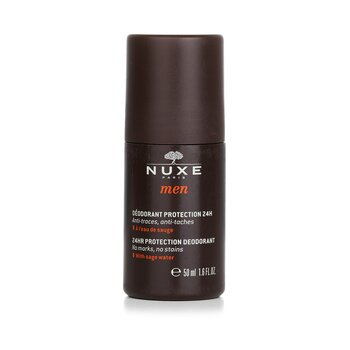
Nuxe Men Aluminum Deodorant, 1.6 Oz
Analysis updated August 2026 · How Scout scores
At a glance
Summary
This deodorant is aluminum-free, which is a positive aspect, and contains several beneficial ingredients like sage leaf water, glycerin, and macadamia seed oil that provide antimicrobial and moisturizing benefits. However, the presence of synthetic fragrance is a concern due to potential skin irritation and lack of transparency regarding its chemical composition. Additionally, the inclusion of butylene glycol, although not as concerning as aluminum, still contributes to a lower score due to its synthetic nature.
Key ingredients 32
Salvia Officinalis (Sage) Leaf WaterGood
Sage leaf water is known for its antimicrobial and antioxidant properties. It can help reduce odor-causing bacteria and soothe the skin. It is generally considered safe and beneficial in deodorant formulations.
Risks
May cause irritation in sensitive individuals.
Benefits
Offers antimicrobial and antioxidant benefits, helping to reduce odor and soothe the skin.
GlycerinGood
Glycerin is a well-known humectant that attracts moisture to the skin. It helps to keep the skin hydrated and is generally considered safe and beneficial. It is widely used in skincare products for its moisturizing properties.
Risks
Very low risk of irritation.
Benefits
Attracts moisture to the skin, keeping it hydrated.
Macadamia Integrifolia Seed OilGood
Macadamia seed oil is a nourishing oil rich in fatty acids. It helps to moisturize and protect the skin, making it beneficial in skincare products. It is generally considered safe and beneficial for skin health.
Risks
Very low risk of skin irritation.
Benefits
Moisturizes and protects the skin with its rich fatty acid content.
AllantoinGood
Allantoin is known for its soothing and skin-protecting properties. It helps to promote skin healing and reduce irritation. It is generally considered safe and beneficial in skincare products.
Risks
Very low risk of skin irritation.
Benefits
Soothes and protects the skin, promoting healing and reducing irritation.
TocopherolGood
Tocopherol, also known as vitamin E, is an antioxidant that helps to protect the skin from damage. It is beneficial for skin health and is generally considered safe. It is widely used in skincare products for its protective properties.
Risks
Very low risk of skin irritation.
Benefits
Protects the skin from damage with its antioxidant properties.
Aqua/WaterNeutral
Water is a common solvent used in many cosmetic products. It helps dissolve other ingredients and provides a base for the formulation. It does not have any direct risks or benefits in this context.
Benefits
Provides a base for the formulation and helps dissolve other ingredients.
Decyl OleateNeutral
Decyl oleate is an emollient that helps to soften and smooth the skin. It is derived from natural sources and is generally considered safe. It does not have significant risks or benefits beyond its emollient properties.
Risks
Minimal risk of skin irritation.
Benefits
Helps to soften and smooth the skin.
Butylene GlycolNeutral
Butylene glycol is a common solvent and humectant in cosmetics. It helps to retain moisture and improve the texture of the product. It is generally considered safe but can cause irritation in some individuals.
Risks
Potential for skin irritation in sensitive individuals.
Benefits
Helps retain moisture and improve product texture.
SilicaNeutral
Silica is used as an absorbent and thickening agent in cosmetics. It helps to control moisture and improve the texture of the product. It is generally considered safe with no significant risks or benefits.
Risks
Inhalation of silica dust can be harmful, but this is not a concern in topical applications.
Benefits
Controls moisture and improves product texture.
Glyceryl CaprateNeutral
Glyceryl caprate is an emulsifier and skin conditioning agent. It helps to stabilize formulations and improve skin feel. It is generally considered safe with no significant risks or benefits.
Risks
Low risk of skin irritation.
Benefits
Stabilizes formulations and improves skin feel.
EthylhexylglycerinNeutral
Ethylhexylglycerin is a preservative and skin conditioning agent. It helps to enhance the efficacy of preservatives and improve skin feel. It is generally considered safe with minimal risks.
Risks
Potential for mild skin irritation.
Benefits
Enhances preservative efficacy and improves skin feel.
Arachidyl AlcoholNeutral
Arachidyl alcohol is a fatty alcohol used as an emollient and thickener. It helps to improve the texture and stability of the product. It is generally considered safe with no significant risks or benefits.
Risks
Low risk of skin irritation.
Benefits
Improves texture and stability of the product.
Cetearyl AlcoholNeutral
Cetearyl alcohol is a fatty alcohol used as an emollient and emulsifier. It helps to soften the skin and stabilize formulations. It is generally considered safe with no significant risks or benefits.
Risks
Low risk of skin irritation.
Benefits
Softens the skin and stabilizes formulations.
Capryloyl GlycineNeutral
Capryloyl glycine is used for its antimicrobial properties and skin conditioning effects. It helps to control odor-causing bacteria and improve skin feel. It is generally considered safe with minimal risks.
Risks
Low risk of skin irritation.
Benefits
Controls odor-causing bacteria and improves skin feel.
Behenyl AlcoholNeutral
Behenyl alcohol is a fatty alcohol used as an emollient and thickener. It helps to improve the texture and stability of the product. It is generally considered safe with no significant risks or benefits.
Risks
Low risk of skin irritation.
Benefits
Improves texture and stability of the product.
Citric AcidNeutral
Citric acid is used to adjust the pH of cosmetic formulations. It helps to maintain the stability and efficacy of the product. It is generally considered safe with minimal risks.
Risks
Potential for mild skin irritation in sensitive individuals.
Benefits
Maintains product stability and efficacy by adjusting pH.
Sodium HydroxideNeutral
Sodium hydroxide is used to adjust the pH of cosmetic formulations. It is a strong base that helps to neutralize acidic components. It is generally considered safe when used in small amounts.
Risks
Can cause skin irritation if used in high concentrations.
Benefits
Adjusts pH to maintain product stability and efficacy.
Arachidyl GlucosideNeutral
Arachidyl glucoside is an emulsifier that helps to blend oil and water components. It improves the texture and stability of the product. It is generally considered safe with no significant risks or benefits.
Risks
Low risk of skin irritation.
Benefits
Improves texture and stability by blending oil and water components.
Cetearyl GlucosideNeutral
Cetearyl glucoside is an emulsifier that helps to blend oil and water components. It improves the texture and stability of the product. It is generally considered safe with no significant risks or benefits.
Risks
Low risk of skin irritation.
Benefits
Improves texture and stability by blending oil and water components.
Xanthan GumNeutral
Xanthan gum is a thickening agent used to stabilize cosmetic formulations. It helps to improve the texture and consistency of the product. It is generally considered safe with no significant risks or benefits.
Risks
Low risk of skin irritation.
Benefits
Stabilizes formulations and improves texture and consistency.
Phytic AcidNeutral
Phytic acid is used as a chelating agent in cosmetics. It helps to bind metal ions and improve product stability. It is generally considered safe with no significant risks or benefits.
Risks
Low risk of skin irritation.
Benefits
Binds metal ions, improving product stability.
Hydrolyzed Adansonia Digitata ExtractNeutral
This extract is derived from the baobab tree and is used for its moisturizing properties. It helps to hydrate and nourish the skin. It is generally considered safe with minimal risks.
Risks
Low risk of skin irritation.
Benefits
Hydrates and nourishes the skin.
Acrylate/C10-30 Alkyl Acrylate CrosspolymerNeutral
This ingredient is used as a thickening and stabilizing agent in cosmetics. It helps to improve the texture and consistency of the product. It is generally considered safe with no significant risks or benefits.
Risks
Low risk of skin irritation.
Benefits
Improves texture and consistency of the product.
Dehydroacetic AcidNeutral
Dehydroacetic acid is a preservative used to prevent microbial growth in cosmetics. It is generally recognized as safe when used within recommended limits. It does not have significant risks or benefits beyond its preservative function.
Risks
Potential for mild skin irritation in sensitive individuals.
Benefits
Prevents microbial growth, extending product shelf life.
CarbomerNeutral
Carbomer is used as a thickening agent in cosmetics. It helps to improve the texture and consistency of the product. It is generally considered safe with no significant risks or benefits.
Risks
Low risk of skin irritation.
Benefits
Improves texture and consistency of the product.
CitronellolNeutral
Citronellol is a fragrance component found in many essential oils. It provides a pleasant floral scent but can cause skin irritation in sensitive individuals. It is generally considered safe when used in small amounts.
Risks
Potential for skin irritation and allergic reactions.
Benefits
Provides a pleasant floral scent.
Sodium BenzoateBad
Synthetic preservative that can form benzene in the presence of vitamin C.
Risks
Potential for mild skin irritation in sensitive individuals.
Benefits
Prevents microbial growth, extending product shelf life.
Benzyl AlcoholBad
Processed additive flagged under Scout's ingredient doctrine.
Risks
Potential for skin irritation and allergic reactions.
Benefits
Prevents microbial growth and dissolves other ingredients.
PhenoxyethanolBad
Processed additive flagged under Scout's ingredient doctrine.
Risks
Potential for skin irritation and allergic reactions.
Benefits
Prevents microbial growth, extending product shelf life.
LimoneneBad
Processed additive flagged under Scout's ingredient doctrine.
Risks
Potential for skin irritation and allergic reactions.
Benefits
Provides a pleasant citrus scent.
LinaloolBad
Processed additive flagged under Scout's ingredient doctrine.
Risks
Potential for skin irritation and allergic reactions.
Benefits
Provides a pleasant floral scent.
Parfum/FragranceVery Bad
Synthetic fragrances can contain phthalates and other chemicals that may cause skin irritation and allergic reactions. They are often not fully disclosed, leading to concerns about potential endocrine disruption. The lack of transparency and potential for irritation make them a concern in personal care products.
Risks
Potential for skin irritation, allergic reactions, and endocrine disruption.
Benefits
Provides a pleasant scent to the product.
Processing
Processed Foods
Get the full breakdown in the Scout appTake Scout shopping
Scan any product to see lab results, healthy alternatives, and your personalized analysis.
Download on theApp Store GET IT ONGoogle PlayAmazon pricing & content
Amazon price as of . Product prices and availability are accurate as of the date/time indicated and are subject to change. Any price and availability information displayed on Amazon.com at the time of purchase will apply to the purchase of this product.
CERTAIN CONTENT THAT APPEARS ON THIS SITE COMES FROM AMAZON. THIS CONTENT IS PROVIDED “AS IS” AND IS SUBJECT TO CHANGE OR REMOVAL AT ANY TIME.