
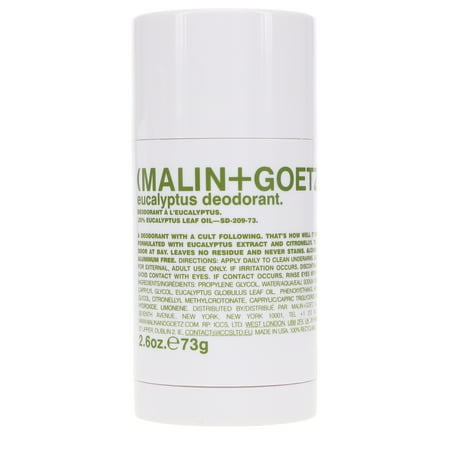

Malin+Goetz Eucalyptus Deodorant 2.6 oz
Analysis updated August 2026 · How Scout scores
At a glance
Summary
This deodorant is aluminum-free, which is a positive aspect, but it contains propylene glycol, a controversial ingredient due to its potential to cause skin irritation and allergic reactions. Additionally, the presence of synthetic fragrance components like limonene and phenoxyethanol further impacts its safety profile. While it includes beneficial eucalyptus oil, the combination of synthetic ingredients and processing level limits its overall score.
Key ingredients 11
Eucalyptus Globulus Leaf OilGood
Eucalyptus oil is known for its antimicrobial properties, making it a beneficial ingredient in deodorants. It provides a natural fragrance and helps to reduce odor-causing bacteria. It is generally considered safe when used in appropriate concentrations.
Risks
Can cause skin irritation if used in high concentrations.
Benefits
Offers natural antimicrobial properties and a refreshing scent.
Water/Aqua/EauNeutral
Water is a universal solvent and is used as a base in many cosmetic formulations. It helps to dissolve other ingredients and provides a medium for application. It is generally considered safe and non-irritating.
Benefits
Acts as a solvent and helps in the even distribution of other ingredients.
Sodium StearateNeutral
Sodium stearate is a common soap ingredient used as a thickener and stabilizer in deodorants. It helps to form a solid stick and provides a smooth application. It is generally considered safe for use in cosmetics.
Risks
May cause mild irritation in very sensitive skin types.
Benefits
Provides structure to the deodorant stick and aids in smooth application.
Caprylyl GlycolNeutral
Caprylyl glycol is a skin-conditioning agent that also acts as a preservative. It helps to improve the moisture content of the skin. It is generally well-tolerated and considered safe.
Risks
Rarely, it may cause mild irritation in sensitive individuals.
Benefits
Enhances skin hydration and acts as a mild preservative.
Hexylene GlycolNeutral
Hexylene glycol is used as a solvent and viscosity agent in cosmetics. It helps to improve the texture and spreadability of the product. It is generally considered safe for use in cosmetics.
Risks
May cause mild irritation in sensitive skin types.
Benefits
Improves product texture and enhances spreadability.
Citronellyl MethylcrotonateNeutral
Citronellyl methylcrotonate is used as a fragrance ingredient in cosmetics. It provides a pleasant scent to the product. It is generally considered safe for use in cosmetics.
Risks
Potential for allergic reactions in fragrance-sensitive individuals.
Benefits
Adds a pleasant fragrance to the product.
Caprylic/Capric TriglycerideNeutral
Caprylic/capric triglyceride is an emollient derived from coconut oil and glycerin. It helps to moisturize and soften the skin. It is generally considered safe and non-irritating.
Risks
Very low risk of irritation or allergic reaction.
Benefits
Moisturizes and softens the skin, enhancing product feel.
Sodium HydroxideNeutral
Sodium hydroxide is used to adjust the pH of cosmetic formulations. It is a strong base and must be used in controlled amounts. It is generally considered safe when used appropriately.
Risks
Can cause irritation if used in high concentrations.
Benefits
Helps to maintain the desired pH level of the product.
Propylene GlycolBad
Propylene glycol is a petroleum-derived compound commonly used as a humectant. It can cause skin irritation, especially in sensitive individuals. Its use in deodorants is controversial due to its potential to cause allergic reactions.
Risks
May cause skin irritation and allergic reactions in some individuals.
Benefits
Helps to retain moisture in the product, preventing it from drying out.
PhenoxyethanolBad
Processed additive flagged under Scout's ingredient doctrine.
Risks
Potential for skin irritation and allergic reactions in sensitive individuals.
Benefits
Effective preservative that extends the shelf life of the product.
LimoneneBad
Processed additive flagged under Scout's ingredient doctrine.
Risks
Potential allergen that may cause skin irritation in sensitive individuals.
Benefits
Adds a fresh, citrus fragrance to the product.
Get the full breakdown in the Scout appTake Scout shopping
Scan any product to see lab results, healthy alternatives, and your personalized analysis.
Download on theApp Store GET IT ONGoogle PlayAmazon pricing & content
Amazon price as of . Product prices and availability are accurate as of the date/time indicated and are subject to change. Any price and availability information displayed on Amazon.com at the time of purchase will apply to the purchase of this product.
CERTAIN CONTENT THAT APPEARS ON THIS SITE COMES FROM AMAZON. THIS CONTENT IS PROVIDED “AS IS” AND IS SUBJECT TO CHANGE OR REMOVAL AT ANY TIME.