
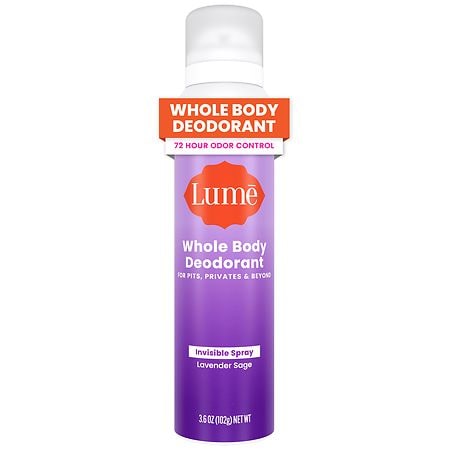
Lume Whole Body Deodorant for Women Spray Deodorant Aluminum Free Lavender Sage 3.6 oz
Analysis updated August 2026 · How Scout scores
At a glance
Summary
This deodorant is aluminum-free, which is a positive aspect, but it contains synthetic fragrance, which can include potentially harmful substances and is associated with allergic reactions. The presence of beneficial ingredients like Caprylic/Capric Triglyceride and Coco-Caprylate, which are derived from coconut oil and known for their skin-conditioning properties, helps balance the formulation. However, the inclusion of synthetic fragrance prevents it from scoring higher.
Key ingredients 17
Caprylic/Capric TriglycerideGood
Caprylic/Capric Triglyceride is derived from coconut oil and glycerin. It is used as an emollient and helps to improve the spreadability of the product. It is generally well-tolerated by the skin.
Risks
There are minimal risks associated with this ingredient, though it may cause mild irritation in very sensitive individuals.
Benefits
It provides moisturizing properties and enhances the texture of the product.
Coco-CaprylateGood
Coco-Caprylate is an emollient derived from coconut oil. It is used to enhance the spreadability and absorption of the product. It is known for its skin-conditioning properties.
Risks
There are minimal risks associated with this ingredient.
Benefits
It provides a silky feel and helps to moisturize the skin.
WaterNeutral
Water is a common solvent used in many cosmetic products. It helps to dissolve other ingredients and provides a base for the formulation. It is generally considered safe and non-irritating.
Risks
There are no significant risks associated with water in cosmetic formulations.
Benefits
Water helps to hydrate the skin and acts as a carrier for other beneficial ingredients.
SD Alcohol 40BNeutral
SD Alcohol 40B is a denatured alcohol used as a solvent and astringent in cosmetics. It helps to dissolve other ingredients and provides a quick-drying finish. However, it can be drying to the skin if used in high concentrations.
Risks
Prolonged use of products with high alcohol content can lead to skin dryness and irritation.
Benefits
It provides a quick-drying effect and helps to dissolve other active ingredients in the formulation.
Oleyl AlcoholNeutral
Oleyl Alcohol is a fatty alcohol used as an emollient and thickener in cosmetic formulations. It helps to improve the texture and feel of the product. It is generally considered safe for use in cosmetics.
Risks
There are minimal risks, though it may cause mild irritation in sensitive skin types.
Benefits
It provides moisturizing benefits and improves the texture of the formulation.
Mandelic AcidNeutral
Mandelic Acid is an alpha hydroxy acid (AHA) used for its exfoliating properties. It helps to improve skin texture and tone. It is generally well-tolerated compared to other AHAs.
Risks
Overuse can lead to skin irritation and increased sensitivity to sunlight.
Benefits
It helps to exfoliate the skin and improve its overall appearance.
UndecaneNeutral
Undecane is a hydrocarbon used as an emollient and solvent in cosmetics. It helps to improve the texture and spreadability of the product. It is considered safe for use in cosmetics.
Risks
There are minimal risks associated with this ingredient.
Benefits
It enhances the texture and feel of the product.
CaffeineNeutral
Caffeine is used in cosmetics for its antioxidant properties and ability to improve circulation. It is often included in products to reduce puffiness and improve skin tone. It is generally considered safe for topical use.
Risks
There are minimal risks, though it may cause mild irritation in sensitive individuals.
Benefits
It provides antioxidant benefits and can help to reduce puffiness.
TridecaneNeutral
Tridecane is a hydrocarbon used as an emollient and solvent in cosmetics. It helps to improve the texture and spreadability of the product. It is considered safe for use in cosmetics.
Risks
There are minimal risks associated with this ingredient.
Benefits
It enhances the texture and feel of the product.
NitrogenNeutral
Nitrogen is used as a propellant in aerosol products. It is an inert gas that helps to dispense the product evenly. It is considered safe for use in cosmetics.
Risks
There are minimal risks associated with this ingredient.
Benefits
It helps to dispense the product evenly without affecting the formulation.
Citronellyl MethylcrotonateNeutral
Citronellyl Methylcrotonate is used as a fragrance ingredient in cosmetics. It provides a floral scent to the product. It is generally considered safe for use in cosmetics.
Risks
There are minimal risks, though it may cause mild irritation in sensitive individuals.
Benefits
It adds a pleasant floral scent to the product.
Benzoic AcidNeutral
Benzoic Acid is used as a preservative in cosmetics. It helps to prevent microbial growth and extend the shelf life of the product. It is generally considered safe for use in cosmetics.
Risks
It can cause skin irritation in sensitive individuals.
Benefits
It acts as a preservative and helps to maintain product stability.
Citric AcidNeutral
Citric Acid is used to adjust the pH of cosmetic formulations. It helps to maintain the stability and effectiveness of the product. It is generally considered safe for use in cosmetics.
Risks
It can cause skin irritation in sensitive individuals.
Benefits
It helps to maintain the pH balance and stability of the product.
Sodium HydroxideNeutral
Sodium Hydroxide is used to adjust the pH of cosmetic formulations. It helps to maintain the stability and effectiveness of the product. It is generally considered safe for use in cosmetics when used in low concentrations.
Risks
In high concentrations, it can cause skin irritation and burns.
Benefits
It helps to maintain the pH balance and stability of the product.
Benzyl AlcoholBad
Processed additive flagged under Scout's ingredient doctrine.
Risks
It can cause skin irritation and allergic reactions in sensitive individuals.
Benefits
It acts as a preservative and helps to maintain product stability.
Sorbic AcidBad
Processed additive flagged under Scout's ingredient doctrine.
Risks
It can cause skin irritation in sensitive individuals.
Benefits
It acts as a preservative and helps to maintain product stability.
FragranceVery Bad
Fragrance is a term used for a mixture of various scent chemicals. It can include phthalates and other potentially harmful substances. It is often associated with allergic reactions and skin irritation.
Risks
Fragrance can cause skin irritation and allergic reactions in sensitive individuals.
Benefits
It provides a pleasant scent to the product.
Get the full breakdown in the Scout appTake Scout shopping
Scan any product to see lab results, healthy alternatives, and your personalized analysis.
Download on theApp Store GET IT ONGoogle PlayAmazon pricing & content
Amazon price as of . Product prices and availability are accurate as of the date/time indicated and are subject to change. Any price and availability information displayed on Amazon.com at the time of purchase will apply to the purchase of this product.
CERTAIN CONTENT THAT APPEARS ON THIS SITE COMES FROM AMAZON. THIS CONTENT IS PROVIDED “AS IS” AND IS SUBJECT TO CHANGE OR REMOVAL AT ANY TIME.