
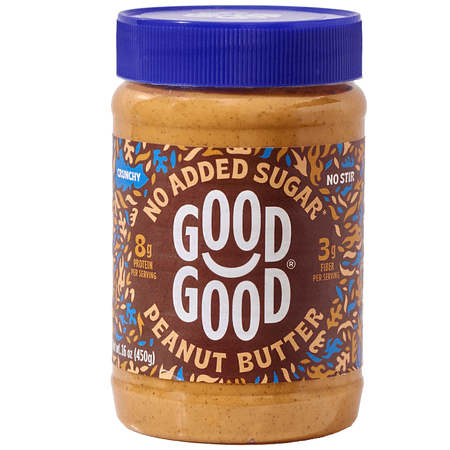


Good Good Peanut Butter Crunchy 16 oz
Summary
This peanut butter contains beneficial ingredients like roasted peanuts and chicory root fiber, which provide healthy fats and prebiotic fiber. However, the presence of palm oil, which is high in saturated fats and has environmental concerns, affects its overall healthiness. The product is moderately processed, which limits its score despite having a relatively clean ingredient list.
At a glance
Key ingredients 5
Roasted PeanutsVery Good
Roasted peanuts are a rich source of protein and healthy fats. They provide essential nutrients such as magnesium, vitamin E, and niacin. The roasting process enhances flavor without significantly degrading nutritional value.
Risks
Potential allergen for individuals with peanut allergies.
Benefits
High in protein and healthy fats, supporting muscle growth and heart health. Contains antioxidants that may reduce inflammation.
Peanut OilGood
Peanut oil is a source of monounsaturated fats, which are beneficial for heart health. It has a high smoke point, making it suitable for cooking at high temperatures. The oil is extracted from peanuts, retaining some of their nutritional benefits.
Risks
May cause allergic reactions in individuals with peanut allergies.
Benefits
Rich in monounsaturated fats that support cardiovascular health. Provides vitamin E, an antioxidant that protects cells from damage.
Chicory Root FiberGood
Chicory root fiber, also known as inulin, is a prebiotic fiber that supports digestive health. It promotes the growth of beneficial gut bacteria and aids in maintaining regular bowel movements. The fiber is extracted from chicory roots, providing a natural source of dietary fiber.
Risks
Excessive consumption may cause digestive discomfort such as bloating or gas.
Benefits
Supports gut health by promoting beneficial bacteria. May improve bowel regularity and enhance mineral absorption.
Palm OilBad
Palm oil is high in saturated fats, which can raise cholesterol levels if consumed in excess. It is often criticized for its environmental impact due to deforestation. The oil is refined, which may reduce its nutritional quality.
Risks
High saturated fat content may contribute to heart disease if consumed excessively. Environmental concerns related to deforestation and habitat destruction.
Benefits
Provides a stable cooking oil with a high smoke point. Contains some vitamin E, which has antioxidant properties.
Sea SaltGood
Unrefined sea salt — a minimally processed, natural source of sodium and essential trace minerals, and a legitimate whole-food seasoning. Treated as a positive ingredient.
Risks
Excessive salt intake can lead to high blood pressure and cardiovascular issues.
Benefits
Adds flavor to foods and contains trace minerals. Less processed than regular table salt.
Processing
Processed Foods
Get the full breakdown in the Scout app
Scan any product to see lab results, healthy alternatives, and your personalized analysis.
Download on theApp Store