
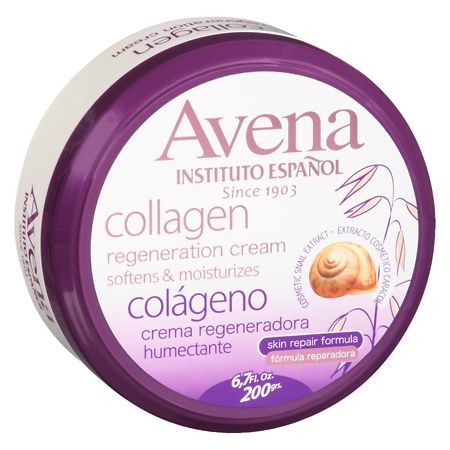
Avena Collagen Regeneration Hand and Body Cream - 6.8 fl oz: Damage Repair, For Dry Skin, Unscented, Jar
Summary
This hand and body cream is processed and contains a mix of beneficial and concerning ingredients. While it is unscented, which avoids the pitfalls of synthetic fragrances, the presence of processed components limits its score. The product does not contain any heavily penalized ingredients like parabens or formaldehyde releasers, but its processing level and lack of a fully natural ingredient list prevent it from achieving a higher rating.
At a glance
Key ingredients 26
Aqua (Water)
Aqua is used as a solvent in cosmetic formulations. It helps dissolve other ingredients and provides a base for the product. It is essential for hydration and texture.
Risks
There are no significant risks associated with water in cosmetics.
Benefits
Water is crucial for hydration and helps in the application of the product.
Paraffinum Liquidum
Paraffinum Liquidum, also known as mineral oil, is used as an emollient. It creates a barrier on the skin to prevent moisture loss. It is widely used for its moisturizing properties.
Risks
There are concerns about it being a petrochemical and potential for pore-clogging.
Benefits
It is effective in preventing moisture loss and is generally considered safe for use in cosmetics.
Propylene Glycol
Propylene Glycol is a humectant that helps retain moisture in the skin. It also acts as a solvent for other ingredients. It is commonly used in skincare products for its moisturizing properties.
Risks
It can cause irritation in sensitive skin types.
Benefits
It helps keep the skin hydrated and enhances the absorption of other ingredients.
Dimethicone
Dimethicone is a silicone-based polymer used as a skin protectant. It provides a smooth application and helps lock in moisture. It is often used to improve the texture of skincare products.
Risks
Some people may experience skin irritation or breakouts.
Benefits
It forms a protective barrier on the skin, preventing moisture loss and improving texture.
Cetyl Alcohol
Cetyl Alcohol is a fatty alcohol used as an emollient and thickener. It helps stabilize and thicken formulations. It is derived from natural sources and is considered safe for use.
Risks
It is generally safe, but in rare cases, it may cause irritation.
Benefits
It provides moisturizing properties and improves the texture of the product.
Cetearyl Alcohol
Cetearyl Alcohol is a mixture of fatty alcohols used as an emollient and emulsifier. It helps stabilize and thicken formulations. It is derived from natural sources and is considered safe for use.
Risks
It is generally safe, but in rare cases, it may cause irritation.
Benefits
It provides moisturizing properties and improves the texture of the product.
Cetearyl Ethylhexanoate
Cetearyl Ethylhexanoate is an ester used as an emollient. It provides a silky feel and helps improve the spreadability of the product. It is commonly used in skincare for its lightweight texture.
Risks
It is generally considered safe with minimal risk of irritation.
Benefits
It enhances the texture and feel of the product, making it more pleasant to use.
Isopropyl Myristate
Isopropyl Myristate is an ester used as an emollient and thickening agent. It helps improve the texture and absorption of the product. It is commonly used in skincare for its lightweight feel.
Risks
It can cause irritation or breakouts in some individuals.
Benefits
It enhances the texture and absorption of the product, making it more effective.
PEG-8 Distearate
PEG-8 Distearate is an emulsifier used to stabilize formulations. It helps blend oil and water-based ingredients. It is commonly used in cosmetics for its emulsifying properties.
Risks
There are concerns about potential contamination with ethylene oxide and 1,4-dioxane.
Benefits
It helps maintain the stability and consistency of the product.
Glyceryl Stearate
Glyceryl Stearate is an emulsifier and emollient. It helps blend oil and water-based ingredients and provides moisturizing properties. It is derived from natural sources and is considered safe for use.
Risks
It is generally safe, but in rare cases, it may cause irritation.
Benefits
It provides moisturizing properties and improves the texture of the product.
PEG-100 Stearate
PEG-100 Stearate is an emulsifier used to stabilize formulations. It helps blend oil and water-based ingredients. It is commonly used in cosmetics for its emulsifying properties.
Risks
There are concerns about potential contamination with ethylene oxide and 1,4-dioxane.
Benefits
It helps maintain the stability and consistency of the product.
Phenoxyethanol
Phenoxyethanol is a preservative used to prevent microbial growth. It is commonly used in cosmetics as an alternative to parabens. It is effective in extending the shelf life of products.
Risks
It can cause irritation in sensitive skin types.
Benefits
It helps maintain the safety and efficacy of the product by preventing contamination.
Triethanolamine
Triethanolamine is used as a pH balancer and emulsifier. It helps stabilize formulations and adjust pH levels. It is commonly used in cosmetics for its multifunctional properties.
Risks
There are concerns about potential formation of nitrosamines, which are carcinogenic.
Benefits
It helps maintain the stability and pH balance of the product.
Carbomer
Carbomer is a thickening agent used to stabilize formulations. It helps create a gel-like consistency and improves texture. It is commonly used in cosmetics for its thickening properties.
Risks
It is generally considered safe with minimal risk of irritation.
Benefits
It enhances the texture and stability of the product.
Parfum (Fragrance)
Parfum is used to add scent to cosmetic products. It enhances the sensory experience of using the product. However, it is a common cause of allergic reactions and skin irritation.
Risks
Fragrance can cause skin irritation and allergic reactions.
Benefits
It provides a pleasant scent to the product.
Caprylyl Glycol
Caprylyl Glycol is a humectant and skin conditioning agent. It helps retain moisture and improve the texture of the product. It is commonly used in cosmetics for its moisturizing properties.
Risks
It is generally considered safe with minimal risk of irritation.
Benefits
It helps keep the skin hydrated and enhances the texture of the product.
Allantoin
Allantoin is a skin protectant and soothing agent. It helps calm irritated skin and promotes healing. It is commonly used in skincare for its soothing properties.
Risks
It is generally considered safe with minimal risk of irritation.
Benefits
It helps soothe and protect the skin, promoting healing.
Imidazolidinyl Urea
Imidazolidinyl Urea is a preservative used to prevent microbial growth. It is effective in extending the shelf life of products. However, it is a formaldehyde releaser and can cause skin irritation.
Risks
It can release formaldehyde, which is a known irritant and potential carcinogen.
Benefits
It helps maintain the safety and efficacy of the product by preventing contamination.
Tetrasodium EDTA
Tetrasodium EDTA is a chelating agent used to improve stability. It helps bind metal ions and prevent them from affecting the product. It is commonly used in cosmetics for its stabilizing properties.
Risks
It is generally considered safe, but there are concerns about environmental impact.
Benefits
It helps maintain the stability and efficacy of the product.
Niacinamide
Niacinamide is a form of Vitamin B3 used as a skin conditioning agent. It helps improve skin texture and tone. It is commonly used in skincare for its anti-inflammatory and brightening properties.
Risks
It is generally considered safe with minimal risk of irritation.
Benefits
It helps improve skin texture, tone, and provides anti-inflammatory benefits.
Soluble Collagen
Soluble Collagen is used as a skin conditioning agent. It helps improve skin elasticity and hydration. It is commonly used in skincare for its anti-aging properties.
Risks
It is generally considered safe with minimal risk of irritation.
Benefits
It helps improve skin elasticity and hydration, providing anti-aging benefits.
Xanthan Gum
Xanthan Gum is a thickening agent used to stabilize formulations. It helps create a gel-like consistency and improves texture. It is commonly used in cosmetics for its thickening properties.
Risks
It is generally considered safe with minimal risk of irritation.
Benefits
It enhances the texture and stability of the product.
Snail Secretion Filtrate
Snail Secretion Filtrate is used as a skin conditioning agent. It helps improve skin texture and hydration. It is commonly used in skincare for its regenerative properties.
Risks
It is generally considered safe with minimal risk of irritation.
Benefits
It helps improve skin texture, hydration, and provides regenerative benefits.
Ethylhexylglycerin
Ethylhexylglycerin is a skin conditioning agent and preservative enhancer. It helps improve the efficacy of preservatives and provides moisturizing properties. It is commonly used in cosmetics for its multifunctional properties.
Risks
It is generally considered safe with minimal risk of irritation.
Benefits
It enhances the efficacy of preservatives and provides moisturizing benefits.
Glucose
Glucose is used as a humectant and skin conditioning agent. It helps retain moisture and improve skin texture. It is commonly used in cosmetics for its moisturizing properties.
Risks
It is generally considered safe with minimal risk of irritation.
Benefits
It helps keep the skin hydrated and improves texture.
Carrageenan (Chondrus Crispus)
Carrageenan is used as a thickening and stabilizing agent. It helps improve the texture and consistency of the product. It is derived from seaweed and is commonly used in cosmetics for its thickening properties.
Risks
There are concerns about potential skin irritation.
Benefits
It enhances the texture and stability of the product.
Processing
Processed Foods
Get the full breakdown in the Scout app
Scan any product to see lab results, healthy alternatives, and your personalized analysis.
Download on theApp Store