
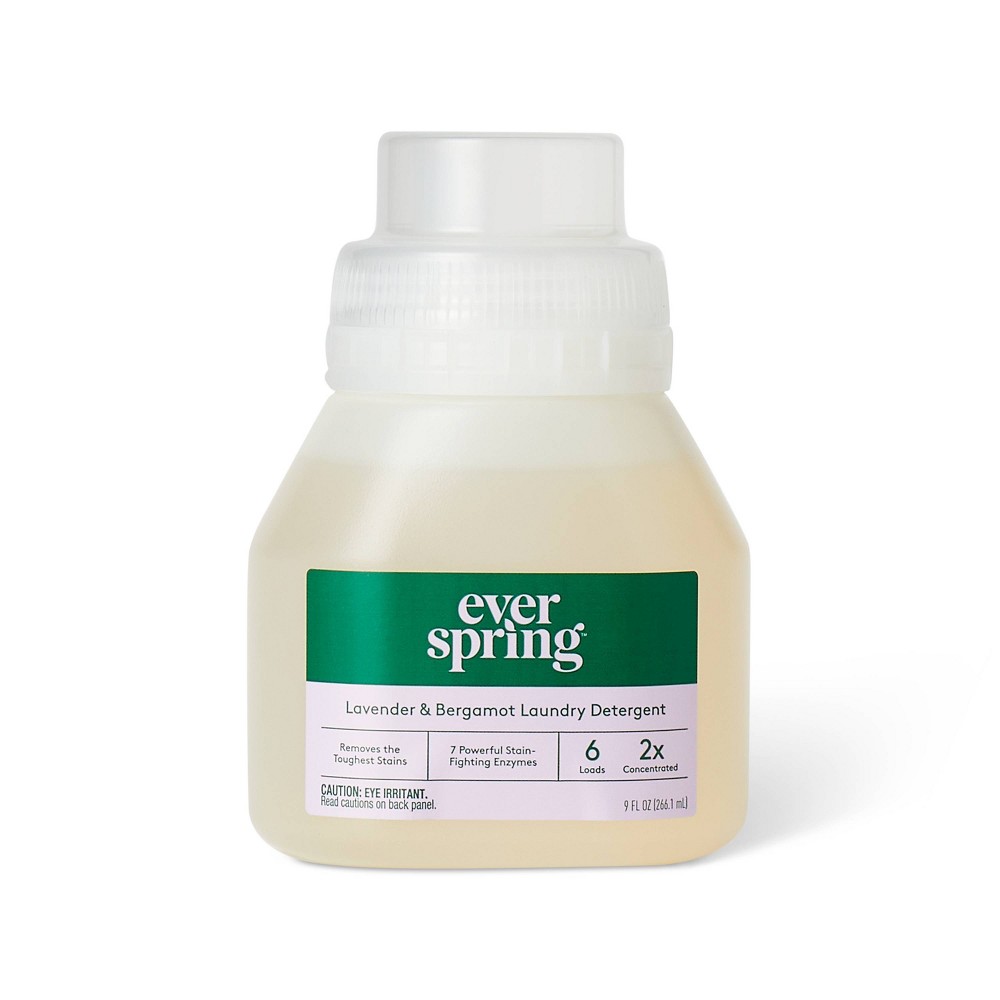
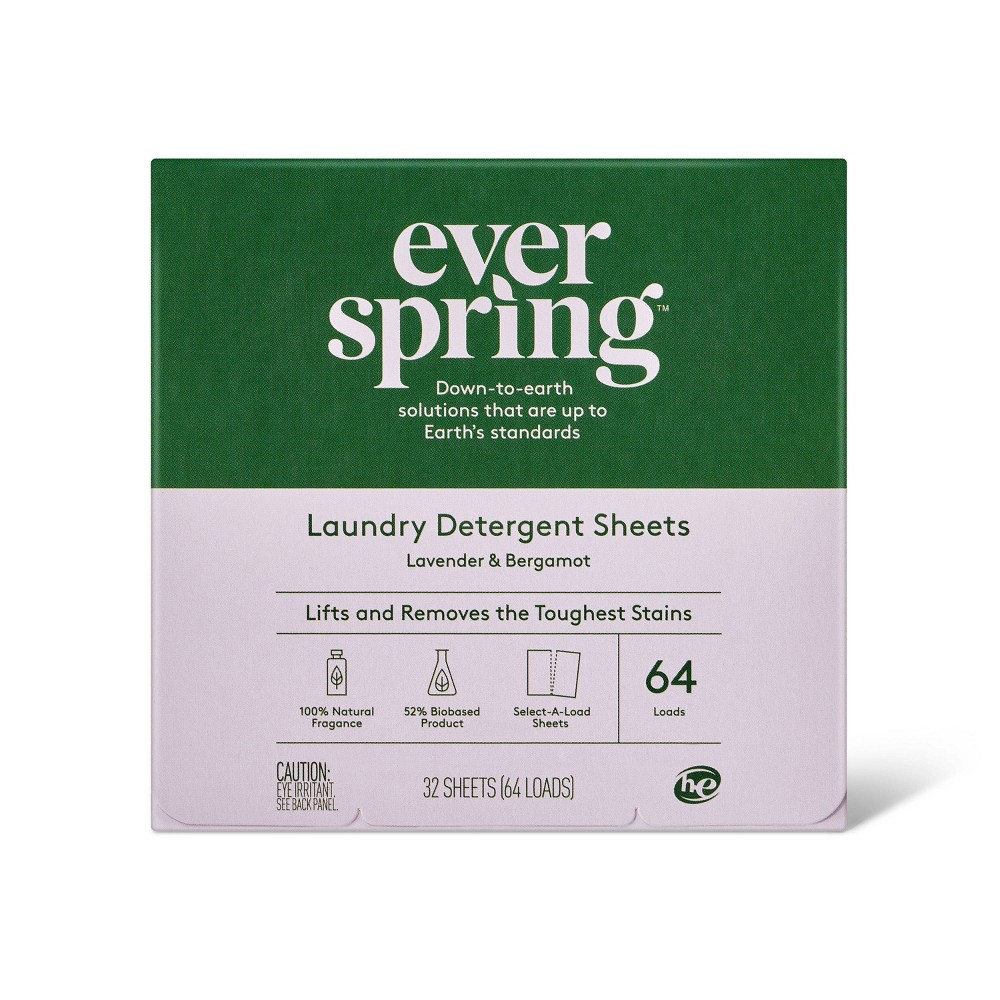
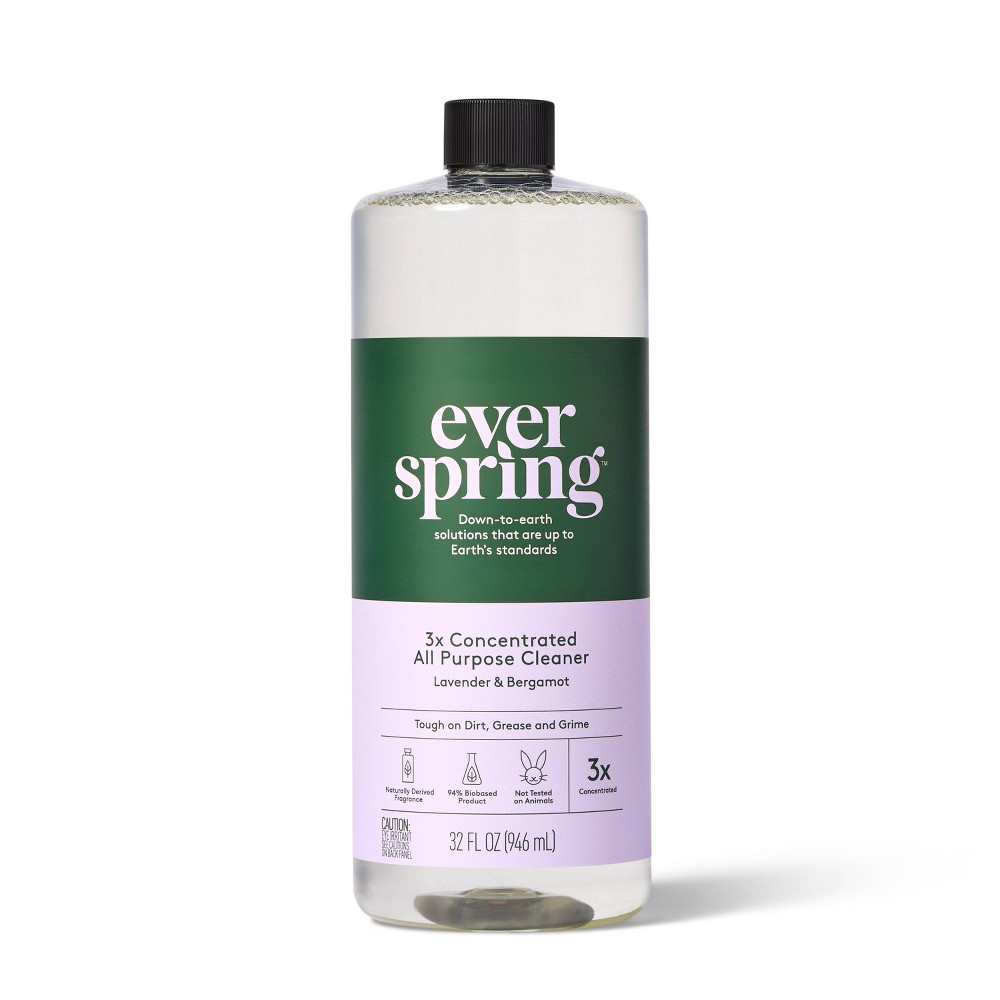
Lavender & Bergamot Laundry Detergent Trial Size - 9 fl oz - Everspring
Summary
This laundry detergent is processed and contains synthetic fragrances, which can impact indoor air quality and are not environmentally friendly. However, it includes plant-derived ingredients and essential oils like lavender and bergamot, which are more sustainable and safer for indoor use. The balance of plant-based components with some synthetic elements results in a moderate score.
At a glance
Key ingredients 12
WATER
Water is used as a solvent to dissolve other ingredients and facilitate the cleaning process. It is a neutral component that does not contribute to the cleaning action itself. Water is essential for the formulation of liquid detergents.
Risks
There are no significant risks associated with water in cleaning products.
Benefits
Water is a safe and natural solvent that helps to evenly distribute other ingredients.
LAURETH-6
Laureth-6 is a surfactant that helps to break down oils and dirt, making them easier to wash away. It is derived from ethoxylated lauryl alcohol. This ingredient is commonly used in cleaning products for its effective cleaning properties.
Risks
There may be concerns about skin irritation and environmental impact due to its synthetic nature.
Benefits
Laureth-6 is effective in removing grease and dirt, enhancing the cleaning power of the detergent.
SODIUM LAURYL SULFATE
Sodium lauryl sulfate is a surfactant that creates lather and helps to remove dirt and oil. It is a common ingredient in many cleaning and personal care products. This ingredient is known for its strong cleaning abilities.
Risks
It can cause skin irritation and dryness with prolonged exposure.
Benefits
Sodium lauryl sulfate is effective at breaking down grease and grime, making it a powerful cleaning agent.
SODIUM OLEATE
Sodium oleate is a surfactant and emulsifier that helps to mix oil and water, improving the cleaning efficiency. It is derived from oleic acid, a fatty acid. This ingredient is often used in soaps and detergents.
Risks
There are minimal risks associated with sodium oleate, though it can cause mild irritation in sensitive individuals.
Benefits
Sodium oleate is biodegradable and contributes to the product's cleaning power.
SODIUM BICARBONATE
Sodium bicarbonate, also known as baking soda, is used for its deodorizing and mild abrasive properties. It helps to neutralize odors and can enhance the cleaning process. This ingredient is a common household cleaning agent.
Risks
There are no significant risks associated with sodium bicarbonate in cleaning products.
Benefits
Sodium bicarbonate is a natural and safe ingredient that helps to neutralize odors and clean surfaces.
BENZISOTHIAZOLINONE
Benzisothiazolinone is a preservative used to prevent microbial growth in cleaning products. It helps to extend the shelf life of the product. This ingredient is effective in maintaining product stability.
Risks
It can cause skin irritation and allergic reactions in some individuals.
Benefits
Benzisothiazolinone helps to preserve the product by preventing microbial contamination.
SODIUM LAURYL ETHER SULFATE
Sodium lauryl ether sulfate is a surfactant that helps to create foam and remove dirt and oil. It is similar to sodium lauryl sulfate but is considered to be milder. This ingredient is widely used in cleaning products for its effective cleaning properties.
Risks
It may cause skin irritation and dryness with prolonged exposure.
Benefits
Sodium lauryl ether sulfate is effective in cleaning and foaming, enhancing the product's performance.
FRAGRANCE
Fragrance is added to cleaning products to provide a pleasant scent. It is a mixture of various aromatic compounds. This ingredient is used to enhance the sensory experience of using the product.
Risks
Synthetic fragrances can cause allergic reactions and may contain harmful chemicals.
Benefits
Fragrance improves the user experience by providing a pleasant smell.
LINALOOL
Linalool is a naturally occurring terpene alcohol found in many flowers and spice plants. It is used for its pleasant floral scent. This ingredient is commonly used in fragrances and cleaning products.
Risks
Linalool can cause allergic reactions in sensitive individuals.
Benefits
Linalool provides a natural and pleasant scent to the product.
MANNANASE ENZYME
Mannanase enzyme is used to break down mannans, a type of polysaccharide found in plant cell walls. It enhances the cleaning power by breaking down complex carbohydrates. This ingredient is beneficial in improving the effectiveness of the detergent.
Risks
There are minimal risks associated with mannanase enzyme in cleaning products.
Benefits
Mannanase enzyme is a plant-based enzyme that improves cleaning efficiency.
SPRING WATER
Spring water is used as a solvent and carrier for other ingredients in the detergent. It is a natural source of water that may contain minerals. This ingredient is essential for the formulation of liquid cleaning products.
Risks
There are no significant risks associated with spring water in cleaning products.
Benefits
Spring water is a natural and safe solvent that helps to distribute other ingredients.
AMYLASE
Amylase is an enzyme that breaks down starches into sugars, aiding in the removal of starchy stains. It is derived from natural sources and is used to enhance cleaning performance. This ingredient is effective in improving the stain-removing capabilities of the detergent.
Risks
There are minimal risks associated with amylase in cleaning products.
Benefits
Amylase is a plant-based enzyme that enhances the cleaning power of the detergent.
Processing
Processed Foods
Get the full breakdown in the Scout app
Scan any product to see lab results, healthy alternatives, and your personalized analysis.
Download on theApp Store