
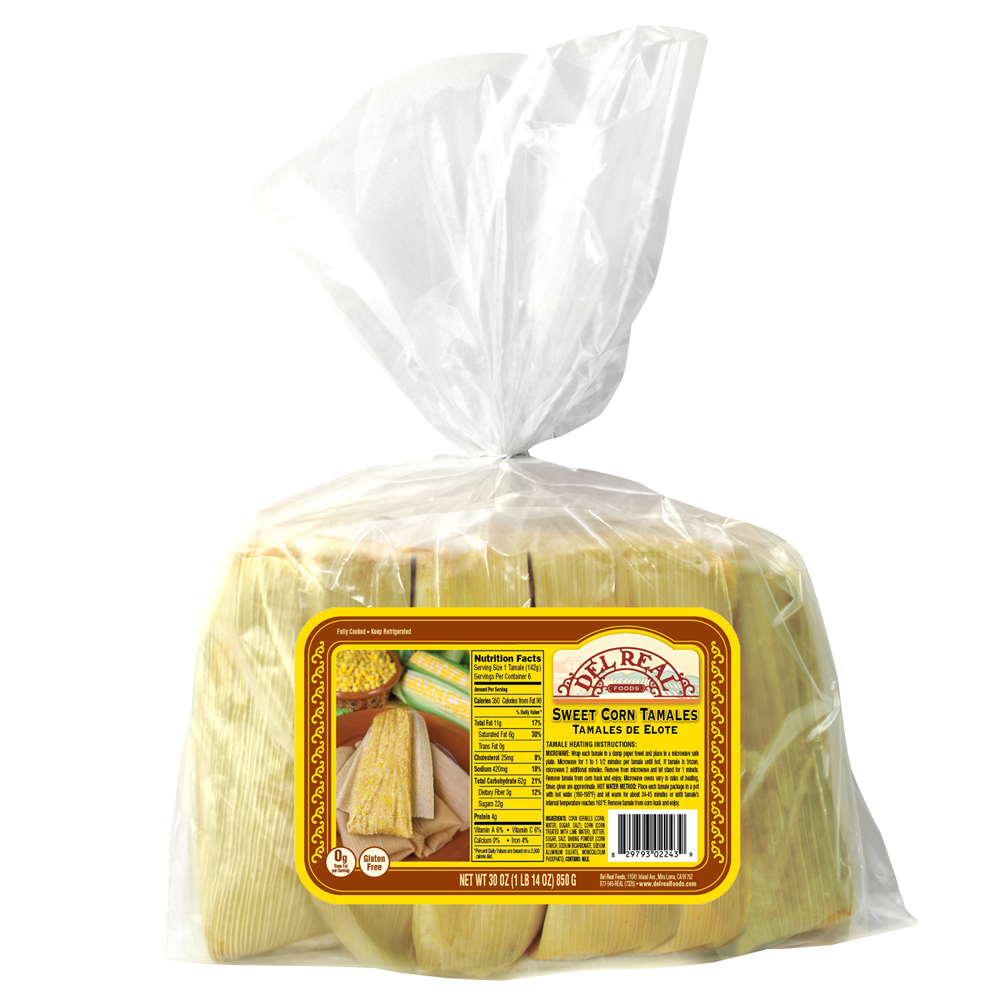


Del Real Foods Sweet Corn Tamales
Analysis updated May 2026 · How Scout scores
At a glance
Summary
The sweet corn tamales contain beneficial ingredients like corn kernels and nixtamalized corn, which are minimally processed and provide essential nutrients. However, the product is processed and includes refined sugar and sodium aluminum sulfate, which are considered harmful due to their potential health impacts. Additionally, the presence of multiple additives contributes to a moderate processing level, affecting the overall healthiness of the product.
Key ingredients 10
Corn kernelsGood
Corn kernels are a whole food providing fiber and essential nutrients. They are minimally processed, retaining most of their natural nutritional profile. The addition of water, sugar, and salt is typical for preservation and flavor enhancement.
Risks
Excessive consumption of added sugar and salt may lead to health issues such as hypertension and increased calorie intake.
Benefits
Provides dietary fiber and essential vitamins like B vitamins and minerals such as magnesium and phosphorus.
Corn treated with lime waterGood
This ingredient is nixtamalized corn, a traditional process that enhances nutritional value by increasing calcium content and making niacin more bioavailable. The process also improves the texture and flavor of the corn. It is a minimally processed ingredient with cultural significance.
Benefits
Improves calcium intake and enhances the bioavailability of nutrients like niacin, supporting overall health.
ButterNeutral
Butter is a source of saturated fats and provides flavor and texture to foods. It is a natural product made from cream, but its high saturated fat content can be a concern for heart health. Moderation is key to balancing its culinary benefits with health considerations.
Risks
High in saturated fats, which may contribute to cardiovascular disease if consumed in excess.
Benefits
Contains fat-soluble vitamins like A, D, E, and K, and provides a rich flavor to dishes.
SaltNeutral
Salt is used to enhance flavor and preserve food. While it is essential for bodily functions, excessive intake can lead to health issues such as hypertension. It is a common ingredient in processed foods for taste and preservation.
Risks
High sodium intake is associated with increased blood pressure and cardiovascular risk.
Benefits
Essential for maintaining fluid balance and nerve function in the body.
Baking powderNeutral
Baking powder is a leavening agent used to make baked goods rise. It contains sodium bicarbonate and acids like sodium aluminum sulfate and monocalcium phosphate. While generally safe, some individuals may be sensitive to aluminum compounds.
Risks
Potential aluminum exposure from sodium aluminum sulfate, though generally considered safe in small amounts.
Corn starchNeutral
Corn starch is a refined carbohydrate used as a thickening agent in foods. It is highly processed and provides no significant nutrients other than calories. It is commonly used in baking and cooking for texture.
See more about Corn starch →Sodium bicarbonateNeutral
Sodium bicarbonate, or baking soda, is used as a leavening agent in baking. It is a simple chemical compound that reacts with acids to produce carbon dioxide gas, helping dough rise. It is generally recognized as safe when used in typical culinary amounts.
Risks
Excessive consumption can lead to alkalosis and electrolyte imbalances.
Monocalcium phosphateNeutral
Monocalcium phosphate is a leavening agent used in baking powders. It reacts with baking soda to produce carbon dioxide, aiding in the rising of dough. It is generally recognized as safe when used in food applications.
See more about Monocalcium phosphate →SugarBad
Refined sugar is a high-calorie ingredient with no essential nutrients, contributing to empty calorie intake. It is associated with various health issues when consumed in excess, such as obesity and dental cavities. Its inclusion in processed foods is often for sweetness and preservation.
Risks
Excessive sugar intake is linked to obesity, type 2 diabetes, and dental problems.
Sodium aluminum sulfateBad
Sodium aluminum sulfate is used in baking powders as an acidulant. Concerns exist about aluminum exposure and its potential link to neurological issues. It is used to provide a delayed reaction in baking, allowing for better texture in baked goods.
Risks
Potential aluminum exposure, which has been linked to neurological concerns in high amounts.
Processing
Processed Foods
Get the full breakdown in the Scout appTake Scout shopping
Scan any product to see lab results, healthy alternatives, and your personalized analysis.
Download on theApp Store GET IT ONGoogle PlayAmazon pricing & content
Amazon price as of . Product prices and availability are accurate as of the date/time indicated and are subject to change. Any price and availability information displayed on Amazon.com at the time of purchase will apply to the purchase of this product.
CERTAIN CONTENT THAT APPEARS ON THIS SITE COMES FROM AMAZON. THIS CONTENT IS PROVIDED “AS IS” AND IS SUBJECT TO CHANGE OR REMOVAL AT ANY TIME.