
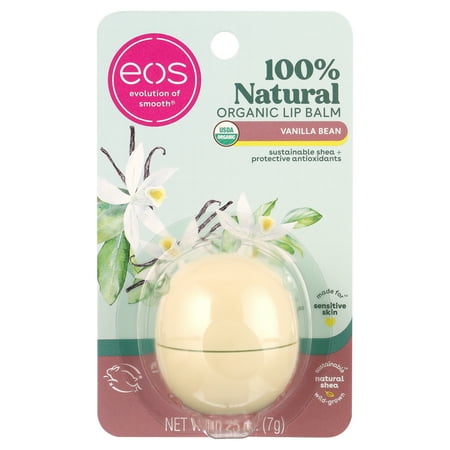


Eos 100% Natural & Organic Lip Balm Sphere - Vanilla | 0.25 oz/1pk
Analysis updated August 2026 · How Scout scores
At a glance
Summary
This lip balm features a clean and natural ingredient list, including beneficial oils and butters like sunflower seed oil, coconut oil, and shea butter, which are known for their moisturizing properties. The product is minimally processed and free from synthetic chemicals, with the only minor concern being the inclusion of 'flavor' which can sometimes be a source of allergens. Overall, the natural composition and minimal processing contribute to a high rating.
Key ingredients 14
Helianthus Annuus (Sunflower) Seed OilVery Good
Sunflower seed oil is a natural emollient that helps to moisturize and soften the skin. It is rich in essential fatty acids and vitamin E, which are beneficial for skin health. Its use in cosmetics is generally considered safe and beneficial.
Risks
There are minimal risks associated with sunflower seed oil, though some individuals may experience mild allergic reactions.
Benefits
It provides excellent moisturizing properties and helps to maintain the skin's natural barrier.
Beeswax/Cera Alba (Cire d’abeille)Very Good
Beeswax is a natural wax produced by honey bees and is used as an occlusive agent in cosmetics. It helps to lock in moisture and protect the skin from environmental factors. Its natural origin and skin-friendly properties make it a popular choice in skincare.
Risks
Beeswax is generally safe, but it may cause allergic reactions in individuals sensitive to bee products.
Benefits
It forms a protective barrier on the skin, helping to retain moisture and prevent dryness.
Cocos Nucifera (Coconut) OilVery Good
Coconut oil is a natural oil known for its moisturizing and nourishing properties. It contains medium-chain fatty acids that are beneficial for skin hydration. Its use in cosmetics is widely regarded as safe and effective.
Risks
Some individuals may experience comedogenic effects, leading to clogged pores.
Benefits
It deeply moisturizes the skin and can help improve skin texture and elasticity.
Copernicia Cerifera (Carnauba) Wax/Cire de carnaubaVery Good
Carnauba wax is a natural wax derived from the leaves of the carnauba palm. It is used in cosmetics for its emollient and thickening properties. Its natural origin makes it a preferred choice for organic and natural products.
Risks
Carnauba wax is generally considered safe, with low risk of irritation or allergic reactions.
Benefits
It provides a smooth application and helps to stabilize cosmetic formulations.
Simmondsia Chinensis (Jojoba) Seed OilVery Good
Jojoba oil is a liquid wax ester that closely resembles the skin's natural sebum. It is highly moisturizing and non-comedogenic, making it suitable for all skin types. Its stability and skin compatibility make it a valuable ingredient in skincare.
Risks
Jojoba oil is generally safe, but overuse may lead to skin irritation in sensitive individuals.
Benefits
It helps to balance oil production and provides long-lasting moisture without clogging pores.
Butyrospermum Parkii (Shea) ButterVery Good
Shea butter is a natural fat extracted from the nuts of the shea tree. It is rich in vitamins and fatty acids, providing excellent moisturizing and anti-inflammatory properties. Its use in cosmetics is highly regarded for its skin-nourishing benefits.
Risks
Shea butter is generally safe, but individuals with nut allergies should exercise caution.
Benefits
It deeply moisturizes and soothes the skin, helping to improve skin elasticity and reduce inflammation.
Olea Europaea (Olive) Fruit OilVery Good
Olive oil is a natural oil rich in antioxidants and healthy fats. It is known for its moisturizing and nourishing properties, making it a staple in skincare. Its use in cosmetics is well-regarded for its ability to improve skin health.
Risks
Olive oil is generally safe, but it may cause breakouts in acne-prone skin due to its heavy nature.
Benefits
It provides deep hydration and helps to protect the skin from oxidative stress.
TocopherolVery Good
Tocopherol, or vitamin E, is a powerful antioxidant that helps protect the skin from free radical damage. It is widely used in cosmetics for its skin-conditioning properties. Its inclusion in skincare products is highly beneficial for maintaining healthy skin.
Risks
Tocopherol is generally safe, but high concentrations may cause skin irritation in some individuals.
Benefits
It helps to protect the skin from oxidative stress and supports skin repair and regeneration.
SqualeneVery Good
Squalene is a natural lipid that is highly compatible with the skin's own oils. It is known for its excellent moisturizing and emollient properties. Its use in cosmetics is highly valued for its ability to improve skin texture and hydration.
Risks
Squalene is generally safe, but it may oxidize and cause irritation if not properly stabilized.
Benefits
It provides deep hydration and helps to improve skin elasticity and smoothness.
Vanilla Planifolia Fruit ExtractGood
Vanilla extract is derived from the vanilla bean and is used for its aromatic properties. It contains antioxidants that can help protect the skin from environmental damage. Its use in cosmetics is appreciated for its pleasant scent and potential skin benefits.
Risks
Vanilla extract is generally safe, but it may cause irritation in sensitive individuals.
Benefits
It provides a natural fragrance and may offer antioxidant benefits to the skin.
Stevia Rebaudiana Leaf/Stem ExtractNeutral
Stevia extract is derived from the stevia plant and is primarily used as a natural sweetener. In cosmetics, it may be used for its potential antioxidant properties. Its role in skincare is not well-defined, leading to a neutral assessment.
Risks
Stevia extract is generally safe, with low risk of irritation or allergic reactions.
Benefits
It may provide mild antioxidant benefits, though its primary use is as a sweetener.
Beta-SitosterolNeutral
Beta-sitosterol is a plant-derived sterol used in cosmetics for its skin-conditioning properties. It is known to help soothe and moisturize the skin. Its use in cosmetics is generally considered safe, though its benefits are not as pronounced as other ingredients.
Risks
Beta-sitosterol is generally safe, with minimal risk of irritation or allergic reactions.
Benefits
It helps to condition the skin and may provide soothing effects.
Anisyl AlcoholNeutral
Anisyl alcohol is a fragrance ingredient used for its pleasant scent. It is considered safe for use in cosmetics at low concentrations. Its role is primarily for fragrance, with no significant skin benefits.
Risks
Anisyl alcohol may cause irritation or allergic reactions in sensitive individuals.
Benefits
It provides a pleasant aroma to cosmetic products.
Flavor (Aroma)Bad
Flavor or aroma in cosmetics can be a source of allergens and irritants, especially for sensitive individuals. The specific components of the flavor are often undisclosed, leading to potential unknown risks. Its inclusion in cosmetics is often scrutinized due to these concerns.
Risks
Potential for allergic reactions and skin irritation, especially in sensitive individuals.
Benefits
Provides a pleasant scent or taste to the product, enhancing user experience.
Get the full breakdown in the Scout appTake Scout shopping
Scan any product to see lab results, healthy alternatives, and your personalized analysis.
Download on theApp Store GET IT ONGoogle PlayAmazon pricing & content
Amazon price as of . Product prices and availability are accurate as of the date/time indicated and are subject to change. Any price and availability information displayed on Amazon.com at the time of purchase will apply to the purchase of this product.
CERTAIN CONTENT THAT APPEARS ON THIS SITE COMES FROM AMAZON. THIS CONTENT IS PROVIDED “AS IS” AND IS SUBJECT TO CHANGE OR REMOVAL AT ANY TIME.