
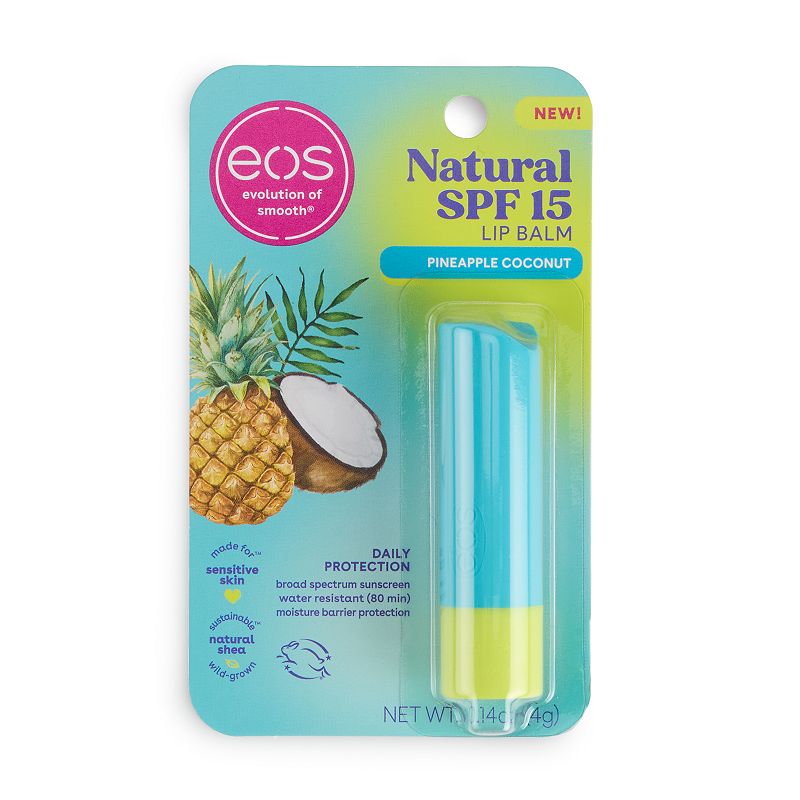
eos SPF 15 Lip Balm - Pineapple Coconut - 0.14oz: Paraben-Free, Phthalate-Free, Gluten-Free, Moisturizing
Analysis updated August 2026 · How Scout scores
At a glance
Summary
This lip balm features a blend of natural ingredients such as beeswax, sunflower seed oil, jojoba oil, and shea butter, which are known for their moisturizing and protective properties. The inclusion of zinc oxide provides mineral-based sun protection without the use of chemical UV filters. The product is free from parabens and phthalates, contributing to its clean label, although the presence of flavoring and some processing elements slightly limits its score.
Key ingredients 11
Beeswax (Cire D’abeille)Very Good
Beeswax is a natural wax produced by honey bees. It forms a protective barrier on the skin that helps to lock in moisture. It is non-comedogenic and provides a breathable layer of protection.
Risks
There are minimal risks associated with beeswax, though some individuals may have allergies.
Benefits
Beeswax is known for its ability to soothe and hydrate the skin, making it an excellent ingredient for lip care.
Helianthus Annuus (Sunflower) Seed OilVery Good
Sunflower seed oil is rich in vitamin E and acts as an emollient that traps moisture and keeps the skin well hydrated. It is lightweight and non-comedogenic, making it suitable for all skin types.
Risks
Rarely, sunflower seed oil can cause allergic reactions in sensitive individuals.
Benefits
It helps to maintain the skin's natural barrier and supports skin health with its antioxidant properties.
Simmondsia Chinensis (Jojoba) Seed OilVery Good
Jojoba oil is a liquid wax ester that closely resembles the skin's natural sebum. It is highly moisturizing and helps to balance oil production.
Risks
Jojoba oil is generally safe, but overuse can lead to clogged pores in some individuals.
Benefits
It provides long-lasting moisture and can help to soothe dry, chapped lips.
Shea Butter Ethyl EsterVery Good
Shea butter ethyl ester is derived from shea butter and provides similar moisturizing benefits. It is easily absorbed and helps to soften the skin.
Risks
There are minimal risks, though individuals with nut allergies should patch test before use.
Benefits
It enhances skin elasticity and provides a smooth, soft texture to the lips.
Jojoba EstersVery Good
Jojoba esters are derived from jojoba oil and provide excellent emollient properties. They help to improve the texture and feel of the product.
Risks
Jojoba esters are generally safe with low risk of irritation.
Benefits
They enhance the moisturizing properties of the lip balm, providing a smooth application.
Cocos Nucifera (Coconut) OilVery Good
Coconut oil is a natural emollient that helps to moisturize and protect the skin. It is rich in fatty acids and has antimicrobial properties.
Risks
Coconut oil can cause breakouts in acne-prone skin if used excessively.
Benefits
It provides deep hydration and helps to soothe and repair dry, chapped lips.
Theobroma Cacao (Cocoa) Seed ButterVery Good
Cocoa butter is a rich natural fat that provides deep hydration and forms a protective barrier on the skin. It is high in antioxidants and helps to improve skin elasticity.
Risks
Cocoa butter can be comedogenic for some skin types, potentially leading to clogged pores.
Benefits
It is excellent for healing dry, sensitive skin and provides a smooth, creamy texture to the lip balm.
Butyrospermum Parkii (Shea) ButterVery Good
Shea butter is a natural fat extracted from the nuts of the shea tree. It is highly moisturizing and contains vitamins A and E, which promote skin health.
Risks
Individuals with nut allergies should use with caution and perform a patch test.
Benefits
It provides deep nourishment and helps to soothe and protect the lips from environmental damage.
TocopherolVery Good
Tocopherol, or vitamin E, is a powerful antioxidant that helps to protect the skin from free radical damage. It also has moisturizing properties.
Risks
Tocopherol is generally safe, but high concentrations can cause skin irritation in sensitive individuals.
Benefits
It supports skin health and helps to maintain the integrity of the lip balm by preventing oxidation.
Zinc Oxide 10.00%Good
Zinc oxide is a mineral sunscreen agent that provides broad-spectrum UV protection. It is non-irritating and suitable for sensitive skin.
Risks
Inhalation of zinc oxide particles can be harmful, but this is not a concern in lip balm formulations.
Benefits
It protects the lips from sun damage and helps to prevent sunburn.
Glycine Soja (Soybean) OilGood
Soybean oil is a natural emollient that helps to moisturize and condition the skin. It is rich in essential fatty acids and vitamin E.
Risks
Soybean oil can cause allergic reactions in individuals with soy allergies.
Benefits
It helps to improve skin texture and provides a smooth, soft feel to the lips.
Get the full breakdown in the Scout appTake Scout shopping
Scan any product to see lab results, healthy alternatives, and your personalized analysis.
Download on theApp Store GET IT ONGoogle PlayAmazon pricing & content
Amazon price as of . Product prices and availability are accurate as of the date/time indicated and are subject to change. Any price and availability information displayed on Amazon.com at the time of purchase will apply to the purchase of this product.
CERTAIN CONTENT THAT APPEARS ON THIS SITE COMES FROM AMAZON. THIS CONTENT IS PROVIDED “AS IS” AND IS SUBJECT TO CHANGE OR REMOVAL AT ANY TIME.