
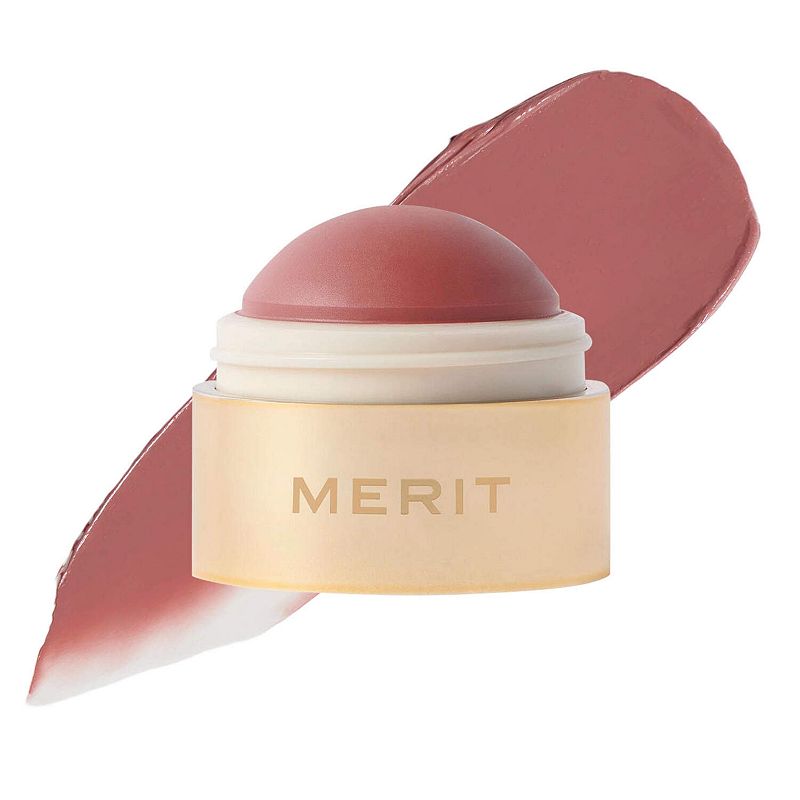


MERIT Flush Balm Cream Blush Color: Archival Size: N/A
Analysis updated August 2026 · How Scout scores
At a glance
Summary
This blush contains a mix of synthetic and natural ingredients, with tocopherol providing antioxidant benefits. However, the presence of polyethylene raises environmental concerns due to its contribution to microplastic pollution. The product's processing level and inclusion of synthetic components like BHT and synthetic waxes also impact its overall rating.
Key ingredients 20
TocopherolVery Good
Tocopherol, also known as Vitamin E, is an antioxidant used in cosmetics to protect the skin and product from oxidative damage. It is beneficial for skin health and helps to maintain the stability of the product. It is widely regarded as safe and beneficial in skincare.
Risks
There is minimal risk associated with its use.
Benefits
It provides antioxidant protection and supports skin health.
Ci 77499/Iron OxidesGood
Beneficial ingredient — whole-food or functional value in this product class.
Risks
There is minimal risk associated with its use.
Benefits
It provides stable and non-reactive color.
OctyldodecanolNeutral
Octyldodecanol is a fatty alcohol used as an emollient and thickening agent in cosmetics. It is generally considered safe and non-irritating for most skin types. It helps improve the texture and spreadability of the product.
Risks
There is a low risk of skin irritation, especially for sensitive skin types.
Benefits
It provides a smooth application and helps to soften the skin.
Hydrogenated PolyisobuteneNeutral
Hydrogenated Polyisobutene is a synthetic polymer used as a skin-conditioning agent and emollient. It is known for its ability to create a smooth, non-greasy film on the skin. It is generally considered safe for use in cosmetics.
Risks
There is minimal risk associated with its use, though it may cause mild irritation in very sensitive individuals.
Benefits
It enhances the texture of the product and provides a silky feel.
Hydrogenated Poly (C6-14 Olefin)Neutral
Hydrogenated Poly (C6-14 Olefin) is used as an emollient and thickening agent in cosmetics. It helps to improve the texture and consistency of the product. It is considered safe for use in personal care products.
Risks
There is a low risk of skin irritation.
Benefits
It provides a smooth application and enhances the product's stability.
SilicaNeutral
Silica is a naturally occurring mineral used as an absorbent and anti-caking agent in cosmetics. It helps to control shine and improve the texture of the product. It is generally considered safe for use in cosmetics.
Risks
Inhalation of silica dust can be harmful, but this is not a concern in cream-based products.
Benefits
It provides a matte finish and helps to absorb excess oil.
Diisostearyl MalateNeutral
Diisostearyl Malate is an ester used as an emollient and skin-conditioning agent in cosmetics. It provides a smooth, silky feel and enhances the spreadability of the product. It is considered safe for use in personal care products.
Risks
There is a low risk of skin irritation.
Benefits
It improves the texture and application of the product.
Synthetic WaxNeutral
Synthetic Wax is used as a thickening agent and emollient in cosmetics. It helps to provide structure and stability to the product. It is generally considered safe for use in cosmetics.
Risks
There is minimal risk associated with its use.
Benefits
It enhances the texture and consistency of the product.
Synthetic FluorphlogopiteNeutral
Synthetic Fluorphlogopite is a synthetic mica used to add shimmer and improve the texture of cosmetics. It is considered a safe alternative to natural mica, which can contain impurities. It is widely used in color cosmetics for its reflective properties.
Risks
There is minimal risk associated with its use.
Benefits
It provides a shimmering effect and enhances the visual appeal of the product.
Sorbitan IsostearateNeutral
Sorbitan Isostearate is an emulsifier used to stabilize and improve the texture of cosmetic formulations. It helps to blend oil and water components effectively. It is generally considered safe for use in cosmetics.
Risks
There is a low risk of skin irritation.
Benefits
It improves the stability and texture of the product.
Ethylene/Propylene CopolymerNeutral
Ethylene/Propylene Copolymer is a synthetic polymer used as a film-former and thickening agent in cosmetics. It helps to improve the texture and consistency of the product. It is considered safe for use in personal care products.
Risks
There is minimal risk associated with its use.
Benefits
It enhances the texture and stability of the product.
Cera Microcristallina (Microcrystalline Wax, Cire Microcristalline)Neutral
Microcrystalline Wax is used as a thickening agent and emollient in cosmetics. It provides structure and stability to the product. It is generally considered safe for use in cosmetics.
Risks
There is minimal risk associated with its use.
Benefits
It enhances the texture and consistency of the product.
MethiconeNeutral
Methicone is a silicone-based compound used as an anti-foaming agent and skin-conditioning agent in cosmetics. It provides a smooth, silky feel and enhances the spreadability of the product. It is generally considered safe for use in cosmetics.
Risks
There is minimal risk associated with its use.
Benefits
It improves the texture and application of the product.
TriethoxycaprylylsilaneNeutral
Triethoxycaprylylsilane is a silicone-based compound used as a surface modifier in cosmetics. It helps to improve the dispersion of pigments and enhances the texture of the product. It is considered safe for use in cosmetics.
Risks
There is minimal risk associated with its use.
Benefits
It improves pigment dispersion and product texture.
Ci 77891 (Titanium Dioxide)Neutral
Titanium Dioxide is a mineral used as a pigment and UV filter in cosmetics. It provides opacity and sun protection in formulations. It is generally considered safe for use in cosmetics.
Risks
Inhalation of fine particles can be harmful, but this is not a concern in cream-based products.
Benefits
It provides color and UV protection.
Ci 77492Neutral
Ci 77492 is an iron oxide used as a pigment in cosmetics. It provides color and is considered safe for use in personal care products. It is widely used in color cosmetics for its stability and non-reactivity.
Risks
There is minimal risk associated with its use.
Benefits
It provides stable and non-reactive color.
Ci 15850 (Red 7 Lake)Neutral
Red 7 Lake is a synthetic pigment used to provide color in cosmetics. It is considered safe for use in personal care products. It is widely used in color cosmetics for its vibrant hue.
Risks
There is minimal risk associated with its use.
Benefits
It provides vibrant and stable color.
Ci 19140 (Yellow 5 Lake)Neutral
Yellow 5 Lake is a synthetic pigment used to provide color in cosmetics. It is considered safe for use in personal care products. It is widely used in color cosmetics for its bright hue.
Risks
There is minimal risk associated with its use.
Benefits
It provides bright and stable color.
BHTBad
Processed additive flagged under Scout's ingredient doctrine.
Risks
There is some concern over potential skin irritation and long-term health effects, but it is deemed safe at low levels.
Benefits
It helps to preserve the product and prevent ingredient degradation.
PolyethyleneVery Bad
Polyethylene is a synthetic polymer used as a thickening agent and film-former in cosmetics. It is often criticized for its environmental impact, particularly in terms of microplastic pollution. While it is generally considered safe for skin, its environmental concerns are significant.
Risks
The primary concern is environmental, as polyethylene contributes to microplastic pollution.
Benefits
It helps to improve the texture and stability of cosmetic products.
Get the full breakdown in the Scout appTake Scout shopping
Scan any product to see lab results, healthy alternatives, and your personalized analysis.
Download on theApp Store GET IT ONGoogle PlayAmazon pricing & content
CERTAIN CONTENT THAT APPEARS ON THIS SITE COMES FROM AMAZON. THIS CONTENT IS PROVIDED “AS IS” AND IS SUBJECT TO CHANGE OR REMOVAL AT ANY TIME.