
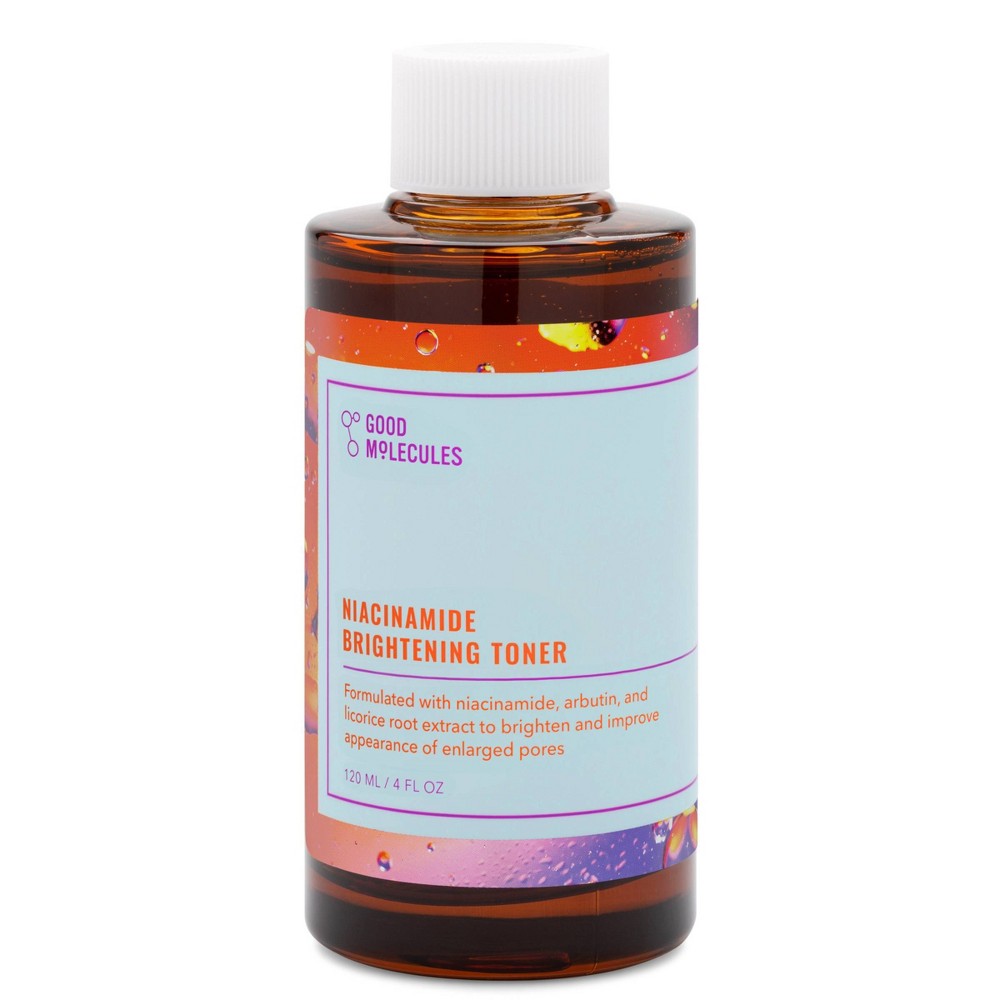

Good Molecules Niacinamide Brightening Face Toner - 4 fl oz: Liquid, Combination Skin, Unscented, Vegan
At a glance
Summary
This toner features a clean and minimally processed formula with beneficial ingredients like niacinamide, glycerin, and sodium hyaluronate, which are known for their hydrating and skin-brightening properties. The inclusion of natural extracts such as licorice root and cocoa seed further enhances its appeal by providing antioxidant protection and reducing hyperpigmentation. The absence of synthetic fragrances and harmful chemicals contributes to its high rating, making it suitable for sensitive skin.
Key ingredients 16
Glycyrrhiza Glabra (Licorice) Root ExtractVery Good
Licorice root extract is known for its anti-inflammatory and skin-brightening properties. It helps reduce redness and hyperpigmentation.
Risks
There is a low risk of irritation or allergic reaction.
Benefits
It helps soothe irritated skin and lighten dark spots.
3-O-Ethyl Ascorbic AcidVery Good
3-O-Ethyl Ascorbic Acid is a stable form of Vitamin C that provides antioxidant protection and brightens the skin. It helps reduce signs of aging and improves skin radiance.
Risks
It may cause mild irritation in sensitive skin types.
Benefits
It helps protect the skin from environmental damage and enhances skin brightness.
Theobroma Cacao (Cocoa) Seed ExtractVery Good
Cocoa seed extract is rich in antioxidants and provides moisturizing benefits. It helps protect the skin from environmental stressors.
Risks
There is a low risk of allergic reactions.
Benefits
It helps nourish and protect the skin, improving its overall health.
GlycerinGood
Glycerin is a humectant that attracts moisture to the skin, helping to keep it hydrated. It is well-tolerated by most skin types and enhances the skin's natural barrier function.
Risks
There are minimal risks associated with glycerin, though in rare cases it may cause irritation.
Benefits
Glycerin helps maintain skin hydration and improves skin smoothness and softness.
NiacinamideGood
Niacinamide is a form of Vitamin B3 that is known for its anti-inflammatory properties and ability to improve skin texture. It helps reduce the appearance of pores and evens out skin tone.
Risks
Niacinamide is generally safe, but high concentrations may cause mild irritation in sensitive individuals.
Benefits
Niacinamide improves skin elasticity, enhances barrier function, and reduces redness and blotchiness.
ArbutinGood
Arbutin is a skin-brightening agent that helps reduce hyperpigmentation. It is a safer alternative to hydroquinone and is derived from natural sources.
Risks
In rare cases, it may cause mild irritation or allergic reactions.
Benefits
Arbutin helps in lightening dark spots and improving overall skin tone.
BetaineGood
Betaine is a natural amino acid derivative that acts as a humectant and anti-irritant. It helps maintain skin hydration and reduces the potential for irritation.
Risks
Betaine is generally considered safe with minimal risk of irritation.
Benefits
It helps improve skin moisture retention and soothes irritated skin.
Sodium HyaluronateGood
Sodium Hyaluronate is a form of hyaluronic acid that provides intense hydration to the skin. It helps retain moisture and improve skin elasticity.
Risks
It is generally safe with minimal risk of irritation.
Benefits
It helps plump the skin and reduce the appearance of fine lines and wrinkles.
WaterNeutral
Water is a common solvent used in cosmetic formulations. It helps dissolve other ingredients and provides a base for the product. It is generally considered safe and non-irritating.
Risks
There are no significant risks associated with water in cosmetic products.
Benefits
Water helps in hydrating the skin and acts as a carrier for other beneficial ingredients.
1,2-HexanediolNeutral
1,2-Hexanediol is a synthetic preservative and moisture-binding agent. It helps stabilize formulations and prevent microbial growth.
Risks
It may cause mild irritation in sensitive skin types.
Benefits
It helps maintain product integrity and enhances skin hydration.
PropanediolNeutral
Propanediol is a glycol that acts as a solvent and humectant in cosmetic formulations. It enhances the absorption of other ingredients.
Risks
It is generally safe, but may cause irritation in very sensitive skin.
Benefits
Propanediol improves skin hydration and texture.
EthylhexylglycerinNeutral
Ethylhexylglycerin is a preservative and skin-conditioning agent. It enhances the efficacy of other preservatives and improves skin feel.
Risks
It is generally safe, but may cause mild irritation in some individuals.
Benefits
It helps maintain product stability and improves skin texture.
CarbomerNeutral
Carbomer is a thickening agent used to stabilize and control the viscosity of cosmetic formulations. It is widely used and considered safe.
Risks
There is a low risk of irritation with carbomer.
Benefits
It helps create a smooth and consistent texture in products.
TromethamineNeutral
Tromethamine is used as a pH adjuster in cosmetic formulations. It helps maintain the stability and efficacy of the product.
Risks
It may cause mild irritation in sensitive skin.
Benefits
It helps ensure the product remains effective and safe for use.
Trisodium Ethylenediamine DisuccinateNeutral
Trisodium Ethylenediamine Disuccinate is a chelating agent that helps stabilize formulations by binding metal ions. It is considered safe for use in cosmetics.
Risks
There are minimal risks associated with this ingredient.
Benefits
It helps improve product stability and shelf life.
DextrinNeutral
Dextrin is used as a binding agent and texture enhancer in cosmetic formulations. It is considered safe and non-irritating.
Risks
There are minimal risks associated with dextrin.
Benefits
It helps improve the texture and consistency of the product.
Get the full breakdown in the Scout appTake Scout shopping
Scan any product to see lab results, healthy alternatives, and your personalized analysis.
Download on theApp Store GET IT ONGoogle PlayAmazon pricing & content
Amazon price as of . Product prices and availability are accurate as of the date/time indicated and are subject to change. Any price and availability information displayed on Amazon.com at the time of purchase will apply to the purchase of this product.
CERTAIN CONTENT THAT APPEARS ON THIS SITE COMES FROM AMAZON. THIS CONTENT IS PROVIDED “AS IS” AND IS SUBJECT TO CHANGE OR REMOVAL AT ANY TIME.