
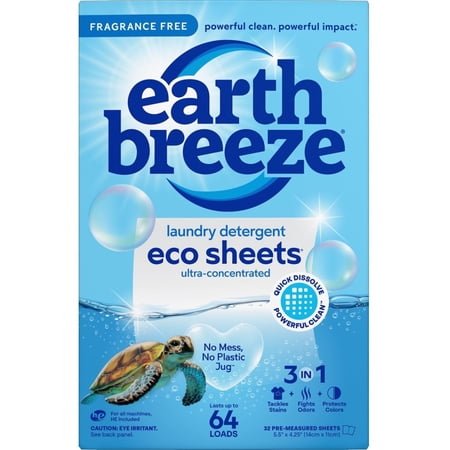


Earth Breeze Laundry Detergent Sheets Fragrance-Free Eco Sheets 32 Count 64 Loads
Summary
This product contains sodium dodecyl sulfate, which is a surfactant similar to SLS and can be harsh on the skin, though it is not as severe as SLS. The presence of plant-based enzymes like protease and the fragrance-free formulation are positive aspects. The product is also eco-friendly with biodegradable components, but the inclusion of synthetic surfactants affects its overall rating.
At a glance
Key ingredients 8
GlycerolNeutral
Glycerol is a simple polyol compound often used as a humectant. It helps in retaining moisture and is generally considered safe. In cleaning products, it can help maintain the texture of the product.
Risks
There are minimal risks associated with glycerol in cleaning products.
Benefits
Glycerol can help in maintaining the moisture balance of the product, preventing it from drying out.
Primary Alcohol EthoxylateNeutral
Primary alcohol ethoxylates are non-ionic surfactants used for their cleaning properties. They help in breaking down and removing dirt and grease. These compounds are generally considered effective and relatively safe in cleaning formulations.
Risks
Potential skin irritation can occur with prolonged exposure.
Benefits
They are effective in removing grease and dirt, enhancing the cleaning power of the product.
Sodium Dodecyl SulfateVery Bad
Sodium dodecyl sulfate, also known as sodium lauryl sulfate (SLS), is a harsh surfactant. It is known for its strong cleaning and foaming properties. However, it is also a strong skin irritant and can be harsh on sensitive skin.
Risks
SLS can cause skin irritation and dryness, especially with prolonged exposure.
Benefits
It is effective at removing oils and residues, contributing to the cleaning efficacy of the product.
Sodium Acetate TrihydrateNeutral
Sodium acetate trihydrate is a salt used for its buffering properties. It helps maintain the pH balance of the product. This can enhance the stability and effectiveness of the cleaning formulation.
Risks
There are minimal risks associated with sodium acetate trihydrate in cleaning products.
Benefits
It helps in maintaining the pH balance, which can improve the product's stability and performance.
ProteaseGood
Protease is an enzyme that breaks down proteins, making it effective in removing protein-based stains. It is a plant-based enzyme, which aligns with eco-friendly formulations. Protease enhances the cleaning power of detergents by targeting specific stains.
Risks
In rare cases, protease can cause allergic reactions if inhaled or in contact with skin.
Benefits
It effectively breaks down protein stains, improving the overall cleaning performance of the detergent.
Polyvinyl AlcoholNeutral
Polyvinyl alcohol is a synthetic polymer used as a film-forming agent. It helps in the structural integrity of detergent sheets. It is generally considered safe for use in cleaning products.
Risks
There are minimal risks associated with polyvinyl alcohol in cleaning products.
Benefits
It provides structural support to the detergent sheets, ensuring they maintain their form until use.
Deionized WaterNeutral
Deionized water is water that has had its mineral ions removed. It is used as a solvent in many cleaning products. It helps dissolve other ingredients and ensures even distribution in the formulation.
Risks
There are no significant risks associated with deionized water.
Benefits
It acts as a solvent, aiding in the uniform distribution of ingredients in the product.
StarchGood
Starch is a natural polymer used for its thickening and stabilizing properties. It is biodegradable and aligns with eco-friendly product formulations. Starch can also help in binding ingredients together in detergent sheets.
Risks
There are minimal risks associated with starch in cleaning products.
Benefits
It is biodegradable and helps in stabilizing the product, contributing to its eco-friendly profile.
Processing
Unprocessed or Minimally Processed Foods
Get the full breakdown in the Scout app
Scan any product to see lab results, healthy alternatives, and your personalized analysis.
Download on theApp Store