
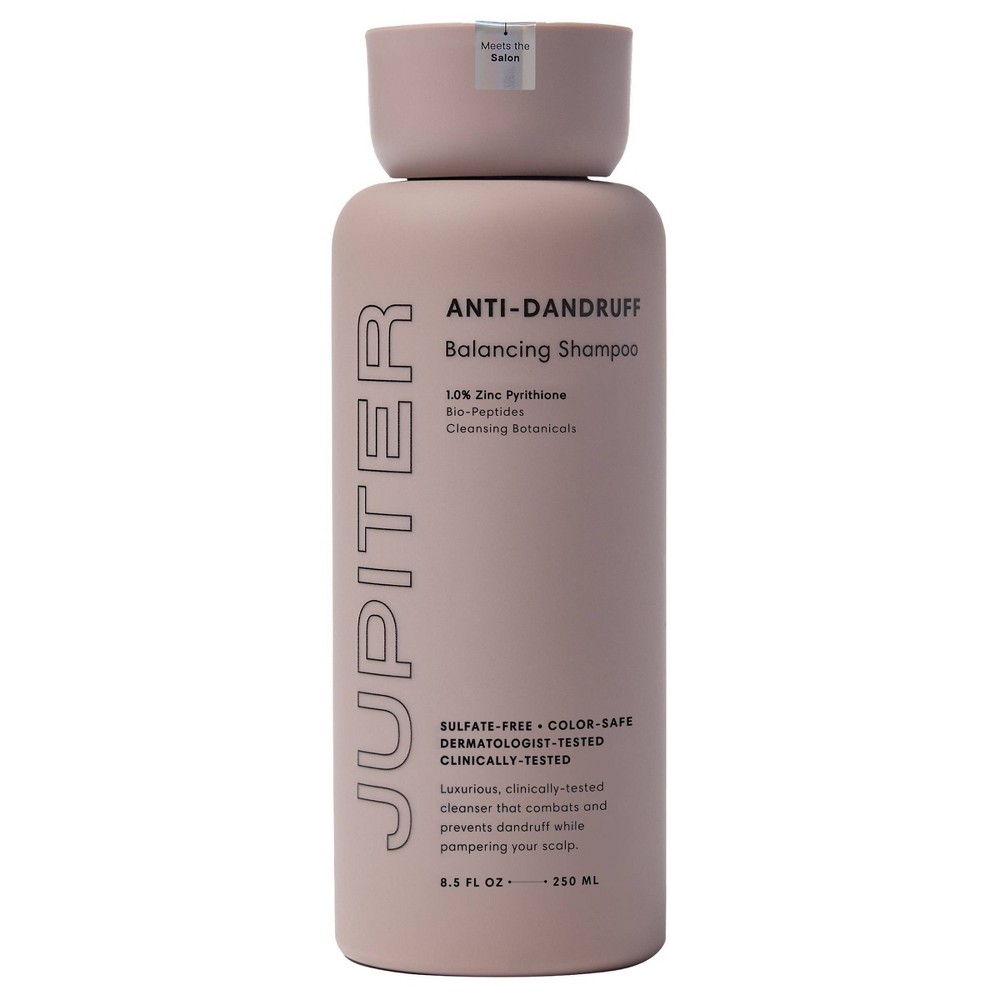

Jupiter Anti-Dandruff Balancing Shampoo - 8.5 fl oz: Suitable for All Hair Types, Vegan, Sulfate-Free, Alcohol-Free
Analysis updated August 2026 · How Scout scores
At a glance
Summary
This shampoo features a sulfate-free formula with gentle surfactants like Sodium Cocoyl Isethionate, which effectively cleanses without stripping natural oils. It includes beneficial ingredients such as safflower seed oil, garlic bulb extract, and green tea extract, which provide nourishment and protection for the hair and scalp. The absence of harsh chemicals like SLS, parabens, and synthetic fragrances contributes to its high rating, although the presence of some processed ingredients limits the maximum score achievable.
Key ingredients 30
Sodium Cocoyl IsethionateVery Good
Sodium Cocoyl Isethionate is a gentle surfactant derived from coconut oil. It effectively cleanses the hair without stripping natural oils. It is well-tolerated by sensitive skin and hair.
Risks
There are minimal risks associated with this ingredient, though overuse can lead to dryness.
Benefits
It provides a rich, creamy lather and leaves hair feeling soft and conditioned.
Cocos Nucifera (Coconut) OilVery Good
Coconut Oil is known for its moisturizing and conditioning properties. It helps to nourish and protect the hair. It is rich in fatty acids and vitamins.
Risks
There are no significant risks associated with this ingredient.
Benefits
It helps to improve hair elasticity and shine.
Sodium LauroamphoacetateGood
Sodium Lauroamphoacetate is a mild surfactant that helps to cleanse the hair and scalp. It is known for its gentle cleansing properties and is often used in baby shampoos. It is suitable for sensitive skin.
Risks
There are no significant risks associated with this ingredient.
Benefits
It helps to maintain the natural moisture balance of the hair and scalp.
Ethylhexyl OlivateGood
Ethylhexyl Olivate is derived from olive oil and is used as an emollient. It helps to moisturize and condition the hair. It is known for its skin-softening properties.
Risks
There are no significant risks associated with this ingredient.
Benefits
It provides a silky feel to the hair and enhances shine.
Carthamus Tinctorius (Safflower) Seed OilGood
Safflower Seed Oil is rich in essential fatty acids and vitamins. It helps to nourish and moisturize the hair and scalp. It is known for its conditioning properties.
Risks
There are no significant risks associated with this ingredient.
Benefits
It helps to improve hair elasticity and shine.
Allium Sativum (Garlic) Bulb ExtractGood
Garlic Bulb Extract is known for its antimicrobial properties. It helps to maintain a healthy scalp environment. It is often used to promote hair health.
Risks
There may be a risk of irritation for sensitive scalps.
Benefits
It helps to strengthen hair and reduce dandruff.
Pyrus Malus (Apple) Fruit ExtractGood
Apple Fruit Extract is rich in antioxidants and vitamins. It helps to nourish and protect the hair. It is known for its conditioning properties.
Risks
There are no significant risks associated with this ingredient.
Benefits
It helps to improve hair shine and manageability.
Camellia Sinensis Leaf ExtractGood
Camellia Sinensis Leaf Extract, also known as green tea extract, is rich in antioxidants. It helps to protect the hair from environmental damage. It is known for its soothing properties.
Risks
There are no significant risks associated with this ingredient.
Benefits
It helps to improve scalp health and reduce inflammation.
PanthenolGood
Panthenol, also known as provitamin B5, is a moisturizing agent. It helps to improve hair elasticity and moisture retention. It is known for its conditioning properties.
Risks
There are no significant risks associated with this ingredient.
Benefits
It helps to strengthen hair and reduce split ends.
Citrus Nobilis (Mandarin Orange) Peel OilGood
Mandarin Orange Peel Oil is known for its refreshing scent and antioxidant properties. It helps to invigorate the scalp and promote hair health. It is often used for its aromatic benefits.
Risks
There may be a risk of irritation for sensitive scalps.
Benefits
It helps to improve hair shine and provides a pleasant fragrance.
Foeniculum Vulgare (Fennel) OilGood
Fennel Oil is known for its antimicrobial and antioxidant properties. It helps to maintain a healthy scalp environment. It is often used to promote hair health.
Risks
There may be a risk of irritation for sensitive scalps.
Benefits
It helps to strengthen hair and reduce dandruff.
Lavandula Angustifolia (Lavender) OilGood
Lavender Oil is known for its calming and soothing properties. It helps to promote a healthy scalp environment. It is often used for its aromatic benefits.
Risks
There may be a risk of irritation for sensitive scalps.
Benefits
It helps to improve hair shine and provides a pleasant fragrance.
Mentha Citrata OilGood
Mentha Citrata Oil, also known as bergamot mint oil, is known for its refreshing scent and antimicrobial properties. It helps to invigorate the scalp and promote hair health. It is often used for its aromatic benefits.
Risks
There may be a risk of irritation for sensitive scalps.
Benefits
It helps to improve hair shine and provides a pleasant fragrance.
Orbignya Oleifera Seed OilGood
Orbignya Oleifera Seed Oil, also known as babassu oil, is rich in fatty acids. It helps to moisturize and condition the hair. It is known for its emollient properties.
Risks
There are no significant risks associated with this ingredient.
Benefits
It helps to improve hair elasticity and shine.
Rosmarinus Officinalis (Rosemary) Leaf OilGood
Rosemary Leaf Oil is known for its stimulating and antioxidant properties. It helps to promote a healthy scalp environment. It is often used to promote hair growth.
Risks
There may be a risk of irritation for sensitive scalps.
Benefits
It helps to strengthen hair and reduce dandruff.
Salvia Sclarea (Clary) OilGood
Clary Oil is known for its calming and soothing properties. It helps to promote a healthy scalp environment. It is often used for its aromatic benefits.
Risks
There may be a risk of irritation for sensitive scalps.
Benefits
It helps to improve hair shine and provides a pleasant fragrance.
Laminaria Saccharina ExtractGood
Laminaria Saccharina Extract is derived from seaweed and is rich in minerals. It helps to nourish and protect the hair. It is known for its conditioning properties.
Risks
There are no significant risks associated with this ingredient.
Benefits
It helps to improve hair shine and manageability.
SqualaneGood
Squalane is a lightweight moisturizer that helps to hydrate the hair. It is derived from olives and is known for its emollient properties. It is suitable for all hair types.
Risks
There are no significant risks associated with this ingredient.
Benefits
It helps to improve hair softness and manageability.
Yeast Ferment ExtractGood
Yeast Ferment Extract is known for its conditioning and moisturizing properties. It helps to nourish and protect the hair. It is rich in vitamins and minerals.
Risks
There are no significant risks associated with this ingredient.
Benefits
It helps to improve hair elasticity and shine.
GlycerinGood
Glycerin is a humectant that helps to attract moisture to the hair. It helps to improve hair hydration and elasticity. It is known for its moisturizing properties.
Risks
There are no significant risks associated with this ingredient.
Benefits
It helps to improve hair softness and manageability.
Lactobacillus FermentGood
Lactobacillus Ferment is known for its probiotic properties. It helps to maintain a healthy scalp environment. It is often used to promote hair health.
Risks
There are no significant risks associated with this ingredient.
Benefits
It helps to strengthen hair and reduce dandruff.
Zinc PyrithioneGood
Zinc Pyrithione is known for its anti-dandruff properties. It helps to reduce flaking and itching associated with dandruff. It is often used in anti-dandruff shampoos.
Risks
There may be a risk of irritation for sensitive scalps.
Benefits
It helps to maintain a healthy scalp environment and reduce dandruff.
Aqua (Water, Eau)Neutral
Water is a universal solvent and is used as a base in many cosmetic products. It helps to dissolve other ingredients and provides a medium for them to be applied to the hair. It does not have any direct benefits or risks.
Risks
There are no known risks associated with water in cosmetic formulations.
Benefits
Water helps to hydrate the hair and scalp by providing moisture.
Stearyl AlcoholNeutral
Standard formulation ingredient — neither beneficial nor harmful at typical use.
Risks
There are no significant risks associated with this ingredient.
Benefits
It helps to improve the texture and manageability of hair.
Caprylyl GlycolNeutral
Caprylyl Glycol is used as a skin conditioning agent and preservative. It helps to improve the texture of the product. It does not have direct benefits or risks for hair health.
Risks
There are no significant risks associated with this ingredient.
Benefits
It helps to maintain the stability of the product.
Guar Hydroxypropyltrimonium ChlorideNeutral
Guar Hydroxypropyltrimonium Chloride is used as a conditioning agent. It helps to improve the texture and manageability of hair. It does not have direct benefits or risks for hair health.
Risks
There are no significant risks associated with this ingredient.
Benefits
It helps to reduce static and improve hair smoothness.
Sodium IsethionateNeutral
Sodium Isethionate is used as a surfactant and cleansing agent. It helps to remove dirt and oil from the hair. It does not have direct benefits or risks for hair health.
Risks
There are no significant risks associated with this ingredient.
Benefits
It helps to cleanse the hair and scalp effectively.
Octenidine HclNeutral
Octenidine Hcl is used as a preservative and antimicrobial agent. It helps to maintain the stability of the product. It does not have direct benefits or risks for hair health.
Risks
There are no significant risks associated with this ingredient.
Benefits
It helps to prevent microbial growth in the product.
Acrylates CopolymerBad
Processed additive flagged under Scout's ingredient doctrine.
Risks
In rare cases, it may cause irritation if not properly formulated.
Benefits
It helps to improve the texture and manageability of hair.
VanillinBad
Processed additive flagged under Scout's ingredient doctrine.
Risks
There are no significant risks associated with this ingredient.
Benefits
It provides a pleasant fragrance to the product.
Get the full breakdown in the Scout appTake Scout shopping
Scan any product to see lab results, healthy alternatives, and your personalized analysis.
Download on theApp Store GET IT ONGoogle Play