
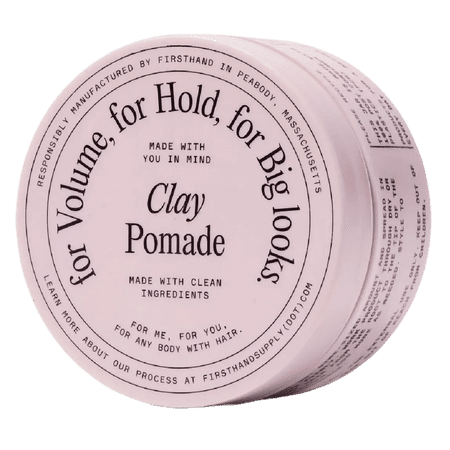


Firsthand Clay Pomade - 3 oz
Summary
This product contains several beneficial natural ingredients like beeswax, kaolin, and shea butter, which are minimally processed and provide moisturizing and protective benefits. However, the presence of synthetic compounds such as PEG-40 Hydrogenated Castor Oil and Phenoxyethanol, which are chemically processed and have potential health concerns, impacts the overall score. The processing level and inclusion of these synthetic ingredients prevent it from achieving a higher rating.
At a glance
Key ingredients 27
AquaNeutral
Aqua, or water, is used as a solvent in cosmetic formulations. It is typically purified to remove impurities and ensure safety. No significant interactions or processing concerns are noted.
See more about Aqua →Cera AlbaGood
Cera Alba, or beeswax, is a natural wax produced by honey bees. It is minimally processed and provides a protective barrier on the skin and hair. It is valued for its emollient properties and ability to lock in moisture.
Benefits
Provides moisture retention and protection for skin and hair.
KaolinGood
Kaolin is a natural clay used for its absorbent properties. It is minimally processed and helps to cleanse and exfoliate the skin and scalp. It is gentle and suitable for sensitive skin types.
Benefits
Helps absorb excess oil and impurities from the skin and scalp.
Copernicia Cerifera CeraGood
Copernicia Cerifera Cera, or carnauba wax, is a natural wax derived from the leaves of the carnauba palm. It is used for its thickening and emulsifying properties in cosmetics. It is hypoallergenic and provides a glossy finish.
Benefits
Offers thickening properties and a glossy finish to cosmetic products.
PEG-40 Hydrogenated Castor OilBad
PEG-40 Hydrogenated Castor Oil is a synthetic compound used as an emulsifier and surfactant. It is derived from castor oil but undergoes significant chemical processing. Concerns exist about potential contamination with harmful impurities like ethylene oxide.
Risks
Potential contamination with ethylene oxide and 1,4-dioxane, which are carcinogenic.
Butyrospermum Parkii ButterVery Good
Butyrospermum Parkii Butter, or shea butter, is a natural fat extracted from the nuts of the shea tree. It is rich in vitamins and fatty acids, providing excellent moisturizing properties. It is minimally processed and beneficial for skin and hair health.
Benefits
Rich in vitamins and fatty acids that nourish and moisturize the skin and hair.
LecithinGood
Lecithin is a natural emulsifier derived from soybeans or sunflower seeds. It helps to stabilize and blend ingredients in cosmetic formulations. It is minimally processed and supports skin hydration.
Benefits
Supports skin hydration and improves texture of cosmetic products.
Sodium SesquicarbonateNeutral
Sodium Sesquicarbonate is a compound used as a buffering agent in cosmetics. It helps to maintain the pH balance of formulations. It is synthetically produced but considered safe for use in cosmetics.
Prunus Armeniaca Kernel OilVery Good
Prunus Armeniaca Kernel Oil, or apricot kernel oil, is a natural oil extracted from apricot seeds. It is rich in vitamins A and E, providing nourishing and moisturizing benefits. It is cold-pressed to preserve its nutrient content.
Benefits
Rich in vitamins A and E, promoting skin and hair health.
Vitis Vinifera Seed OilVery Good
Vitis Vinifera Seed Oil, or grape seed oil, is a natural oil extracted from grape seeds. It is high in antioxidants and essential fatty acids, supporting skin and hair health. It is typically cold-pressed to retain its beneficial properties.
Benefits
High in antioxidants and essential fatty acids, beneficial for skin and hair.
GlycerinGood
Glycerin is a humectant that attracts moisture to the skin and hair. It is often derived from plant oils and is minimally processed. It helps to maintain hydration and improve the texture of cosmetic products.
Benefits
Helps maintain hydration and improve texture in cosmetic formulations.
Sodium ChlorideNeutral
Sodium Chloride, or table salt, is used as a thickening agent in cosmetics. It is naturally occurring and minimally processed. It helps to enhance the viscosity and stability of formulations.
See more about Sodium Chloride →Argania Spinosa Kernel OilVery Good
Argania Spinosa Kernel Oil, or argan oil, is a natural oil extracted from the kernels of the argan tree. It is rich in essential fatty acids and vitamin E, providing nourishing and moisturizing benefits. It is cold-pressed to preserve its nutrient content.
Benefits
Rich in essential fatty acids and vitamin E, promoting skin and hair health.
Citrus Aurantium Bergamia Fruit OilGood
Citrus Aurantium Bergamia Fruit Oil, or bergamot oil, is a natural essential oil extracted from the peel of bergamot oranges. It is used for its fragrance and potential antimicrobial properties. It is cold-pressed to retain its aromatic compounds.
Risks
May cause photosensitivity when applied to skin and exposed to sunlight.
Benefits
Provides a pleasant fragrance and potential antimicrobial benefits.
Lavandula Angustifolia Flower OilGood
Lavandula Angustifolia Flower Oil, or lavender oil, is a natural essential oil extracted from lavender flowers. It is known for its calming fragrance and potential antimicrobial properties. It is steam-distilled to preserve its aromatic compounds.
Risks
May cause skin irritation in sensitive individuals.
Benefits
Known for its calming fragrance and potential antimicrobial benefits.
Juniperus Communis Wood OilGood
Juniperus Communis Wood Oil, or juniper oil, is a natural essential oil extracted from juniper wood. It is used for its fragrance and potential antimicrobial properties. It is steam-distilled to retain its beneficial compounds.
Risks
May cause skin irritation in sensitive individuals.
Benefits
Provides a pleasant fragrance and potential antimicrobial benefits.
Artemisia Absinthium OilNeutral
Artemisia Absinthium Oil, or wormwood oil, is a natural essential oil extracted from the wormwood plant. It is used for its fragrance and potential antimicrobial properties. It is steam-distilled to preserve its aromatic compounds.
Risks
May cause skin irritation in sensitive individuals.
Benefits
Provides a pleasant fragrance and potential antimicrobial benefits.
PhenoxyethanolBad
Phenoxyethanol is a synthetic preservative used to prevent microbial growth in cosmetics. It is chemically processed and can cause skin irritation in some individuals. Concerns exist about its potential neurotoxic effects when used in high concentrations.
Risks
Potential skin irritant and concerns about neurotoxicity at high concentrations.
Caprylyl GlycolNeutral
Caprylyl Glycol is a synthetic compound used as a skin conditioning agent and preservative. It is chemically processed but considered safe for use in cosmetics. It helps to improve the texture and stability of formulations.
Benefits
Improves texture and stability of cosmetic formulations.
Aloe Barbadensis LeafVery Good
Aloe Barbadensis Leaf, or aloe vera, is a natural plant extract known for its soothing and moisturizing properties. It is minimally processed and rich in vitamins and antioxidants. It is widely used for its skin-healing benefits.
Benefits
Rich in vitamins and antioxidants, providing soothing and moisturizing benefits.
Bursera Graveolens Wood OilNeutral
Bursera Graveolens Wood Oil, or palo santo oil, is a natural essential oil extracted from the wood of the palo santo tree. It is used for its fragrance and potential antimicrobial properties. It is steam-distilled to retain its aromatic compounds.
Benefits
Provides a pleasant fragrance and potential antimicrobial benefits.
TocopherolVery Good
Tocopherol, or vitamin E, is a natural antioxidant used to protect skin and hair from oxidative damage. It is minimally processed and derived from natural sources. It helps to extend the shelf life of cosmetic products by preventing rancidity.
Benefits
Acts as an antioxidant, protecting skin and hair from oxidative damage.
Glycine Soja OilGood
Glycine Soja Oil, or soybean oil, is a natural oil extracted from soybeans. It is rich in essential fatty acids and vitamin E, providing nourishing and moisturizing benefits. It is typically cold-pressed to retain its beneficial properties.
Benefits
Rich in essential fatty acids and vitamin E, promoting skin and hair health.
Sorbic AcidNeutral
Sorbic Acid is a synthetic preservative used to inhibit microbial growth in cosmetics. It is chemically processed but considered safe for use in low concentrations. It helps to extend the shelf life of cosmetic products.
See more about Sorbic Acid →D-LimoneneNeutral
D-Limonene is a natural compound found in citrus oils, used for its fragrance and potential antimicrobial properties. It is extracted through cold pressing of citrus peels. It is generally recognized as safe but can cause skin irritation in sensitive individuals.
Risks
May cause skin irritation in sensitive individuals.
Benefits
Provides a pleasant citrus fragrance and potential antimicrobial benefits.
CitralNeutral
Citral is a natural compound found in citrus oils, used for its fragrance and potential antimicrobial properties. It is extracted through steam distillation of citrus peels. It is generally recognized as safe but can cause skin irritation in sensitive individuals.
Risks
May cause skin irritation in sensitive individuals.
Benefits
Provides a pleasant citrus fragrance and potential antimicrobial benefits.
LinaloolNeutral
Linalool is a natural compound found in many essential oils, used for its fragrance and potential antimicrobial properties. It is extracted through steam distillation of plant materials. It is generally recognized as safe but can cause skin irritation in sensitive individuals.
Risks
May cause skin irritation in sensitive individuals.
Benefits
Provides a pleasant floral fragrance and potential antimicrobial benefits.
Processing
Processed Foods
Get the full breakdown in the Scout app
Scan any product to see lab results, healthy alternatives, and your personalized analysis.
Download on theApp Store