
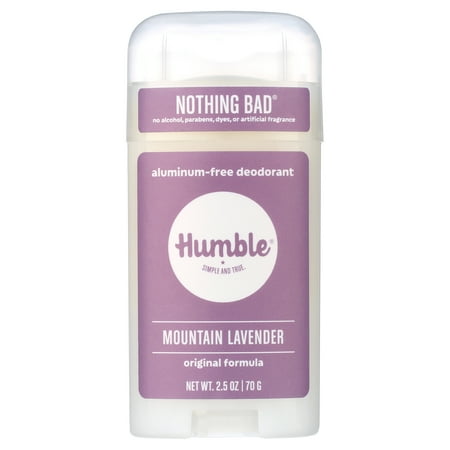

Humble Brands Natural Deodorant Mountain Lavender 2.5oz
Analysis updated August 2026 · How Scout scores
At a glance
Summary
This deodorant features a clean formula with beneficial ingredients like baking soda, beeswax, and essential oils, which are known for their natural odor control and skin-conditioning properties. It is free from aluminum, synthetic fragrances, and propylene glycol, making it a safer choice for consumers seeking natural alternatives. The product's processing level is moderate, but the high-quality, non-GMO, and natural ingredients contribute positively to its overall rating.
Key ingredients 5
Sodium Bicarbonate (Baking Soda)Very Good
Sodium Bicarbonate is a natural odor neutralizer that helps to maintain a neutral pH in the underarm area. It is widely used in natural deodorants for its effectiveness in controlling odor. It is considered safe for most users.
Risks
Some individuals may experience skin irritation or sensitivity, especially with prolonged use.
Benefits
It is highly effective at neutralizing odors and is a popular choice for natural deodorant formulations.
Caprylic/Capric Triglyceride (MCT)Good
Caprylic/Capric Triglyceride is a mixed triester derived from coconut oil and glycerin. It is used for its skin-conditioning properties and helps to improve the spreadability of the product. It is generally considered safe and non-irritating.
Risks
There are minimal risks associated with this ingredient, though some individuals may experience mild irritation.
Benefits
It provides a lightweight, non-greasy feel and helps to moisturize the skin.
Non-GMO Zea Mays (Corn) StarchGood
Corn starch is a natural absorbent that helps to control moisture. It is derived from corn and is often used in natural deodorants for its ability to absorb sweat. Being non-GMO adds an additional layer of consumer confidence.
Risks
There are minimal risks, though it may cause irritation in rare cases for those with corn allergies.
Benefits
It effectively absorbs moisture, helping to keep the underarm area dry.
Cera Alba (Beeswax)Good
Beeswax is a natural wax produced by honeybees and is used in cosmetics for its emollient properties. It helps to form a protective barrier on the skin, locking in moisture. It is generally well-tolerated and non-irritating.
Risks
There are minimal risks, though it may cause allergic reactions in individuals sensitive to bee products.
Benefits
It provides a protective barrier and helps to moisturize and soothe the skin.
Essential OilsGood
Essential oils are concentrated plant extracts that provide fragrance and may offer antimicrobial properties. They are often used in natural deodorants for their pleasant scent and potential skin benefits. The specific oils used can vary, affecting their overall impact.
Risks
Some essential oils can cause skin irritation or allergic reactions, especially in sensitive individuals.
Benefits
They provide natural fragrance and may offer additional antimicrobial benefits, contributing to odor control.
Get the full breakdown in the Scout appTake Scout shopping
Scan any product to see lab results, healthy alternatives, and your personalized analysis.
Download on theApp Store GET IT ONGoogle PlayAmazon pricing & content
Amazon price as of . Product prices and availability are accurate as of the date/time indicated and are subject to change. Any price and availability information displayed on Amazon.com at the time of purchase will apply to the purchase of this product.
CERTAIN CONTENT THAT APPEARS ON THIS SITE COMES FROM AMAZON. THIS CONTENT IS PROVIDED “AS IS” AND IS SUBJECT TO CHANGE OR REMOVAL AT ANY TIME.