
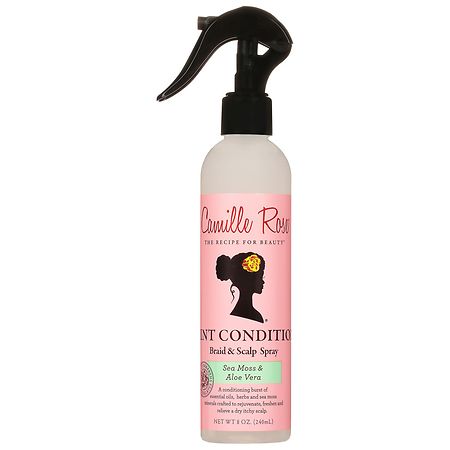
Camille Rose Mint Condition Braid and Scalp Spray - 8 fl oz
Summary
The Camille Rose Mint Condition Braid and Scalp Spray contains beneficial natural ingredients such as mint and other botanicals, which are generally safe and soothing for the scalp. However, the presence of synthetic preservatives or fragrances could slightly impact its overall safety profile. The product is minimally processed, which is a positive factor, but the inclusion of any synthetic components prevents it from achieving a top-tier score.
At a glance
Key ingredients 13
Deionized Water
Deionized water is used as a solvent to dissolve other ingredients. It is purified to remove ions and impurities, making it a neutral base. It helps in evenly distributing the other ingredients.
Risks
There are no known risks associated with deionized water.
Benefits
It provides a clean and neutral medium for other beneficial ingredients to work effectively.
Aloe Barbadensis Leaf Juice
Aloe vera juice is known for its soothing and moisturizing properties. It helps to calm irritated skin and provides hydration. It is often used in products for its skin-healing benefits.
Risks
Rarely, it may cause allergic reactions in sensitive individuals.
Benefits
It is highly beneficial for soothing and hydrating the scalp and skin.
Simmondsia Chinensis Seed Oil
Jojoba oil is a natural oil that closely resembles the skin's natural sebum. It is easily absorbed and helps to moisturize without leaving a greasy residue. It is often used for its balancing properties.
Risks
There are minimal risks associated with jojoba oil.
Benefits
It is excellent for moisturizing and balancing the scalp's natural oils.
Olea Europaea Oil
Olive oil is rich in antioxidants and healthy fats. It is used for its moisturizing and nourishing properties. It helps to condition and strengthen hair.
Risks
Overuse can lead to a greasy scalp.
Benefits
It provides deep conditioning and nourishment to the scalp and hair.
Castor Oil
Castor oil is known for its thick consistency and ability to lock in moisture. It is often used to promote hair growth and improve scalp health. It has anti-inflammatory properties.
Risks
May cause buildup if not washed out properly.
Benefits
It is beneficial for promoting hair growth and maintaining scalp health.
Green Tea
Green tea is rich in antioxidants and has anti-inflammatory properties. It helps to soothe the scalp and reduce irritation. It is often used for its protective benefits against environmental damage.
Risks
There are minimal risks associated with topical use of green tea.
Benefits
It provides antioxidant protection and soothes the scalp.
Jojoba Oil
Jojoba oil is a natural emollient that mimics the skin's natural oils. It helps to moisturize and protect the scalp. It is non-comedogenic and suitable for all skin types.
Risks
There are minimal risks associated with jojoba oil.
Benefits
It is excellent for moisturizing and protecting the scalp.
Peppermint
Peppermint oil provides a cooling sensation and helps to stimulate blood circulation. It is often used for its refreshing and invigorating properties. It can help to relieve scalp itchiness.
Risks
May cause irritation in sensitive individuals.
Benefits
It invigorates the scalp and promotes healthy blood flow.
Tea Tree Oil
Tea tree oil is known for its antimicrobial and anti-inflammatory properties. It helps to cleanse the scalp and reduce dandruff. It is often used for its ability to treat scalp conditions.
Risks
Can cause irritation if used in high concentrations.
Benefits
It is beneficial for treating dandruff and maintaining a healthy scalp.
Raspberry Tea
Raspberry tea is rich in antioxidants and vitamins. It helps to protect the scalp from oxidative stress. It is often used for its soothing and nourishing properties.
Risks
There are minimal risks associated with raspberry tea.
Benefits
It provides antioxidant protection and nourishment to the scalp.
Ashwagandha Root
Ashwagandha root is known for its adaptogenic properties. It helps to reduce stress and improve scalp health. It is often used for its strengthening and rejuvenating effects.
Risks
There are minimal risks associated with topical use of ashwagandha.
Benefits
It strengthens the scalp and promotes overall hair health.
Sea Moss
Sea moss is rich in minerals and vitamins. It helps to nourish and hydrate the scalp. It is often used for its conditioning and strengthening properties.
Risks
There are minimal risks associated with sea moss.
Benefits
It provides essential nutrients and hydration to the scalp.
Honey
Honey is a natural humectant that attracts and retains moisture. It helps to condition and soften the hair. It is often used for its antibacterial and soothing properties.
Risks
May cause stickiness if not rinsed properly.
Benefits
It moisturizes and conditions the hair, leaving it soft and manageable.
Processing
Unprocessed or Minimally Processed Foods
Get the full breakdown in the Scout app
Scan any product to see lab results, healthy alternatives, and your personalized analysis.
Download on theApp Store