
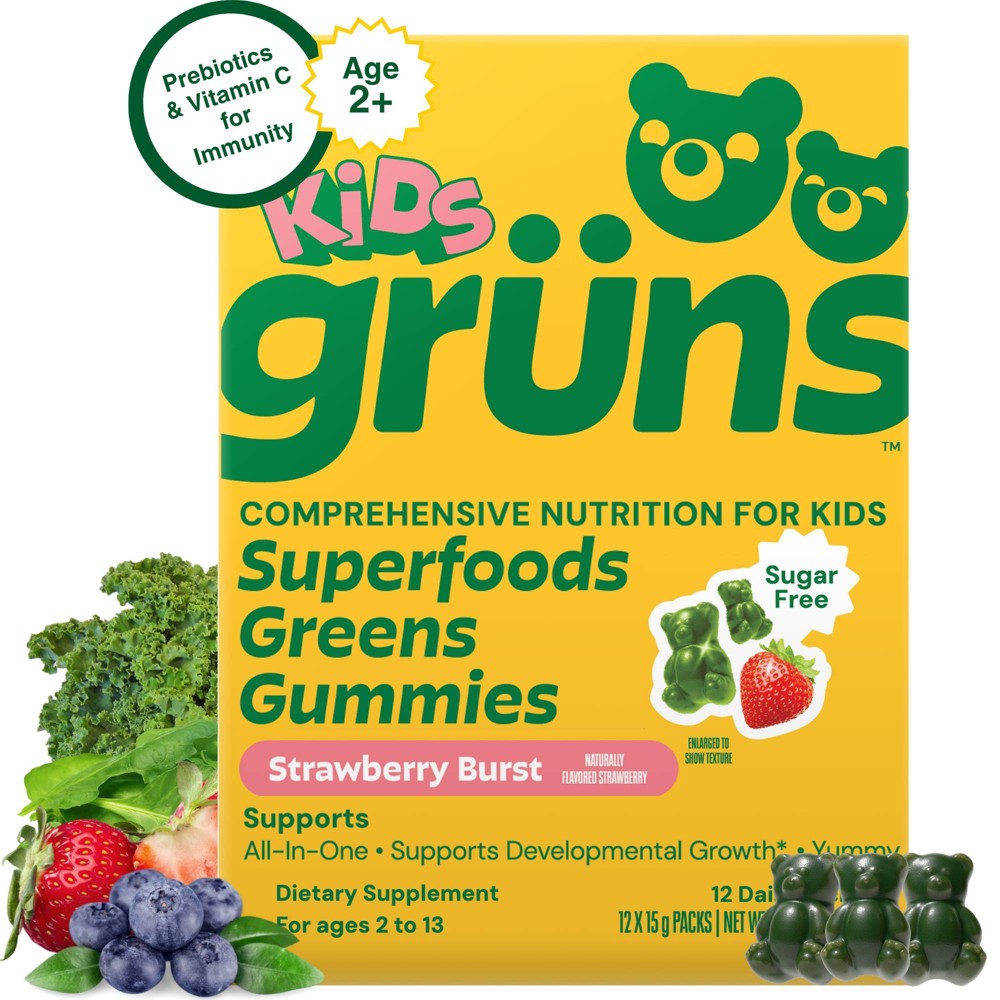


Grüns Kids' Sugar-Free Superfoods Greens Gummies - 180g/12 Servings
Analysis updated August 2026 · How Scout scores
At a glance
Summary
This product features a comprehensive blend of essential vitamins and minerals, along with whole food fruits, vegetables, and beneficial compounds like super mushrooms and adaptogens. The formulation is clean, with no artificial additives or harmful ingredients, and focuses on providing a wide range of nutrients to support overall health. The minimal processing and high-quality ingredients contribute to its strong health profile.
Key ingredients 19
Vitamin AVery Good
Vitamin A is essential for maintaining healthy vision, immune function, and skin health. It is a high-quality active ingredient commonly found in supplements. Its inclusion in the product supports overall health and development.
Benefits
Supports vision, immune function, and skin health.
Vitamin B6Very Good
Vitamin B6 is crucial for brain development and function, as well as the production of neurotransmitters. It is a beneficial ingredient that aids in metabolism and energy production. Its presence in the product enhances cognitive and physical health.
Benefits
Supports brain health and energy metabolism.
Vitamin CVery Good
Vitamin C is a powerful antioxidant that supports the immune system and skin health. It is a well-regarded ingredient in supplements for its role in collagen synthesis and protection against oxidative stress. Its presence enhances immune defense and skin vitality.
Benefits
Boosts immune function and supports skin health.
Vitamin EVery Good
Vitamin E is an antioxidant that protects cells from damage and supports immune function. It is a valuable ingredient in supplements for its role in skin health and anti-inflammatory properties. Its presence contributes to cellular protection and immune support.
Benefits
Protects cells and supports immune health.
Vitamin K2Very Good
Vitamin K2 is important for bone and cardiovascular health. It is a beneficial nutrient that aids in calcium metabolism and arterial health. Its inclusion supports bone strength and heart health.
Benefits
Supports bone and cardiovascular health.
FolateVery Good
Folate is crucial for DNA synthesis and cell division, especially important during periods of rapid growth. It is a high-quality nutrient that supports brain health and fetal development. Its inclusion is vital for overall health and development.
Benefits
Supports DNA synthesis and cell division.
CopperVery Good
Copper is essential for iron metabolism and the formation of red blood cells. It is a beneficial mineral that supports immune function and bone health. Its presence is important for maintaining overall health and vitality.
Benefits
Supports iron metabolism and immune function.
IodineVery Good
Iodine is crucial for thyroid function and hormone production. It is a beneficial nutrient that supports metabolic rate and energy production. Its inclusion is essential for maintaining thyroid health and metabolic balance.
Benefits
Supports thyroid function and energy metabolism.
SeleniumVery Good
Selenium is an antioxidant that protects cells from damage and supports immune function. It is a valuable mineral that aids in thyroid health and DNA synthesis. Its presence contributes to cellular protection and immune support.
Benefits
Protects cells and supports immune health.
IronVery Good
Iron is vital for the production of hemoglobin and oxygen transport in the blood. It is a high-quality mineral that supports energy levels and cognitive function. Its presence is essential for maintaining overall health and vitality.
Benefits
Supports oxygen transport and energy production.
Whole Food FruitsVery Good
Whole food fruits provide essential vitamins, minerals, and antioxidants. They are beneficial ingredients that support overall health and well-being. Their inclusion enhances the nutritional profile of the product.
Benefits
Rich in vitamins, minerals, and antioxidants.
VegetablesVery Good
Vegetables are rich in essential nutrients and fiber, supporting digestive health and overall nutrition. They are beneficial ingredients that enhance the product's health benefits. Their presence contributes to a balanced and nutritious supplement.
Benefits
Rich in nutrients and fiber, supporting overall health.
Super MushroomsVery Good
Super mushrooms are known for their immune-boosting and adaptogenic properties. They are beneficial ingredients that support immune health and stress resilience. Their inclusion enhances the product's health-promoting effects.
Benefits
Supports immune health and stress resilience.
PrebioticsVery Good
Prebiotics support gut health by promoting the growth of beneficial bacteria. They are beneficial ingredients that enhance digestive health and nutrient absorption. Their presence contributes to a healthy gut microbiome.
Benefits
Supports gut health and nutrient absorption.
AdaptogensVery Good
Adaptogens help the body adapt to stress and promote overall well-being. They are beneficial ingredients that support stress management and energy levels. Their inclusion enhances the product's ability to support mental and physical health.
Benefits
Supports stress management and overall well-being.
Vitamin B12Good
Vitamin B12 is vital for nerve function and the production of DNA and red blood cells. It is a high-quality nutrient that supports energy levels and neurological health. Its inclusion is beneficial for maintaining overall vitality.
Benefits
Supports nerve function and energy production.
Vitamin D3Good
Vitamin D3 is essential for calcium absorption and bone health. It is a beneficial ingredient that supports immune function and mood regulation. Its inclusion is crucial for maintaining strong bones and overall well-being.
Benefits
Enhances bone health and supports immune function.
BiotinGood
Biotin is essential for healthy hair, skin, and nails, as well as energy metabolism. It is a beneficial ingredient that supports cellular health and metabolic function. Its presence enhances beauty and energy levels.
Benefits
Promotes healthy hair, skin, and nails.
ZincGood
Zinc is essential for immune function, wound healing, and DNA synthesis. It is a beneficial mineral that supports growth and development. Its inclusion is crucial for maintaining immune health and overall well-being.
Benefits
Supports immune function and wound healing.
Processing
Unprocessed or Minimally Processed Foods
Get the full breakdown in the Scout appTake Scout shopping
Scan any product to see lab results, healthy alternatives, and your personalized analysis.
Download on theApp Store GET IT ONGoogle PlayAmazon pricing & content
Amazon price as of . Product prices and availability are accurate as of the date/time indicated and are subject to change. Any price and availability information displayed on Amazon.com at the time of purchase will apply to the purchase of this product.
CERTAIN CONTENT THAT APPEARS ON THIS SITE COMES FROM AMAZON. THIS CONTENT IS PROVIDED “AS IS” AND IS SUBJECT TO CHANGE OR REMOVAL AT ANY TIME.