
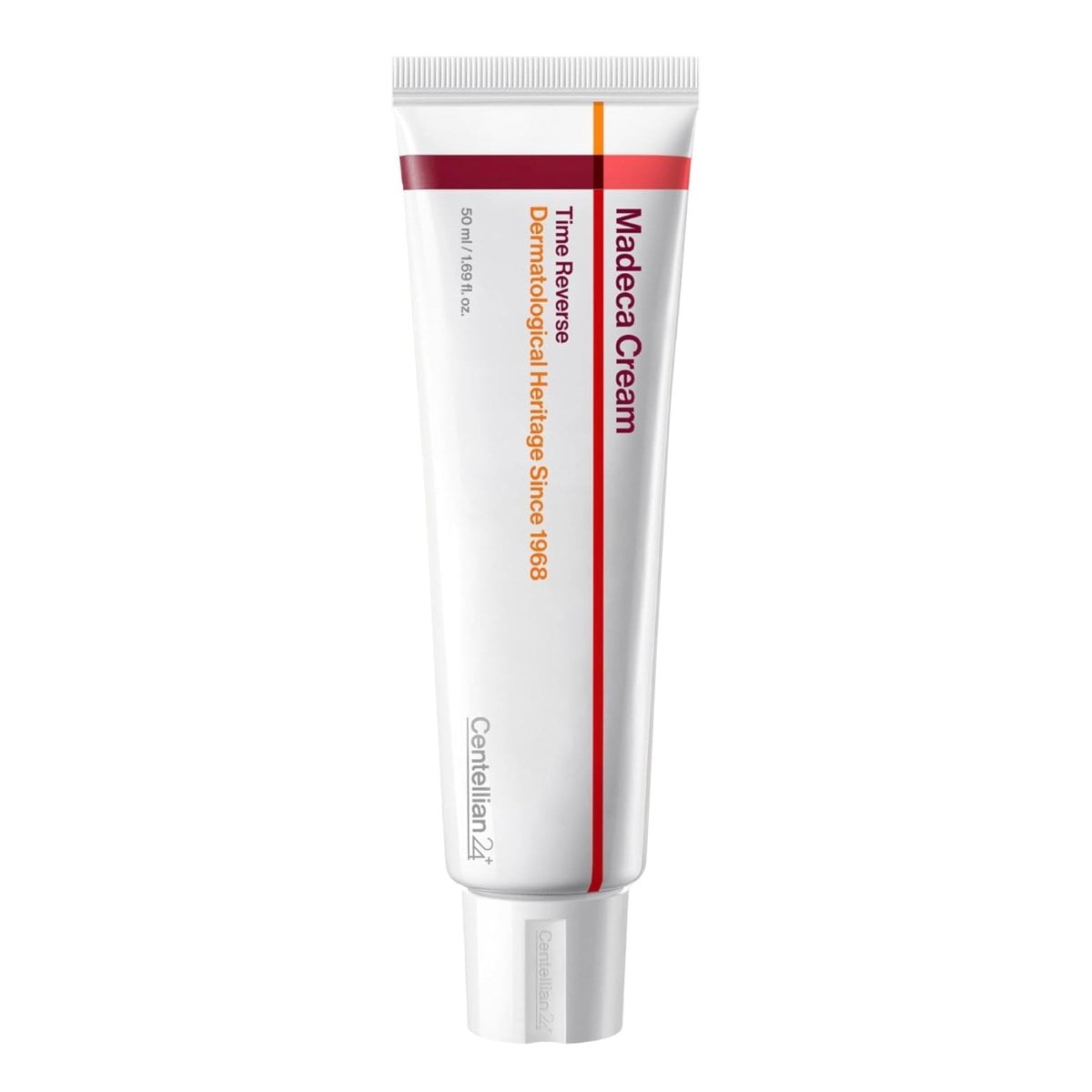
Centellian24 Madeca Cream Time Reverse 50ml 1.69 Fl Oz
Analysis updated August 2026 · How Scout scores
At a glance
Summary
This product features a clean and beneficial ingredient list, including Centella Asiatica Oil, Madecassic Acid, and Hyaluronic Acid, which are known for their soothing, healing, and moisturizing properties. The inclusion of antioxidants like Vitamin C and E, along with skin-repairing ceramides, enhances its anti-aging and protective benefits. The formulation is minimally processed and free from harmful additives, making it an excellent choice for skincare.
Key ingredients 17
Centella Asiatica OilVery Good
Centella Asiatica Oil is derived from a medicinal plant known for its healing properties. It helps to soothe and repair the skin, making it beneficial for sensitive or damaged skin. It is highly regarded for its anti-inflammatory and antioxidant effects.
Risks
There are minimal risks, though allergic reactions are possible in rare cases.
Benefits
It promotes collagen production and enhances skin healing, making it excellent for anti-aging and skin repair.
Madecassic AcidVery Good
Madecassic Acid is a compound derived from Centella Asiatica with anti-inflammatory and healing properties. It helps to soothe irritated skin and promote healing. It is beneficial for sensitive and damaged skin.
Risks
There are minimal risks, though allergic reactions are possible in rare cases.
Benefits
It supports skin repair and reduces inflammation, making it excellent for sensitive skin.
AsiaticosideVery Good
Asiaticoside is a triterpene glycoside from Centella Asiatica known for its skin-healing properties. It helps to stimulate collagen synthesis and improve skin elasticity. It is beneficial for anti-aging and skin repair.
Risks
There are minimal risks, though allergic reactions are possible in rare cases.
Benefits
It enhances skin firmness and elasticity, promoting a youthful appearance.
Vitamin CVery Good
Vitamin C is a potent antioxidant that helps to brighten the skin and reduce signs of aging. It protects against environmental damage and promotes collagen production. It is highly valued for its skin-brightening and anti-aging properties.
Risks
There are minimal risks, though it may cause mild irritation in very sensitive skin.
Benefits
It improves skin tone and texture, providing a radiant and youthful appearance.
Vitamin EVery Good
Vitamin E is a powerful antioxidant that helps to protect the skin from environmental damage. It moisturizes and soothes the skin, reducing inflammation. It is highly regarded for its protective and moisturizing benefits.
Risks
There are minimal risks, though it may cause mild irritation in very sensitive skin.
Benefits
It enhances skin hydration and provides antioxidant protection, making it excellent for all skin types.
CeramidesVery Good
Ceramides are lipids that help to restore the skin's barrier and retain moisture. They improve skin hydration and protect against environmental damage. They are highly valued for their barrier-repairing and moisturizing benefits.
Risks
There are minimal risks, though it may cause mild irritation in very sensitive skin.
Benefits
They enhance skin hydration and barrier function, making them excellent for dry and sensitive skin.
EctoinVery Good
Ectoin is a natural compound known for its protective and moisturizing properties. It helps to stabilize cell membranes and protect against environmental stress. It is highly regarded for its protective and soothing benefits.
Risks
There are minimal risks, though it may cause mild irritation in very sensitive skin.
Benefits
It provides protection against environmental stressors and enhances skin hydration.
RetinoidVery Good
Retinoids are derivatives of Vitamin A known for their anti-aging properties. They help to improve skin texture and reduce the appearance of fine lines and wrinkles. They are highly valued for their skin-renewing and anti-aging benefits.
Risks
There is a risk of irritation and increased sensitivity to sunlight, so sun protection is recommended.
Benefits
They promote cell turnover and improve skin texture, making them excellent for anti-aging.
Hyaluronic AcidGood
Hyaluronic Acid is a powerful humectant that attracts and retains moisture in the skin. It helps to hydrate and plump the skin, reducing the appearance of fine lines. It is highly regarded for its moisturizing and anti-aging benefits.
Risks
There are minimal risks, though it may cause mild irritation in very sensitive skin.
Benefits
It provides intense hydration and improves skin texture, making it excellent for all skin types.
NiacinamideGood
Niacinamide is a form of Vitamin B3 known for its anti-inflammatory and brightening properties. It helps to improve skin tone and texture, reducing redness and hyperpigmentation. It is highly regarded for its skin-brightening and anti-inflammatory benefits.
Risks
There are minimal risks, though it may cause mild irritation in very sensitive skin.
Benefits
It improves skin tone and texture, providing a radiant and even complexion.
AquaNeutral
Aqua, or water, is a common solvent used in cosmetics. It helps dissolve other ingredients and provides a base for the formulation. It is generally considered safe and non-irritating.
Risks
There are no significant risks associated with water in cosmetic formulations.
Benefits
Water helps to hydrate the skin and is essential for the formulation of creams and lotions.
Dipropylene GlycolNeutral
Dipropylene Glycol is a solvent and viscosity-decreasing agent. It helps to improve the texture and spreadability of the product. It is generally considered safe for use in cosmetics.
Risks
In rare cases, it may cause mild irritation in sensitive individuals.
Benefits
It enhances the absorption of other ingredients and provides a smooth application.
Hydrogenated PolydeceneNeutral
Hydrogenated Polydecene is an emollient that provides a silky feel to the skin. It helps to lock in moisture and improve skin texture. It is considered safe for use in cosmetics.
Risks
There are minimal risks associated with its use, though it may cause mild irritation in very sensitive skin.
Benefits
It provides a non-greasy, smooth finish and helps to maintain skin hydration.
Caprylic/CapricNeutral
Caprylic/Capric Triglyceride is an emollient derived from coconut oil and glycerin. It helps to moisturize and replenish the skin. It is widely used in cosmetics for its skin-conditioning properties.
Risks
It is generally safe, but in rare cases, it may cause mild irritation.
Benefits
It provides a lightweight, non-greasy feel and helps to improve the skin's barrier function.
Cetyl AlcoholNeutral
Cetyl Alcohol is a fatty alcohol used as an emollient and thickening agent. It helps to stabilize emulsions and improve the texture of the product. It is considered safe and non-irritating.
Risks
There are minimal risks, though it may cause mild irritation in very sensitive skin.
Benefits
It provides a smooth, creamy texture and helps to soften and condition the skin.
PropanediolNeutral
Propanediol is a glycol used as a solvent and skin-conditioning agent. It helps to improve the texture and absorption of the product. It is considered safe and non-irritating.
Risks
There are minimal risks, though it may cause mild irritation in very sensitive skin.
Benefits
It enhances the penetration of other ingredients and provides a smooth application.
AsiaticNeutral
Asiatic refers to compounds derived from Centella Asiatica, known for their skin-soothing properties. They help to calm and repair the skin. They are generally considered safe and beneficial for sensitive skin.
Risks
There are minimal risks, though allergic reactions are possible in rare cases.
Benefits
They promote skin healing and reduce inflammation, making them excellent for sensitive skin.
Processing
Processed Foods
Get the full breakdown in the Scout appTake Scout shopping
Scan any product to see lab results, healthy alternatives, and your personalized analysis.
Download on theApp Store GET IT ONGoogle PlayAmazon pricing & content
Amazon price as of . Product prices and availability are accurate as of the date/time indicated and are subject to change. Any price and availability information displayed on Amazon.com at the time of purchase will apply to the purchase of this product.
CERTAIN CONTENT THAT APPEARS ON THIS SITE COMES FROM AMAZON. THIS CONTENT IS PROVIDED “AS IS” AND IS SUBJECT TO CHANGE OR REMOVAL AT ANY TIME.