
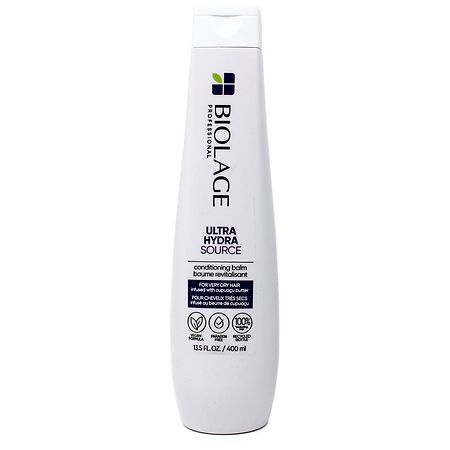


Biolage Ultra Hydra Source Conditioner for Very Dry Hair 13.5 oz.
Summary
This conditioner features beneficial ingredients like aloe, cetearyl alcohol, palm oil, and cupuaçu butter, which provide hydration and nourishment to dry hair. It is free from harsh sulfates, silicones, and parabens, making it a gentle choice for hair and scalp health. The product's processing level is moderate, but the clean ingredient list supports a strong score for safety and effectiveness.
At a glance
Key ingredients 7
AloeGood
Aloe is known for its hydrating properties, making it beneficial for dry hair. It helps to soothe the scalp and reduce dandruff. Aloe can also promote hair growth by improving blood circulation.
Risks
There are minimal risks associated with aloe, though some individuals may experience allergic reactions.
Benefits
Aloe provides moisture and nourishment to the hair, enhancing its overall health and appearance.
Salicylic AcidNeutral
Salicylic acid is often used in hair care for its exfoliating properties, helping to remove dead skin cells from the scalp. It can aid in reducing dandruff and promoting a healthier scalp environment. However, it is not primarily a conditioning agent.
Risks
Overuse of salicylic acid can lead to scalp irritation or dryness.
Benefits
It helps maintain a clean and healthy scalp, which can indirectly benefit hair health.
Chlorhexidine DihydrochlorideNeutral
Chlorhexidine dihydrochloride is an antimicrobial agent that helps reduce bacteria and fungi on the scalp. It is often used in medicated shampoos and conditioners. While effective for scalp health, it does not directly condition the hair.
Risks
Potential risks include irritation or allergic reactions in sensitive individuals.
Benefits
It helps maintain a healthy scalp by controlling microbial growth.
Citric AcidNeutral
Citric acid is used to adjust the pH of hair care products, ensuring they are not too alkaline. It can help smooth the hair cuticle, enhancing shine. However, it is not a conditioning agent itself.
Risks
In high concentrations, citric acid can cause irritation or dryness.
Benefits
It helps maintain the product's stability and can enhance hair shine.
Cetearyl AlcoholGood
Cetearyl alcohol is a fatty alcohol that acts as an emulsifier and thickener in hair care products. It helps to soften and smooth the hair, making it easier to manage. Unlike drying alcohols, it provides moisture and conditioning benefits.
Risks
There are minimal risks associated with cetearyl alcohol, as it is generally well-tolerated.
Benefits
It improves the texture and manageability of hair, providing a conditioning effect.
Elaeis Guineensis OilVery Good
Elaeis guineensis oil, commonly known as palm oil, is rich in fatty acids and antioxidants. It provides deep conditioning and helps to lock in moisture, making it beneficial for dry hair. The oil also adds shine and smoothness to the hair.
Risks
Sustainability concerns exist with palm oil production, but it is generally safe for topical use.
Benefits
It deeply conditions and nourishes the hair, improving its overall health and appearance.
Cupuaçu ButterVery Good
Cupuaçu butter is a natural emollient that provides intense hydration and nourishment to the hair. It helps to improve elasticity and prevent breakage. The butter is rich in fatty acids, which help to smooth and soften the hair.
Risks
There are minimal risks associated with cupuaçu butter, though some individuals may experience allergic reactions.
Benefits
It provides deep hydration and improves hair elasticity, making it ideal for very dry hair.
Processing
Processed Foods
Get the full breakdown in the Scout app
Scan any product to see lab results, healthy alternatives, and your personalized analysis.
Download on theApp Store