
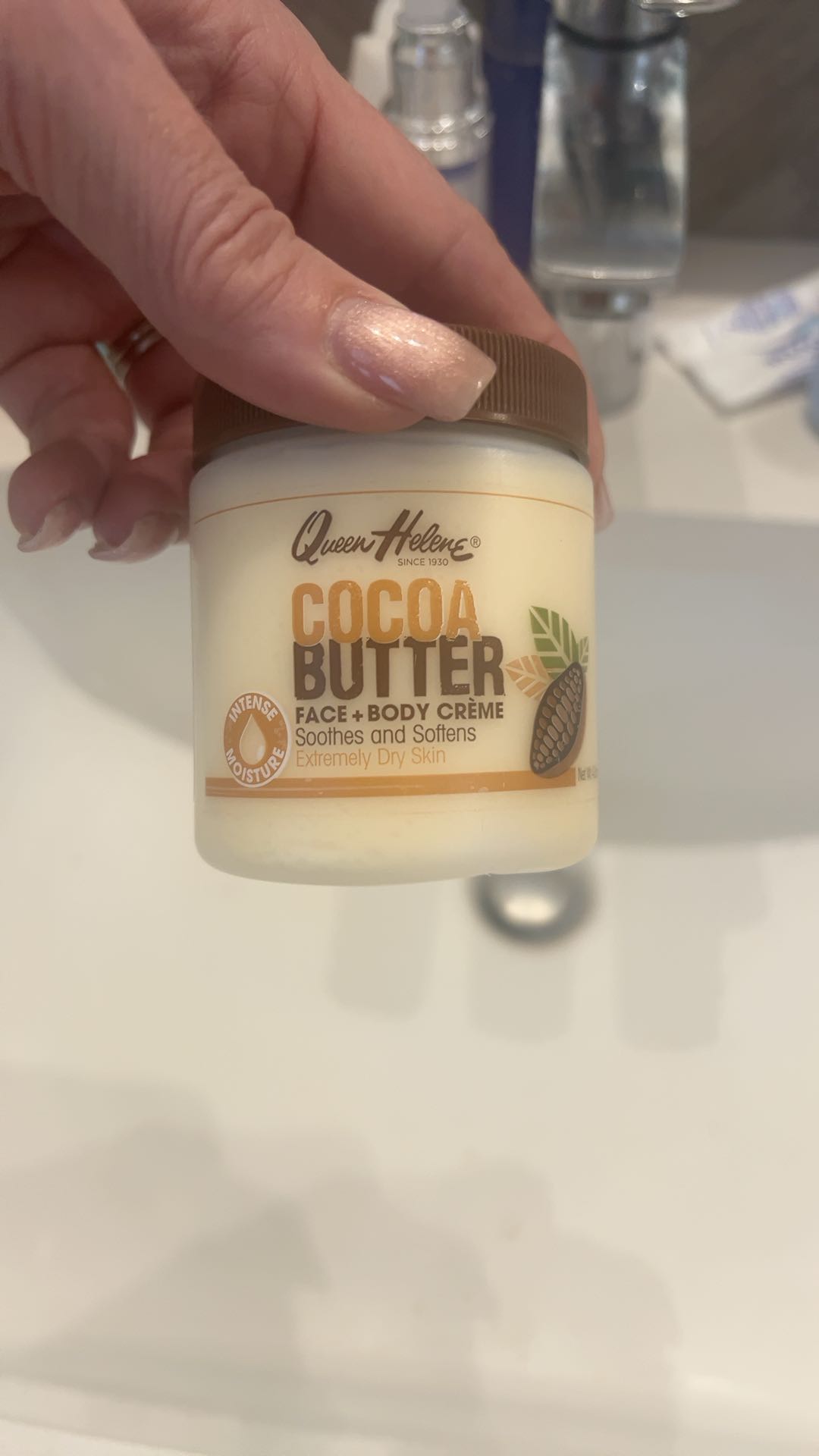


Queen Helene Cocoa Butter Face & Body Creme 15 Oz
Analysis updated August 2026 · How Scout scores
At a glance
Summary
This body creme contains beneficial ingredients like beeswax, cocoa butter, and lanolin, which are known for their moisturizing and protective properties. However, the presence of paraffinum liquidum and sodium borate, which can be irritating and are associated with contamination risks, lowers its overall safety profile. The product has a mix of natural and synthetic components, resulting in a moderate processing level.
Key ingredients 10
BeeswaxVery Good
Beeswax is a natural wax produced by honeybees and is used as an emollient and thickening agent in cosmetics. It helps to form a protective barrier on the skin, locking in moisture. Additionally, it has anti-inflammatory properties that can soothe irritated skin.
Risks
There is a minimal risk of allergic reactions in individuals sensitive to bee products.
Benefits
It provides a protective barrier on the skin and has anti-inflammatory properties, making it beneficial for soothing and moisturizing.
Theobroma Cacao Seed ButterVery Good
Theobroma Cacao Seed Butter, commonly known as cocoa butter, is a natural fat extracted from cocoa beans. It is rich in fatty acids, which help to hydrate and nourish the skin. It also contains antioxidants that can help protect the skin from environmental stressors.
Risks
There is a low risk of allergic reactions, but it is generally considered safe for most skin types.
Benefits
It deeply moisturizes the skin and provides antioxidants that help protect against environmental damage.
LanolinGood
Lanolin is a natural substance derived from sheep's wool and is used as an emollient in cosmetics. It is highly effective at moisturizing and softening the skin. It also helps to repair the skin barrier and retain moisture.
Risks
There is a potential risk of allergic reactions in individuals sensitive to wool-derived products.
Benefits
It is an excellent moisturizer that helps to repair the skin barrier and retain moisture.
WaterNeutral
Water is a universal solvent and is used as a base in many cosmetic formulations. It helps to dissolve other ingredients and provides hydration to the skin. However, it does not have any active benefits on its own.
Risks
There are no significant risks associated with water in cosmetic formulations.
Benefits
It helps to hydrate the skin and acts as a carrier for other beneficial ingredients.
Stearyl AlcoholNeutral
Stearyl Alcohol is a fatty alcohol used as an emollient and thickening agent in cosmetics. It helps to improve the texture and spreadability of products. It is not drying like other alcohols and is generally considered safe for skin.
Risks
There are minimal risks associated with stearyl alcohol, as it is non-irritating and safe for most skin types.
Benefits
It helps to improve the texture of cosmetic products and provides emollient properties.
EthylhexylglycerinNeutral
Ethylhexylglycerin is used as a preservative and skin conditioning agent in cosmetics. It helps to enhance the efficacy of other preservatives and provides mild moisturizing benefits. It is generally considered safe for use in cosmetics.
Risks
There is a low risk of skin irritation, but it is generally well-tolerated.
Benefits
It acts as a preservative booster and provides mild moisturizing benefits.
CoumarinNeutral
Coumarin is a naturally occurring compound used for its fragrance in cosmetics. It provides a pleasant scent to products but does not have significant skin benefits. It is generally used in low concentrations to minimize potential risks.
Risks
There is a potential risk of allergic reactions, especially in individuals sensitive to fragrances.
Benefits
It provides a pleasant fragrance to cosmetic products.
Paraffinum LiquidumBad
Processed additive flagged under Scout's ingredient doctrine.
Risks
There is a potential risk of clogging pores, which may lead to acne in some individuals.
Benefits
It is effective at creating a barrier on the skin to prevent moisture loss, making it useful for dry skin.
ParaffinBad
Processed additive flagged under Scout's ingredient doctrine.
Risks
Like mineral oil, paraffin can potentially clog pores, leading to acne in some individuals.
Benefits
It helps to create a barrier on the skin to retain moisture, which is beneficial for dry skin.
Sodium BorateBad
Sodium Borate, also known as borax, is used as a buffering agent and preservative in cosmetics. It helps to stabilize the pH of formulations. However, it can be irritating to the skin and eyes, especially in high concentrations.
Risks
It may cause skin irritation and should be used with caution, especially on sensitive skin.
Benefits
It helps to stabilize the pH of cosmetic formulations, ensuring product stability.
Get the full breakdown in the Scout appTake Scout shopping
Scan any product to see lab results, healthy alternatives, and your personalized analysis.
Download on theApp Store GET IT ONGoogle PlayAmazon pricing & content
Amazon price as of . Product prices and availability are accurate as of the date/time indicated and are subject to change. Any price and availability information displayed on Amazon.com at the time of purchase will apply to the purchase of this product.
CERTAIN CONTENT THAT APPEARS ON THIS SITE COMES FROM AMAZON. THIS CONTENT IS PROVIDED “AS IS” AND IS SUBJECT TO CHANGE OR REMOVAL AT ANY TIME.