
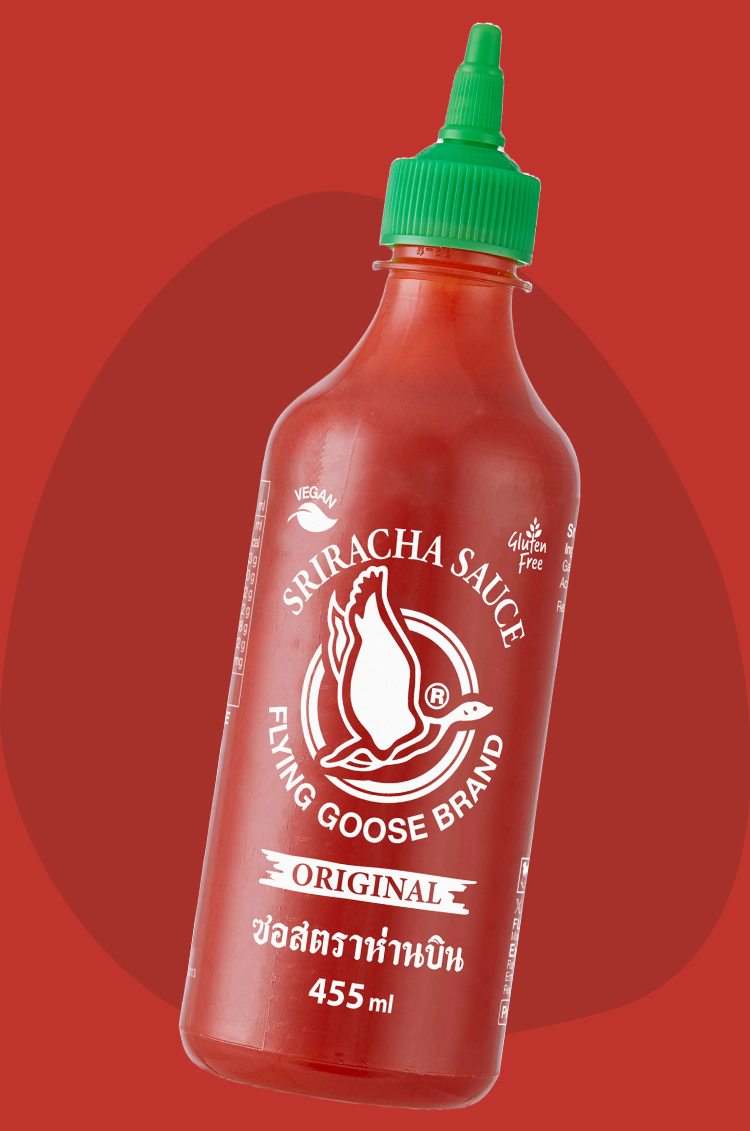


Flying Goose Brand Sriracha Hot Chili Sauce Spicy Sauce Original 24.6oz / 730 mL
Summary
This hot chili sauce is heavily processed, containing multiple additives such as monosodium glutamate and potassium sorbate, which are common in processed foods and raise health concerns. Despite a high percentage of natural chili, the sauce has a significant amount of added sugar, contributing to its high calorie content. The combination of these factors, along with its ultra-processed nature, limits its healthiness despite some natural ingredients.
At a glance
Key ingredients 7
ChilliGood
Chilli is a natural ingredient that provides heat and flavor to the sauce. It contains capsaicin, which may have metabolism-boosting properties. The high percentage of chilli indicates a strong presence of natural ingredients.
Risks
Excessive consumption may cause digestive discomfort in sensitive individuals.
Benefits
Rich in vitamins A and C, and capsaicin, which may support metabolism and provide antioxidant benefits.
SugarBad
Sugar is a refined carbohydrate that contributes to the sweetness of the sauce. High sugar content can lead to increased calorie intake and potential health issues. It is not a natural sugar source and lacks nutritional benefits.
Risks
Excessive sugar consumption is linked to obesity, diabetes, and heart disease.
Monosodium GlutamateBad
Monosodium glutamate (MSG) is used as a flavor enhancer in processed foods. It can cause adverse reactions in sensitive individuals, such as headaches or nausea. Its use is controversial due to potential health concerns.
Risks
May cause headaches, nausea, or other symptoms in sensitive individuals.
Benefits
Enhances flavor, making foods more palatable.
Xanthan GumNeutral
Xanthan gum is a common food additive used as a thickener and stabilizer. It is produced through fermentation and is generally considered safe in small amounts. It does not provide nutritional benefits but helps maintain product consistency.
Risks
Excessive consumption may cause digestive issues in some individuals.
Benefits
Helps stabilize and thicken products, improving texture.
Acetic AcidNeutral
Acetic acid is used as an acidity regulator in foods. It is the main component of vinegar and is generally recognized as safe. It helps preserve the product and enhance flavor.
Benefits
Acts as a preservative and flavor enhancer.
Citric AcidNeutral
Citric acid is a natural acid found in citrus fruits, used as a preservative and flavoring agent. It is widely used in the food industry and is considered safe. It helps maintain the acidity and freshness of the product.
Benefits
Enhances flavor and acts as a preservative.
Potassium SorbateBad
Potassium sorbate is a synthetic preservative used to extend shelf life. It is effective in preventing mold and yeast growth but is a synthetic additive. Its use is common in processed foods, raising concerns about long-term consumption.
Risks
May cause allergic reactions or sensitivities in some individuals.
Benefits
Prevents spoilage by inhibiting mold and yeast growth.
Processing
Ultra-Processed Foods
Get the full breakdown in the Scout app
Scan any product to see lab results, healthy alternatives, and your personalized analysis.
Download on theApp Store