
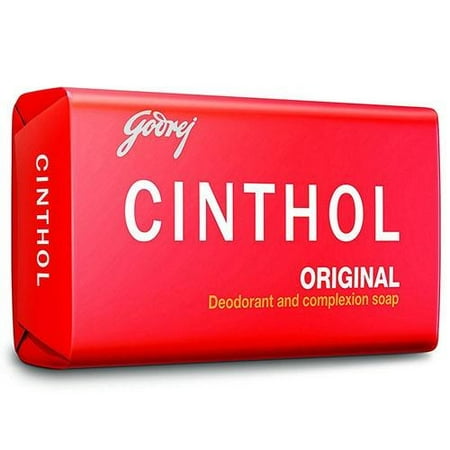


CINTHOL ORIGINAL SOAP 100 GM
Summary
Cinthol Original Soap is a processed personal care product that contains synthetic ingredients typical of many soaps. While it does not contain some of the most harmful chemicals like parabens or formaldehyde releasers, it may include surfactants and preservatives that are not entirely natural. The level of processing and the presence of synthetic components prevent it from achieving a higher score.
At a glance
Key ingredients 12
Sodium Palmate
Sodium Palmate is a surfactant derived from palm oil, commonly used in soap making. It helps to cleanse the skin by removing dirt and oils. It is generally considered safe for use in cosmetics.
Risks
There are environmental concerns related to palm oil production, including deforestation and habitat destruction.
Benefits
It effectively cleanses the skin and is biodegradable.
Sodium Palm Kernelate
Sodium Palm Kernelate is a surfactant derived from palm kernel oil, used for its cleansing properties. It helps to create a lather in soap products. It is generally regarded as safe for use in cosmetics.
Risks
Similar to Sodium Palmate, it poses environmental concerns due to palm oil production practices.
Benefits
It provides effective cleansing and is biodegradable.
Water
Water is used as a solvent in many cosmetic products, helping to dissolve other ingredients. It is essential for the formulation of liquid and semi-solid products. It is universally recognized as safe.
Risks
There are no significant risks associated with water in cosmetics.
Benefits
It hydrates the skin and helps in the application of the product.
Perfume
Perfume is added to cosmetics to provide a pleasant scent. It is a mixture of various aromatic compounds. However, it can be a source of allergens and irritants.
Risks
Perfume can cause skin irritation and allergic reactions in sensitive individuals.
Benefits
It enhances the sensory experience of using the product.
Triclocarban
Triclocarban is an antimicrobial agent used in personal care products to reduce or prevent bacterial contamination. It is effective in controlling odor and bacteria on the skin. However, its safety has been questioned due to potential endocrine-disrupting effects.
Risks
Triclocarban may disrupt hormone function and contribute to antibiotic resistance.
Benefits
It provides antibacterial properties, helping to maintain hygiene.
Sodium Chloride
Sodium Chloride, or table salt, is used in cosmetics as a thickening agent and to enhance the cleansing effect of surfactants. It is generally considered safe for use in personal care products. It can also help to improve the texture of the product.
Risks
In high concentrations, it may cause skin dryness or irritation.
Benefits
It helps to thicken the product and improve its cleansing properties.
Glycerin
Glycerin is a humectant that attracts moisture to the skin, helping to keep it hydrated. It is widely used in cosmetics for its moisturizing properties. It is considered safe and beneficial for most skin types.
Risks
There are minimal risks associated with glycerin, though it may cause irritation in very sensitive skin.
Benefits
It effectively moisturizes and softens the skin.
Titanium Dioxide
Titanium Dioxide is used in cosmetics as a pigment and UV filter. It provides opacity and whiteness to products and can help protect the skin from UV radiation. It is generally considered safe when used in non-nano form.
Risks
Inhalation of its powder form can be harmful, and there are concerns about its safety in nano form.
Benefits
It offers sun protection and improves product appearance.
Disodium EDTA
Disodium EDTA is a chelating agent used in cosmetics to improve stability and prevent metal ion contamination. It helps to maintain the integrity of the product over time. It is generally considered safe in low concentrations.
Risks
There are concerns about its environmental impact, as it is not readily biodegradable.
Benefits
It enhances product stability and shelf life.
BHT
BHT (Butylated Hydroxytoluene) is an antioxidant used in cosmetics to prevent the oxidation of ingredients, thereby extending product shelf life. It is effective in maintaining product quality. However, its safety has been debated due to potential health risks.
Risks
BHT may cause skin irritation and has been linked to potential endocrine disruption.
Benefits
It helps to preserve the product by preventing ingredient degradation.
Citric Acid
Citric Acid is used in cosmetics to adjust pH levels and as a preservative. It helps to maintain the stability and effectiveness of the product. It is generally recognized as safe for use in cosmetics.
Risks
In high concentrations, it may cause skin irritation or sensitivity.
Benefits
It helps to balance pH and preserve the product.
CI 47000
CI 47000, also known as D&C Yellow No. 11, is a synthetic dye used to impart color to cosmetics. It is approved for use in certain cosmetic applications. However, synthetic dyes can sometimes cause allergic reactions.
Risks
There is a potential for allergic reactions or skin irritation in sensitive individuals.
Benefits
It provides vibrant color to the product.
Processing
Processed Foods
Get the full breakdown in the Scout app
Scan any product to see lab results, healthy alternatives, and your personalized analysis.
Download on theApp Store