

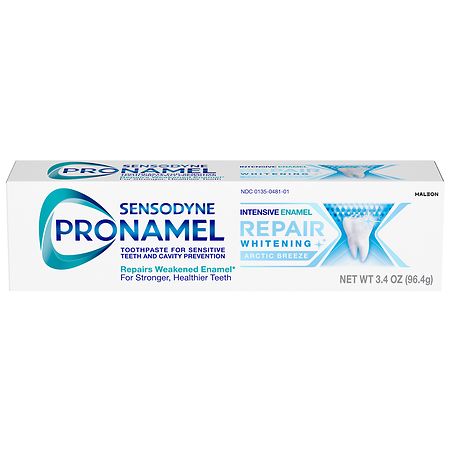

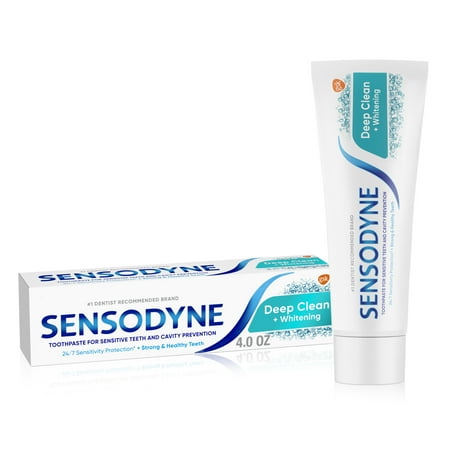

Toothpaste With Novamin Repair And Protect From Sensodyne - (70g x 5), Free Ship
Summary
This toothpaste contains Novamin, which is beneficial for enamel repair, but also includes fluoride, which can be toxic in excess. The presence of processed ingredients limits its score, despite some beneficial components. The product's processing level and inclusion of potentially concerning substances like fluoride prevent it from achieving a higher rating.
At a glance
Key ingredients 13
Glycerin
Glycerin is a humectant that helps retain moisture in toothpaste, preventing it from drying out. It is generally considered safe for oral care products. However, it can leave a film on teeth that may inhibit remineralization.
Risks
There are minimal risks associated with glycerin, though it may contribute to a sticky feeling in the mouth.
Benefits
Glycerin helps maintain the moisture and consistency of toothpaste, enhancing user experience.
PEG-8
PEG-8 is used as a humectant and solvent in toothpaste formulations. It helps to maintain the product's texture and stability. However, it is a petroleum-derived compound and may contain impurities.
Risks
PEG-8 can be contaminated with ethylene oxide and 1,4-dioxane, which are potential carcinogens.
Benefits
It helps to keep the toothpaste smooth and prevents it from drying out.
Hydrated Silica
Hydrated silica is used as an abrasive to help remove plaque and stains from teeth. It is effective in polishing teeth but can be abrasive if used excessively. Overuse may lead to enamel erosion.
Risks
Excessive use of hydrated silica can lead to enamel wear over time.
Benefits
It effectively cleans and polishes teeth, contributing to a brighter smile.
Calcium Sodium Phosphosilicate (NOVAMIN)
Novamin is a bioactive glass that releases calcium and phosphate ions to help remineralize and repair tooth enamel. It is beneficial for sensitive teeth and promotes oral health. However, its effectiveness can vary based on formulation and usage.
Risks
There are minimal risks, though its effectiveness may be limited without proper formulation.
Benefits
Novamin aids in remineralizing enamel and reducing tooth sensitivity.
Cocamidopropyl Betaine
Cocamidopropyl betaine is a surfactant used to create foam and improve the spreadability of toothpaste. It is derived from coconut oil but can cause allergic reactions in some individuals. It is generally considered safe for use in oral care products.
Risks
It may cause skin irritation or allergic reactions in sensitive individuals.
Benefits
It enhances the foaming action of toothpaste, improving cleaning efficiency.
Sodium Methyl Cocoyl Taurate
Sodium methyl cocoyl taurate is a mild surfactant that helps to create foam and cleanse the teeth. It is derived from coconut oil and is considered gentle on the skin and mucous membranes. It is generally safe for use in oral care products.
Risks
There are minimal risks, though it may cause irritation in very sensitive individuals.
Benefits
It provides gentle cleansing and foaming action, enhancing the toothpaste's effectiveness.
Aroma
Aroma in toothpaste is used to provide a pleasant taste and freshen breath. It can be derived from natural or synthetic sources. Synthetic aromas may contain undisclosed chemicals.
Risks
Synthetic aromas can contain allergens or irritants that may cause reactions in sensitive individuals.
Benefits
It improves the taste and user experience of the toothpaste.
Titanium Dioxide
Titanium dioxide is used as a whitening agent to give toothpaste a bright, white appearance. It is generally considered safe in small amounts but has raised concerns when used in nanoparticle form. There is ongoing debate about its safety in food and cosmetics.
Risks
There are concerns about its safety in nanoparticle form, though it is generally considered safe in toothpaste.
Benefits
It enhances the visual appeal of toothpaste by providing a bright, white color.
Carbomer
Carbomer is a thickening agent that helps to stabilize and maintain the consistency of toothpaste. It is a synthetic polymer and is generally considered safe for use in oral care products. However, it is a synthetic ingredient and may not be preferred by those seeking natural products.
Risks
There are minimal risks, though it is a synthetic ingredient.
Benefits
It helps maintain the toothpaste's texture and stability, ensuring a consistent product.
Silica
Silica is used as an abrasive to help clean and polish teeth. It is effective in removing plaque and surface stains. However, excessive use can lead to enamel erosion.
Risks
Overuse of silica can contribute to enamel wear over time.
Benefits
It effectively cleans and polishes teeth, contributing to oral hygiene.
Sodium Saccharin
Sodium saccharin is an artificial sweetener used to improve the taste of toothpaste. It is calorie-free and provides sweetness without contributing to tooth decay. However, it can disrupt the gut microbiome and is not preferred by those seeking natural ingredients.
Risks
It may disrupt the gut microbiome and is not preferred by those seeking natural ingredients.
Benefits
It enhances the taste of toothpaste without adding calories or promoting tooth decay.
Sodium Fluoride
Sodium fluoride is used to strengthen tooth enamel and prevent cavities. It is effective in reducing tooth decay but can be toxic in excessive amounts. Overuse can lead to dental fluorosis, especially in children.
Risks
Excessive fluoride can cause dental fluorosis and other health issues.
Benefits
It helps to strengthen enamel and prevent cavities, contributing to oral health.
Limonene
Limonene is a natural compound used for its pleasant citrus aroma and potential antimicrobial properties. It is generally considered safe but can cause allergic reactions in some individuals. It is often used in natural and organic products.
Risks
It may cause allergic reactions in sensitive individuals.
Benefits
It provides a pleasant aroma and may have antimicrobial properties.
Processing
Processed Foods
Get the full breakdown in the Scout app
Scan any product to see lab results, healthy alternatives, and your personalized analysis.
Download on theApp Store