
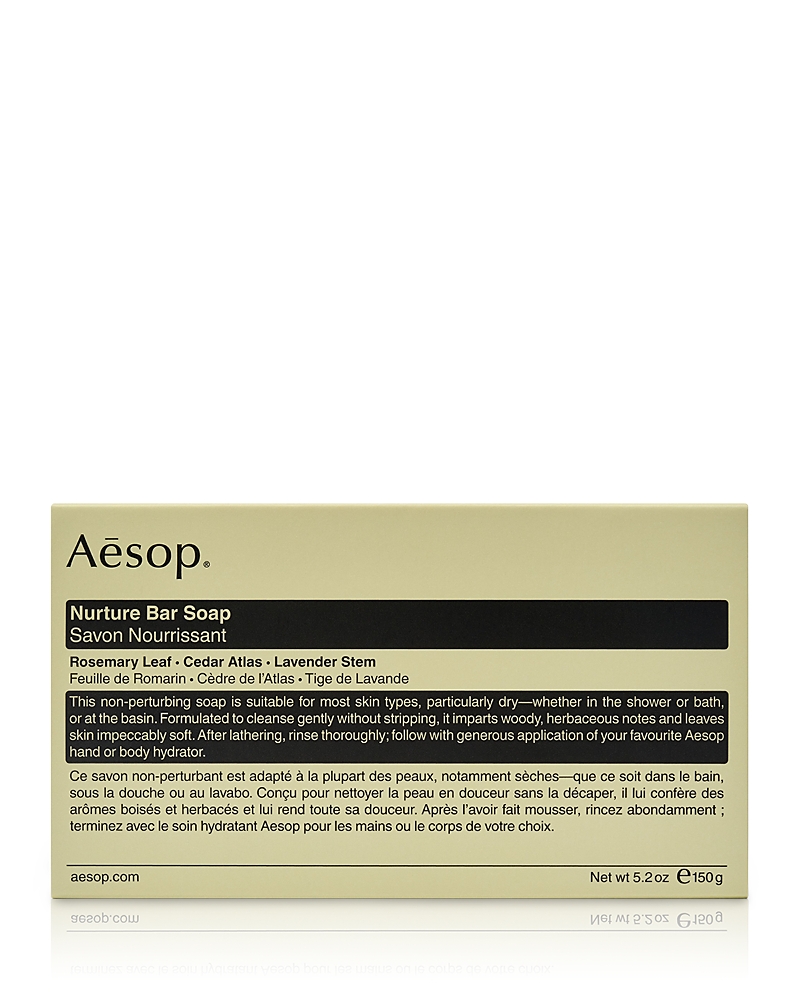


Aesop Nurture Bar Soap
Summary
The Aesop Nurture Bar Soap contains a mix of natural and synthetic ingredients, which results in a moderate processing level. While it includes beneficial botanicals and oils that are generally safe for skin, the presence of synthetic components and the processing involved prevent it from achieving a higher score. The product does not contain any highly concerning chemicals, but the balance of natural versus synthetic ingredients influences its rating.
At a glance
Key ingredients 7
Sodium Palmate
Sodium Palmate is a surfactant derived from palm oil, commonly used in soap making. It helps to cleanse the skin by removing dirt and oils. It is generally considered safe for use in cosmetics.
Risks
There are environmental concerns related to palm oil production, including deforestation and habitat destruction.
Benefits
It effectively cleanses the skin and is biodegradable, making it an environmentally friendly choice compared to synthetic surfactants.
Sodium Palm Kernelate
Sodium Palm Kernelate is a surfactant derived from palm kernel oil, used to create lather in soaps. It is effective in removing oils and dirt from the skin. It is widely used in personal care products.
Risks
Similar to Sodium Palmate, it raises environmental concerns due to palm oil production practices.
Benefits
It provides a rich lather and is biodegradable, contributing to a more sustainable product.
Water (Aqua)
Water is used as a solvent in cosmetics, helping to dissolve other ingredients. It is essential for the formulation of many personal care products. It is safe and non-toxic.
Risks
There are no significant risks associated with water in cosmetics.
Benefits
It hydrates the skin and helps in the application and absorption of other ingredients.
Glycerin
Glycerin is a humectant that attracts moisture to the skin, helping to keep it hydrated. It is a common ingredient in skincare products due to its moisturizing properties. It is considered safe and effective.
Risks
There are minimal risks associated with glycerin, though it may cause irritation in very sensitive skin.
Benefits
It improves skin hydration and barrier function, making it beneficial for dry skin.
Butyrospermum Parkii (Shea) Butter
Shea Butter is a natural fat extracted from the nuts of the shea tree, known for its moisturizing and emollient properties. It is rich in vitamins and fatty acids, making it beneficial for skin health. It is widely used in skincare for its nourishing effects.
Risks
There are minimal risks, though individuals with nut allergies should exercise caution.
Benefits
It deeply moisturizes and nourishes the skin, improving elasticity and softness.
Lavandula Angustifolia (Lavender) Oil
Lavender Oil is an essential oil known for its calming scent and potential skin-soothing properties. It is used in cosmetics for its fragrance and potential anti-inflammatory effects. It is generally considered safe when used in appropriate concentrations.
Risks
It may cause irritation or allergic reactions in sensitive individuals.
Benefits
It provides a pleasant aroma and may help soothe irritated skin.
Sodium Citrate
Sodium Citrate is used as a buffering agent in cosmetics to maintain the pH balance. It helps stabilize formulations and enhance product performance. It is considered safe for use in personal care products.
Risks
There are no significant risks associated with sodium citrate in cosmetics.
Benefits
It helps maintain the stability and effectiveness of the product.
Processing
Processed Foods
Get the full breakdown in the Scout app
Scan any product to see lab results, healthy alternatives, and your personalized analysis.
Download on theApp Store