

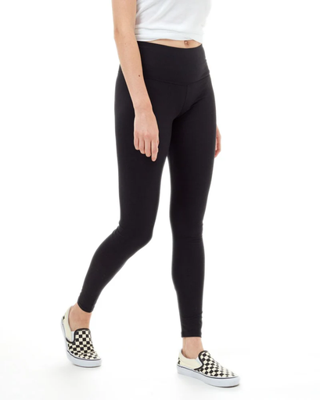

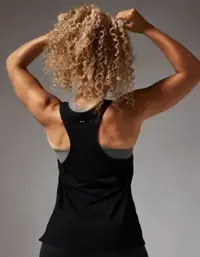
Aktiiv Proterra Leggings
At a glance
Summary
Aktiiv Proterra Leggings score 78/100. Entirely Proterra fabric — 42% plant-based nylon grown from castor beans, 40% biodegradable bio-accelerated nylon, and 18% Roica V550 degradable stretch — with no conventional trim anywhere in the garment. Aktiiv's Proterra fabric is plant-based and biodegradable, and every yarn in it is OEKO-TEX STANDARD 100 certified to Annex 6, Product Class I — the babies-and-toddlers tier, which carries the strictest limit values in the scheme and screens over a thousand substances. Aktiiv also lab-tests non-detect for BPA, PFAS, azo dyes, phthalates, and formaldehyde. On chemical exposure that is a stronger position than most certified-organic activewear, which is certified but rarely lab-tested. What holds the score below the natural-fiber leaders is that this is still a synthetic knit: it sheds microfibres during wear and washing. Most of that shedding breaks down rather than persisting, but the castor-based nylon is bio-sourced rather than biodegradable and behaves like ordinary nylon once released.
Key ingredients 3
Plant-Based Nylon (42%)Good
A 100% bio-based polyamide spun from castor beans rather than petroleum, and OEKO-TEX Standard 100 Class I certified. Bio-based is not the same as biodegradable, though — this fiber still sheds microfibres that persist like conventional nylon.
See more about Plant-Based Nylon (42%) →Biodegradable Bio-Accelerated Nylon (40%)Good
An additive lets microbes break this polyamide down: roughly five years in anaerobic landfill against fifty-plus for ordinary nylon, and the microfibres it sheds in the wash degrade far faster in seawater. Testing found the byproducts to be organic matter, not toxic residues.
See more about Biodegradable Bio-Accelerated Nylon (40%) →Roica V550 (18%)Neutral
The stretch fiber, and the only elastane holding a Cradle to Cradle Material Health Gold certificate. It partially decomposes into CO2 and water under industrial composting, though the manufacturer is explicit that full degradation has not been verified. It is what gives the garment its recovery.
See more about Roica V550 (18%) →Get the full breakdown in the Scout appTake Scout shopping
Scan any product to see lab results, healthy alternatives, and your personalized analysis.
Download on theApp Store GET IT ONGoogle Play