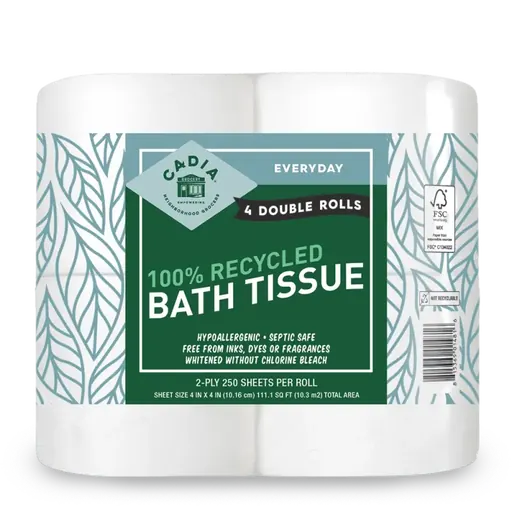
Cadia Everyday 100% Recycled Bath Tissue
At a glance
Summary
This product is made from 100% recycled paper fiber, with a high percentage of post-consumer content, which is beneficial for sustainability and reducing waste. It avoids the use of chlorine bleach, dyes, inks, and fragrances, aligning with eco-friendly practices and reducing potential health risks. However, the use of plastic bag packaging detracts from its overall environmental friendliness, impacting its score.
Key ingredients 6
100% recycled paper fiberVery Good
Recycled paper fiber is an environmentally friendly material as it reduces the need for virgin paper production, conserving natural resources. It also helps in reducing waste by reusing paper that would otherwise end up in landfills. This ingredient is beneficial for sustainability and eco-conscious consumers.
Risks
There are minimal risks associated with recycled paper fiber, primarily related to potential contamination if not properly processed.
Benefits
The primary benefit is its positive environmental impact, as it supports recycling efforts and reduces deforestation.
80% post-consumerVery Good
Post-consumer content indicates that the material has been used by consumers and then recycled, which is a key aspect of sustainable practices. It helps in closing the recycling loop and reduces the demand for new raw materials. This is a strong indicator of the product's commitment to sustainability.
Risks
Potential risks include contamination if the recycling process is not thorough, but these are generally well-managed in certified processes.
Benefits
The use of post-consumer content significantly reduces environmental impact and supports recycling industries.
no chlorine bleach used in manufacturingVery Good
Avoiding chlorine bleach in manufacturing is beneficial as it prevents the release of harmful dioxins into the environment. This practice aligns with eco-friendly manufacturing processes and reduces potential health risks associated with chlorine exposure. It is a positive aspect for both environmental and consumer health.
Risks
There are no significant risks associated with not using chlorine bleach; rather, it mitigates potential environmental and health hazards.
Benefits
The main benefit is the reduction of toxic chemical release, making the product safer for both the environment and consumers.
free of dyes, inks and fragrancesVery Good
Being free of dyes, inks, and fragrances reduces the risk of skin irritation and allergic reactions. It also indicates a lower environmental impact, as these substances can be harmful pollutants. This is a positive attribute for consumers seeking hypoallergenic and eco-friendly products.
Risks
There are minimal risks associated with the absence of these substances, as they are typically added for aesthetic purposes only.
Benefits
The absence of dyes, inks, and fragrances enhances the product's safety for sensitive skin and reduces environmental pollution.
FSC RecycledVery Good
FSC Recycled certification ensures that the product is made from responsibly sourced recycled materials. This certification is a strong indicator of environmental responsibility and sustainable forestry practices. It provides assurance to consumers about the ethical sourcing of materials.
Risks
There are no significant risks associated with FSC certification; it is a mark of quality and sustainability.
Benefits
The certification supports sustainable forest management and promotes the use of recycled materials, benefiting the environment.
plastic bag packagingBad
Plastic packaging is generally considered harmful due to its environmental impact, as it contributes to plastic pollution and is not biodegradable. It is a concern for eco-conscious consumers who prefer sustainable packaging options. This aspect detracts from the overall environmental friendliness of the product.
Risks
The primary risk is environmental pollution, as plastic waste can persist in ecosystems for hundreds of years.
Benefits
Plastic packaging can offer durability and protection to the product, but these benefits are outweighed by environmental concerns.
Get the full breakdown in the Scout appTake Scout shopping
Scan any product to see lab results, healthy alternatives, and your personalized analysis.