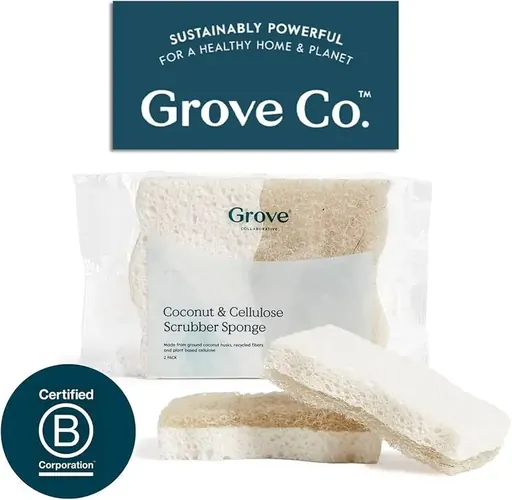
Grove Collaborative Coconut Scrubber Sponge 2 Pack
At a glance
Summary
This product features a plant-based cellulose sponge layer and a coconut scour layer, both of which are natural and biodegradable, contributing positively to environmental sustainability. However, the inclusion of recycled PET fibers, despite being recycled, introduces concerns about microplastic shedding and long-term environmental impact. The absence of synthetic dyes is a positive aspect, but the presence of synthetic fibers prevents it from achieving a higher rating.
Key ingredients 4
plant-based cellulose sponge layerVery Good
The plant-based cellulose sponge layer is derived from natural materials, making it biodegradable and environmentally friendly. It does not contribute to microplastic pollution and is a sustainable choice for home essentials. This ingredient aligns with eco-friendly practices and reduces environmental impact.
Risks
There are minimal risks associated with plant-based cellulose, primarily related to potential allergies.
Benefits
It is biodegradable and reduces environmental impact compared to synthetic alternatives.
coconut scour layerVery Good
The coconut scour layer is made from natural coconut fibers, which are biodegradable and sustainable. This ingredient is a renewable resource and does not shed microplastics, making it an environmentally responsible choice. Coconut fibers are effective for scrubbing without harming the environment.
Risks
Potential risks include allergies to coconut fibers.
Benefits
It is biodegradable and provides effective scrubbing without shedding microplastics.
adhesive ('non-toxic adhesive', not named)Neutral
The adhesive is labeled as non-toxic, which suggests it is safer for use in home products. However, without specific details, it is difficult to fully assess its environmental and health impact. Non-toxic adhesives are generally preferable to those containing harmful chemicals.
Risks
Potential risks are unknown due to lack of specific ingredient disclosure.
Benefits
Non-toxic adhesives are generally safer for human health and the environment.
recycled PET fibersBad
Recycled PET fibers, while reducing waste, are still synthetic and can shed microplastics during use. The use of recycled content does not mitigate the environmental impact of microplastic pollution. These fibers are not biodegradable and contribute to long-term environmental issues.
Risks
They can shed microplastics into the environment, contributing to pollution.
Benefits
Using recycled PET reduces the demand for new plastic production.
Get the full breakdown in the Scout appTake Scout shopping
Scan any product to see lab results, healthy alternatives, and your personalized analysis.
Amazon pricing & content
Amazon price as of . Product prices and availability are accurate as of the date/time indicated and are subject to change. Any price and availability information displayed on Amazon.com at the time of purchase will apply to the purchase of this product.
CERTAIN CONTENT THAT APPEARS ON THIS SITE COMES FROM AMAZON. THIS CONTENT IS PROVIDED “AS IS” AND IS SUBJECT TO CHANGE OR REMOVAL AT ANY TIME.