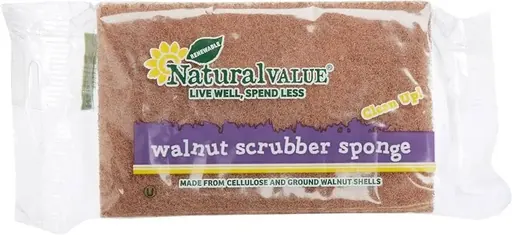
Natural Value Scrub Sponge Walnut Shell
At a glance
Summary
The Natural Value Scrub Sponge Walnut Shell is made with plant-based cellulose and crushed walnut shell, both of which are natural and biodegradable, reducing environmental impact and avoiding microplastic pollution. However, the use of recycled fibers in the scrubber, while environmentally conscious, can shed microplastics, which is a concern for environmental pollution. The lack of specific polymer disclosure adds uncertainty to its environmental impact.
Key ingredients 4
plant-based cellulose sponge layerVery Good
The plant-based cellulose sponge layer is derived from natural materials, making it biodegradable and environmentally friendly. It does not contribute to microplastic pollution, which is a significant advantage over synthetic alternatives. This ingredient aligns with sustainable practices and reduces environmental impact.
Risks
There are minimal risks associated with plant-based cellulose, primarily related to potential degradation over time.
Benefits
The primary benefit is its biodegradability, which ensures it breaks down naturally without harming the environment.
crushed walnut shell abrasiveVery Good
Crushed walnut shell abrasive is a natural and biodegradable material, providing effective scrubbing without the environmental impact of synthetic abrasives. It is a renewable resource and does not contribute to microplastic pollution. This ingredient is a sustainable choice for abrasive purposes.
Risks
Potential risks include allergies for individuals sensitive to nuts, although this is rare in non-food applications.
Benefits
The benefits include its natural origin and biodegradability, making it an eco-friendly alternative to synthetic abrasives.
water-based pigment added during mixingNeutral
Water-based pigments are generally considered safer than solvent-based alternatives, reducing the risk of VOC emissions. However, the specific composition of the pigment is not disclosed, which limits a full assessment of its safety and environmental impact. The use of water as a base is a positive aspect, minimizing potential harmful emissions.
Risks
Without full disclosure, there is a potential risk of unknown additives or chemicals in the pigment.
Benefits
The primary benefit is the reduced environmental impact compared to solvent-based pigments, contributing to safer indoor air quality.
recycled fibers in the scrubberBad
Recycled fibers in the scrubber, while environmentally conscious in terms of material reuse, can shed microplastics during use. This is a concern as it contributes to environmental pollution. The lack of specific polymer disclosure adds uncertainty regarding the potential environmental impact.
Risks
The primary risk is the shedding of microplastics, which can pollute water systems and harm aquatic life.
Benefits
The use of recycled materials reduces waste and supports circular economy practices, although it does not mitigate the shedding issue.
Get the full breakdown in the Scout appTake Scout shopping
Scan any product to see lab results, healthy alternatives, and your personalized analysis.
Amazon pricing & content
Amazon price as of . Product prices and availability are accurate as of the date/time indicated and are subject to change. Any price and availability information displayed on Amazon.com at the time of purchase will apply to the purchase of this product.
CERTAIN CONTENT THAT APPEARS ON THIS SITE COMES FROM AMAZON. THIS CONTENT IS PROVIDED “AS IS” AND IS SUBJECT TO CHANGE OR REMOVAL AT ANY TIME.