
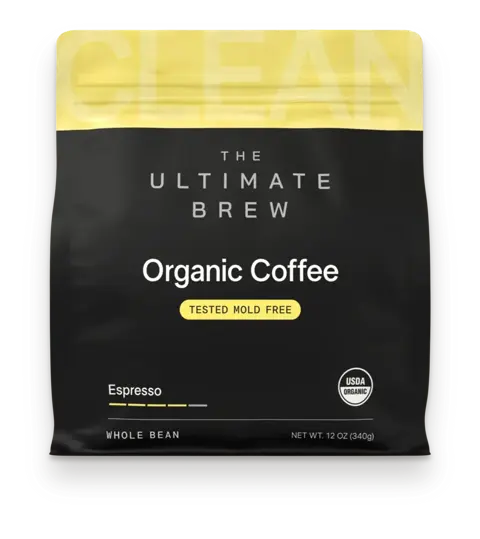
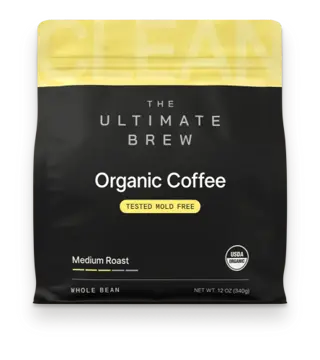
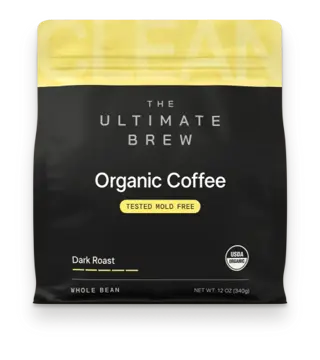

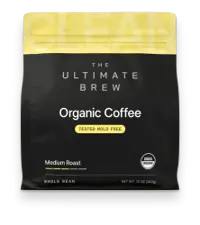
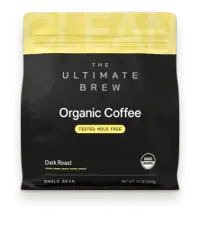
The Ultimate Brew Organic Coffee Espresso, Whole Bean
The Ultimate Brew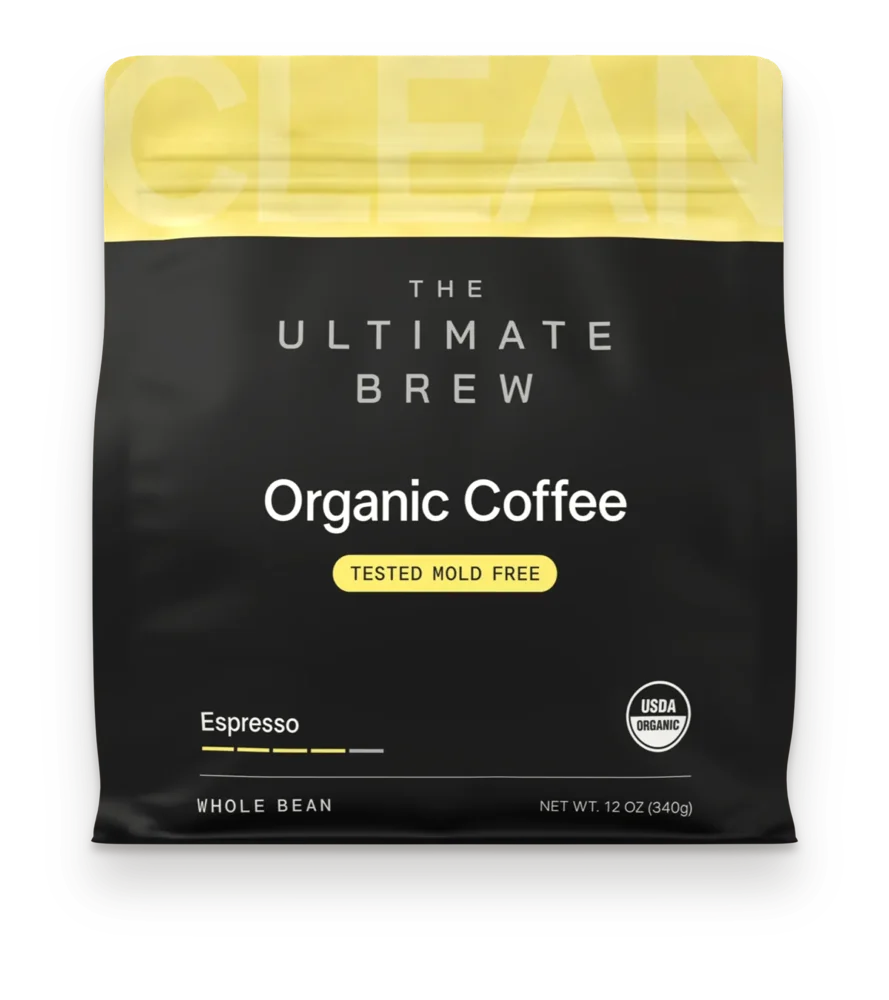
At a glance
Summary
The Ultimate Brew Organic Coffee Espresso, Whole Bean scores 100/100. One ingredient: USDA Organic, 100% Arabica whole-bean coffee from a single origin, Tolima in the Colombian Andes, grown at 1,500–1,850 meters, washed and roasted in Miami. Nothing added. Bold and balanced, with notes of dark chocolate, cocoa and black cherry. Every lot is independently lab tested before it ships, and the QR code on each bag opens that lot's report. The published report for lot TUB-0001 (August 2026) found no mold toxins (aflatoxins, ochratoxin A or the rest of the mycotoxin panel), no residues on the multi-residue pesticide screen, and no lead, arsenic, cadmium or mercury. It found two traces, both small fractions of the federal limits: glyphosate at 0.05 mg/kg (5% of the EPA tolerance for green coffee) and piperonyl butoxide, an additive in storage insecticides, at 0.19 mg/kg (2% of its tolerance).
Contaminants 10
Source: The Ultimate Brew lot report TUB-0001, independent third-party lab (not named), reported Aug 14, 2026
Aflatoxins (B1, B2, G1, G2) Not detected (<4 µg/kg) Not detected
Below the lab's 4 µg/kg reporting limit for total aflatoxins, against the FDA action level of 20 µg/kg. Aflatoxins are mold toxins that can form when coffee beans are dried or stored damp.
LC-MS/MS, from The Ultimate Brew's published report for lot TUB-0001 (sample received Aug 7, reported Aug 14, 2026); the lab is an independent third party the report does not name.
Ochratoxin A Not detected (<1.0 µg/kg) Not detected
Below the lab's 1.0 µg/kg reporting limit. Ochratoxin A is the mold toxin most often found in coffee: a 2024 review detected it in 55% of 3,256 coffee samples worldwide. The US sets no limit for coffee.
LC-MS/MS, from The Ultimate Brew's published report for lot TUB-0001 (sample received Aug 7, reported Aug 14, 2026); the lab is an independent third party the report does not name.
Other mycotoxins Not detected Not detected
DON, T-2, HT-2, fumonisins B1 to B3 and zearalenone were each below their reporting limits. They come from the same damp drying and storage that produces aflatoxins.
LC-MS/MS, from The Ultimate Brew's published report for lot TUB-0001 (sample received Aug 7, reported Aug 14, 2026); the lab is an independent third party the report does not name.
Pesticides (multi-residue screen) Not detected Not detected
No residues at the limit of quantification on either multi-residue panel. The coffee is USDA Organic; the screen checks for drift from neighboring farms and for treatments during storage. Piperonyl butoxide, a pesticide synergist, is reported separately.
GC-MS/MS and LC-MS/MS (AOAC 2007.01 and AOAC 2013.06), from The Ultimate Brew's published report for lot TUB-0001 (sample received Aug 7, reported Aug 14, 2026); the lab is an independent third party the report does not name.
Glyphosate 0.05 mg/kg (50 ppb) Trace
Detected, at 5% of the EPA tolerance for green coffee (1.0 mg/kg). Coffee isn't sprayed with glyphosate directly; the brand attributes the trace to drift from nearby farmland or earlier use of the land.
Dedicated glyphosate test by LC-MS/MS, from The Ultimate Brew's published report for lot TUB-0001 (sample received Aug 7, reported Aug 14, 2026); the lab is an independent third party the report does not name.
Piperonyl butoxide (PBO) 0.19 mg/kg Trace
Detected, at 2% of the EPA's 10 mg/kg tolerance for dried foods and food kept in treated storage areas (coffee isn't listed by name, so that is the closest limit). PBO is added to pyrethrin insecticides to make them work better and most likely reaches coffee through pest control during storage or shipping.
Multi-residue LC-MS/MS, from The Ultimate Brew's published report for lot TUB-0001 (sample received Aug 7, reported Aug 14, 2026); the lab is an independent third party the report does not name.
Lead Not detected (<0.02 mg/kg) Not detected
Below the lab's 0.02 mg/kg (20 ppb) reporting limit. The US sets no heavy-metal limit for coffee.
USP <561> (modified), from The Ultimate Brew's published report for lot TUB-0001 (sample received Aug 7, reported Aug 14, 2026); the lab is an independent third party the report does not name.
Arsenic Not detected (<0.02 mg/kg) Not detected
Below the lab's 0.02 mg/kg (20 ppb) reporting limit.
USP <561> (modified), from The Ultimate Brew's published report for lot TUB-0001 (sample received Aug 7, reported Aug 14, 2026); the lab is an independent third party the report does not name.
Cadmium Not detected (<0.01 mg/kg) Not detected
Below the lab's 0.01 mg/kg (10 ppb) reporting limit. For scale, the FDA's Total Diet Study averaged 52 ppb in peanut butter and 222 ppb in raw spinach.
USP <561> (modified), from The Ultimate Brew's published report for lot TUB-0001 (sample received Aug 7, reported Aug 14, 2026); the lab is an independent third party the report does not name.
Mercury Not detected (<0.010 mg/kg) Not detected
Below the lab's 0.010 mg/kg (10 ppb) reporting limit.
USP <561> (modified), from The Ultimate Brew's published report for lot TUB-0001 (sample received Aug 7, reported Aug 14, 2026); the lab is an independent third party the report does not name.
Key ingredients 1
Organic 100% Arabica Coffee (Whole Bean)Very Good
USDA Organic, single-origin Arabica from Tolima, Colombia: coffee's natural polyphenols (chlorogenic acids) and caffeine, nothing added.
See more about Organic 100% Arabica Coffee (Whole Bean) →Processing
Unprocessed or Minimally Processed Foods
Get the full breakdown in the Scout appTake Scout shopping
Scan any product to see lab results, healthy alternatives, and your personalized analysis.
Are you The Ultimate Brew? Fix an error Get the badge Get tested