
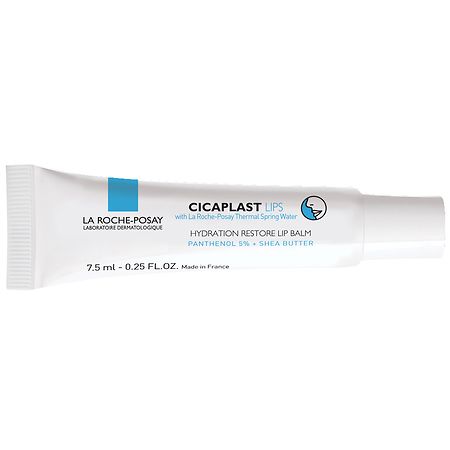

La Roche-Posay Cicaplast Hydration Restore Lip Balm 0.25 fl oz
Analysis updated August 2026 · How Scout scores
At a glance
Summary
This lip balm contains beneficial ingredients such as shea butter, beeswax, and panthenol, which are known for their moisturizing and skin-replenishing properties. However, the presence of PEG compounds and hydrogenated vegetable oil indicates a moderate level of processing, which slightly detracts from its overall ingredient safety. The product avoids major harmful substances, but the inclusion of synthetic components prevents it from achieving a top-tier rating.
Key ingredients 13
Butyrospermum parkii butter/shea butterVery Good
Shea butter is a natural fat extracted from the nuts of the shea tree. It is rich in vitamins and fatty acids, making it incredibly nourishing and moisturizing for the skin. It is widely used for its anti-inflammatory and healing properties.
Risks
Allergic reactions are rare but possible, especially for individuals with nut allergies.
Benefits
Shea butter is excellent for softening and soothing dry, chapped lips.
Cera alba/beeswaxVery Good
Beeswax is a natural wax produced by honey bees. It acts as a protective barrier on the skin, helping to lock in moisture. It is also known for its anti-inflammatory and antibacterial properties.
Risks
Beeswax is generally safe, but it may cause allergic reactions in individuals sensitive to bee products.
Benefits
It provides a natural barrier that protects the lips from environmental damage while retaining moisture.
Caprylic/capric triglycerideGood
Caprylic/capric triglyceride is a mixed triester derived from coconut oil and glycerin. It is known for its excellent skin-replenishing properties and ability to enhance the spreadability of products. It is generally considered safe and non-irritating.
Risks
There are minimal risks associated with this ingredient, primarily limited to rare cases of skin sensitivity.
Benefits
It provides a lightweight, non-greasy barrier that helps retain moisture in the skin.
PanthenolGood
Panthenol is a provitamin of B5, known for its moisturizing and healing properties. It penetrates the skin easily and helps to improve hydration, elasticity, and smooth appearance. It is often used in skincare for its soothing effects.
Risks
Panthenol is generally considered safe, with minimal risk of irritation or allergic reaction.
Benefits
It enhances skin barrier function and promotes healing of damaged skin.
Glycine soja/soybean sterolsGood
Soybean sterols are derived from soybeans and are used for their emollient and skin-conditioning properties. They help to improve skin barrier function and hydration. They are generally considered safe for use in cosmetics.
Risks
Soy-based ingredients may cause allergic reactions in individuals with soy allergies.
Benefits
They help to moisturize and condition the skin, improving its overall texture.
Hydrogenated vegetable oilNeutral
Hydrogenated vegetable oil is used as an emollient and thickening agent in cosmetics. It helps to create a smooth texture and provides a protective layer on the skin. It is generally considered safe for use in cosmetics.
Risks
There is a potential for minor skin irritation in sensitive individuals.
Benefits
It helps to soften and smooth the skin, providing a protective barrier.
Ethylhexyl palmitateNeutral
Ethylhexyl palmitate is an ester of 2-ethylhexyl alcohol and palmitic acid. It is used as an emollient and texture enhancer in cosmetics. It is generally considered safe for use in personal care products.
Risks
May cause mild irritation in sensitive skin types.
Benefits
It provides a silky feel and enhances the spreadability of the product.
Silica silylateNeutral
Silica silylate is a form of silica used as a thickening agent and to improve the texture of cosmetic products. It is generally considered safe for use in cosmetics.
Risks
Inhalation of silica particles can be harmful, but this risk is minimal in topical applications.
Benefits
It helps to improve the texture and stability of the product.
PolybuteneNeutral
Polybutene is a polymer used as a binder and film-forming agent in cosmetics. It helps to improve the texture and adhesion of the product. It is generally considered safe for use in cosmetics.
Risks
There is a low risk of skin irritation with polybutene.
Benefits
It enhances the product's texture and helps it adhere better to the skin.
Aqua/waterNeutral
Water is a universal solvent used in cosmetics to dissolve other ingredients and provide hydration. It is essential for the formulation of many cosmetic products. It is inherently safe and non-irritating.
Risks
There are no significant risks associated with water in cosmetics.
Benefits
It acts as a solvent and provides hydration to the skin.
Myristyl malate phosphonic acidNeutral
Myristyl malate phosphonic acid is used as an emollient and conditioning agent in cosmetics. It helps to improve the texture and feel of the product. It is generally considered safe for use in cosmetics.
Risks
There is a low risk of skin irritation with this ingredient.
Benefits
It helps to condition the skin and improve the product's texture.
Pentaerythrityl tetra-di-t-butyl hydroxyhydrocinnamateNeutral
This ingredient is an antioxidant used to stabilize cosmetic formulations and prevent oxidation. It is generally considered safe for use in cosmetics.
Risks
There is a minimal risk of skin irritation with this ingredient.
Benefits
It helps to protect the product from degradation and extend its shelf life.
Sodium saccharinBad
Processed additive flagged under Scout's ingredient doctrine.
Risks
There is a potential for minor irritation in sensitive individuals.
Benefits
It enhances the taste of lip products, making them more pleasant to use.
Processing
Processed Foods
Get the full breakdown in the Scout appTake Scout shopping
Scan any product to see lab results, healthy alternatives, and your personalized analysis.
Download on theApp Store GET IT ONGoogle PlayAmazon pricing & content
Amazon price as of . Product prices and availability are accurate as of the date/time indicated and are subject to change. Any price and availability information displayed on Amazon.com at the time of purchase will apply to the purchase of this product.
CERTAIN CONTENT THAT APPEARS ON THIS SITE COMES FROM AMAZON. THIS CONTENT IS PROVIDED “AS IS” AND IS SUBJECT TO CHANGE OR REMOVAL AT ANY TIME.