
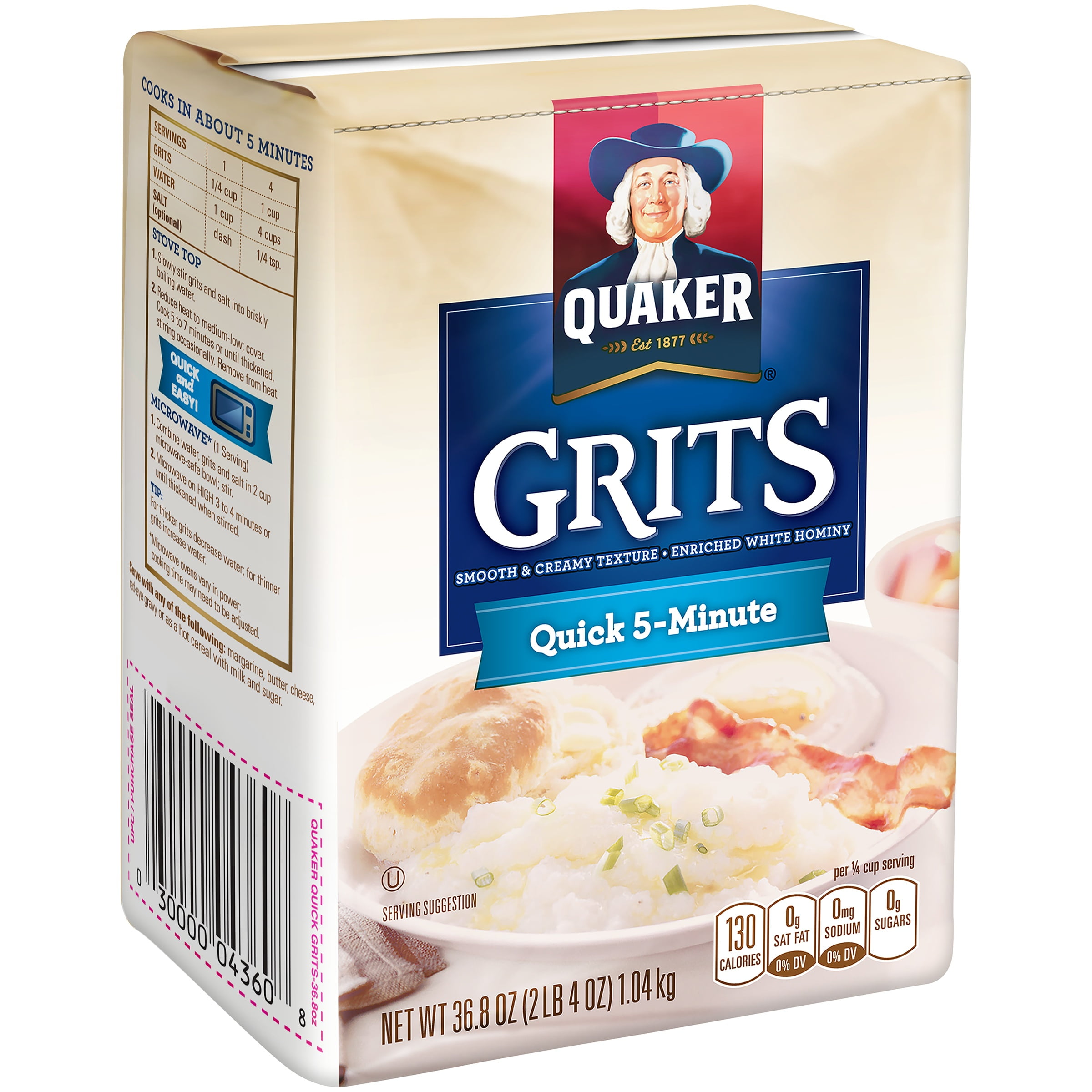

Quaker Quick Grits 18.4 Ounce Paper Box
Analysis updated May 2026 · How Scout scores
At a glance
Summary
This product is primarily composed of white hominy grits, which are nutritionally enhanced through nixtamalization, and fortified with essential B vitamins and iron. The ingredient list is clean and free from harmful additives, artificial colors, or seed oils, contributing to its favorable rating. Despite being processed, the absence of negative ingredients and the presence of beneficial fortifications support a high score within its category.
Key ingredients 6
White Hominy GritsGood
White hominy grits are made from corn that has been treated with an alkali in a process called nixtamalization. This process enhances the nutritional profile by increasing the availability of niacin and improving digestibility. It is a traditional food with a long history of consumption.
Benefits
Provides a source of carbohydrates and fiber, supporting energy levels and digestive health.
NiacinGood
Niacin, also known as vitamin B3, is essential for converting food into energy and maintaining healthy skin and nerves. It is often added to foods to prevent deficiencies. Fortification ensures adequate intake in populations at risk of deficiency.
Benefits
Supports energy metabolism and is crucial for maintaining healthy skin and nerve function.
Thiamin MononitrateGood
Thiamin mononitrate is a stable form of vitamin B1 used in food fortification. It plays a key role in energy metabolism and nerve function. Fortification helps prevent thiamin deficiency, especially in processed foods.
Benefits
Supports energy metabolism and is essential for proper nerve function.
RiboflavinGood
Riboflavin, or vitamin B2, is important for energy production and cellular function. It is often added to foods to ensure adequate intake. Riboflavin is water-soluble and not stored in the body, requiring regular consumption.
Benefits
Essential for energy production and maintaining healthy skin and eyes.
Reduced IronNeutral
Standard formulation ingredient — neither beneficial nor harmful at typical use.
Risks
Excessive iron intake can lead to toxicity, but this is rare from fortified foods alone.
Benefits
Essential for oxygen transport and energy production in the body.
Folic AcidNeutral
Standard formulation ingredient — neither beneficial nor harmful at typical use.
Risks
Excessive intake can mask vitamin B12 deficiency, but this is uncommon with normal consumption.
Benefits
Supports DNA synthesis and is vital for fetal development during pregnancy.
Processing
Processed Foods
Get the full breakdown in the Scout appTake Scout shopping
Scan any product to see lab results, healthy alternatives, and your personalized analysis.
Download on theApp Store GET IT ONGoogle Play