
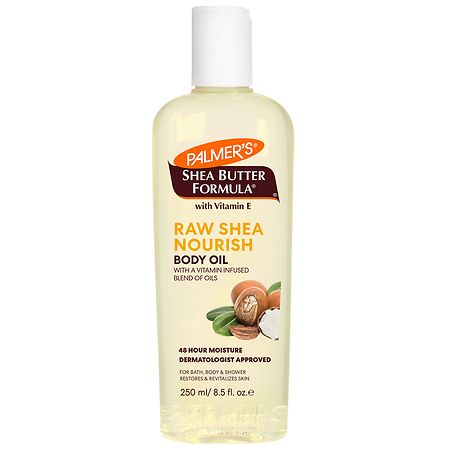
Palmer s Shea Formula Raw Shea Body Oil for Dry Skin 8.5 fl oz
Analysis updated August 2026 · How Scout scores
At a glance
Summary
This body oil contains several beneficial natural ingredients like shea oil, marula oil, and squalane, which are known for their moisturizing and skin-nourishing properties. However, the presence of synthetic fragrance and BHT, which are associated with potential skin irritation and health concerns, negatively impacts the overall ingredient quality. The product's processing level and inclusion of these synthetic components prevent it from achieving a higher score.
Key ingredients 11
Glycine Soja (Soybean) OilVery Good
Soybean oil is a natural oil rich in essential fatty acids and vitamin E. It is often used for its moisturizing properties and ability to improve skin barrier function. Its natural origin and beneficial properties make it a positive ingredient.
Risks
There is a potential risk of allergic reactions in individuals sensitive to soy.
Benefits
It provides excellent moisturizing benefits and helps in maintaining skin health.
Butyrospermum Parkii (Shea) OilVery Good
Shea oil is derived from the nuts of the shea tree and is known for its rich moisturizing properties. It contains vitamins A and E, which are beneficial for skin health. Its natural origin and skin-nourishing properties make it a highly beneficial ingredient.
Risks
There is a minimal risk of allergic reactions for individuals with nut allergies.
Benefits
It deeply moisturizes the skin and helps in improving skin elasticity.
Sclerocarya Birrea Seed OilVery Good
Also known as Marula oil, it is rich in antioxidants and essential fatty acids. It is known for its ability to hydrate and rejuvenate the skin. Its natural origin and skin benefits make it a very good ingredient.
Risks
There is a low risk of allergic reactions.
Benefits
It provides deep hydration and helps in reducing the appearance of fine lines.
Tocopheryl AcetateGood
Tocopheryl Acetate is a form of vitamin E, a powerful antioxidant that helps protect the skin from damage. It is widely used in skincare for its ability to nourish and protect the skin. Its antioxidant properties contribute to its positive classification.
Risks
In rare cases, it may cause skin irritation or allergic reactions.
Benefits
It provides antioxidant protection and helps in maintaining skin health.
SqualaneGood
Squalane is a highly effective emollient and natural antioxidant. It is known for its ability to mimic the skin's natural oils, providing excellent hydration. Its skin-compatible nature and moisturizing properties make it a beneficial ingredient.
Risks
There are minimal risks associated with its use.
Benefits
It helps in maintaining skin moisture and improves skin texture.
Isopropyl MyristateNeutral
Isopropyl Myristate is a synthetic oil used to enhance the absorption of other ingredients. It is commonly used in cosmetics for its ability to create a smooth, non-greasy feel. While it is effective in its function, it does not provide direct skin benefits.
Risks
It may cause skin irritation or acne in sensitive individuals.
Benefits
It helps in improving the texture and absorption of the product.
Benzyl SalicylateNeutral
Benzyl Salicylate is used as a fragrance ingredient and UV light absorber. It is commonly used in cosmetics but can cause allergic reactions in some individuals. Its dual function in fragrance and UV protection is balanced by potential sensitivity issues.
Risks
It may cause allergic reactions or skin irritation.
Benefits
It provides UV protection and enhances fragrance.
Hexyl CinnamalNeutral
Hexyl Cinnamal is a fragrance ingredient used to impart a floral scent. It is a synthetic compound that can cause allergic reactions in sensitive individuals. While it enhances fragrance, its synthetic nature and potential for irritation are concerns.
Risks
It may cause skin irritation or allergic reactions.
Benefits
It adds a pleasant floral scent to the product.
BHTBad
BHT is a synthetic antioxidant used to extend the shelf life of products. It is controversial due to potential health concerns and environmental impact. Its synthetic nature and associated risks contribute to its negative classification.
Risks
It may cause skin irritation and has been linked to potential health concerns.
Benefits
It helps in preserving the product by preventing oxidation.
Benzyl AlcoholBad
Processed additive flagged under Scout's ingredient doctrine.
Risks
It may cause skin irritation or allergic reactions.
Benefits
It acts as a preservative and enhances fragrance.
Fragrance (Parfum)Very Bad
Fragrance is a synthetic component used to impart scent to products. It is often associated with allergic reactions and skin sensitivities. Due to its synthetic nature and potential for irritation, it is considered a negative ingredient.
Risks
It may cause skin irritation, allergies, or respiratory issues.
Benefits
It provides a pleasant scent to the product.
Get the full breakdown in the Scout appTake Scout shopping
Scan any product to see lab results, healthy alternatives, and your personalized analysis.
Download on theApp Store GET IT ONGoogle PlayAmazon pricing & content
Amazon price as of . Product prices and availability are accurate as of the date/time indicated and are subject to change. Any price and availability information displayed on Amazon.com at the time of purchase will apply to the purchase of this product.
CERTAIN CONTENT THAT APPEARS ON THIS SITE COMES FROM AMAZON. THIS CONTENT IS PROVIDED “AS IS” AND IS SUBJECT TO CHANGE OR REMOVAL AT ANY TIME.