
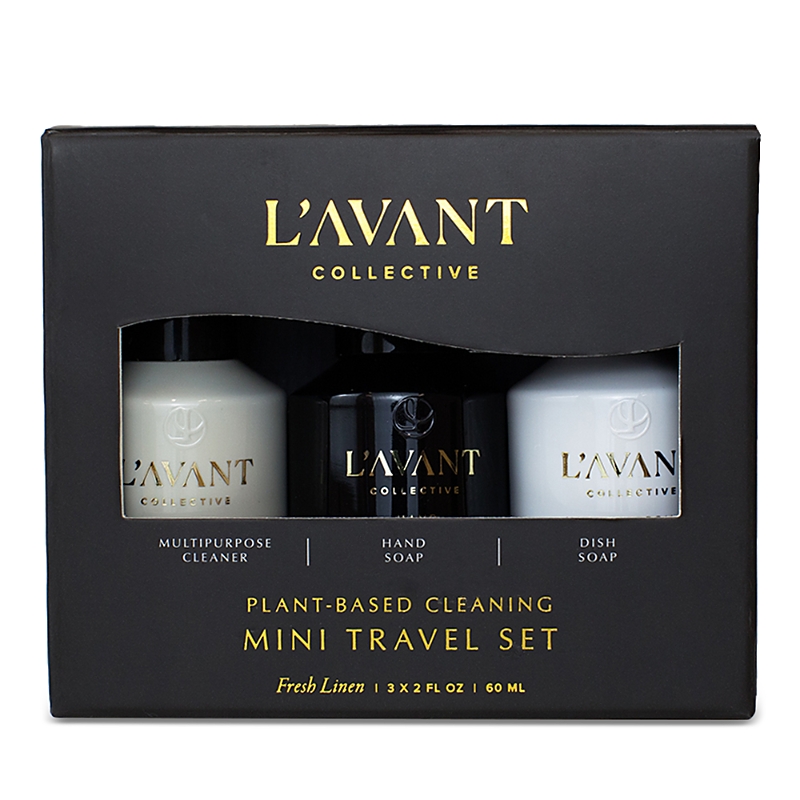

L'Avant Collective Mini Travel Set
Analysis updated August 2026 · How Scout scores
At a glance
Summary
This product contains a mix of beneficial and potentially harmful ingredients. While it includes natural essential oils and biodegradable surfactants, it also contains preservatives like methylisothiazolinone and benzisothiazolinone, which can cause skin irritation and allergic reactions. The presence of denatured alcohol and unspecified fragrance further impacts its safety profile, leading to a moderate processing level and a balanced score.
Key ingredients 33
aloe barbadensis leaf juiceVery Good
Aloe vera juice is known for its soothing and moisturizing properties. It is derived from the aloe plant and is used for its skin benefits. It is often included in formulations for its hydrating and calming effects.
Risks
Generally considered safe with minimal risks.
Benefits
Provides soothing and moisturizing benefits.
chamomilla recutita (matricaria) flower extractVery Good
Chamomile extract is known for its soothing and anti-inflammatory properties. It is derived from the chamomile flower and is used for its calming effects on the skin. It is often included in formulations for sensitive skin.
Risks
Generally considered safe with minimal risks.
Benefits
Provides soothing and anti-inflammatory benefits.
calendula officinalis flower extractVery Good
Calendula extract is known for its healing and anti-inflammatory properties. It is derived from the calendula flower and is used for its soothing effects on the skin. It is often included in formulations for sensitive or irritated skin.
Risks
Generally considered safe with minimal risks.
Benefits
Provides healing and anti-inflammatory benefits.
tocopherolVery Good
Tocopherol, also known as vitamin E, is an antioxidant. It is used to protect the skin from oxidative stress and improve product stability. It is often included for its skin conditioning and protective benefits.
Risks
Generally considered safe with minimal risks.
Benefits
Provides antioxidant and skin conditioning benefits.
alkyl polyglucosideGood
Alkyl polyglucosides are mild surfactants derived from sugar and fatty alcohols. They are biodegradable and considered environmentally friendly. They are used for their gentle cleansing properties.
Risks
There are minimal risks associated with alkyl polyglucosides.
Benefits
They provide gentle cleansing and are biodegradable.
ocimum basilicum (basil) oilGood
Basil oil is an essential oil known for its aromatic properties. It has antimicrobial and antioxidant properties. It is used for its pleasant scent and potential skin benefits.
Risks
May cause irritation in sensitive skin.
Benefits
Provides antimicrobial and antioxidant benefits.
citrus limon (lemon) peel oilGood
Lemon peel oil is an essential oil with a fresh scent. It has antibacterial and astringent properties. It is often used for its refreshing aroma and potential skin benefits.
Risks
Can increase photosensitivity.
Benefits
Offers antibacterial and astringent properties.
lavandula angustifolia (lavender) oilGood
Lavender oil is an essential oil known for its calming scent. It has antimicrobial and anti-inflammatory properties. It is used for its soothing aroma and potential skin benefits.
Risks
May cause irritation in sensitive individuals.
Benefits
Provides calming and antimicrobial benefits.
pelargonium graveolens (geranium) oilGood
Geranium oil is an essential oil with a floral scent. It has antibacterial and anti-inflammatory properties. It is used for its pleasant aroma and potential skin benefits.
Risks
May cause skin irritation in some individuals.
Benefits
Offers antibacterial and anti-inflammatory benefits.
salvia sclarea (clary sage) oilGood
Clary sage oil is an essential oil known for its earthy scent. It has antibacterial and calming properties. It is used for its soothing aroma and potential skin benefits.
Risks
May cause irritation in sensitive skin.
Benefits
Provides antibacterial and calming benefits.
decyl glucosideGood
Decyl glucoside is a mild, non-ionic surfactant derived from glucose. It is biodegradable and gentle on the skin. It is used for its cleansing properties without causing irritation.
Risks
Generally considered safe with minimal risks.
Benefits
Provides gentle cleansing and is biodegradable.
lauryl glucosideGood
Lauryl glucoside is a mild surfactant derived from glucose and lauryl alcohol. It is biodegradable and gentle on the skin. It is used for its effective cleansing properties.
Risks
Generally considered safe with minimal risks.
Benefits
Provides gentle and effective cleansing.
coco-glucosideGood
Coco-glucoside is a mild surfactant derived from coconut oil and glucose. It is biodegradable and gentle on the skin. It is used for its effective cleansing properties without causing irritation.
Risks
Generally considered safe with minimal risks.
Benefits
Provides gentle cleansing and is biodegradable.
glyceryl oleateGood
Glyceryl oleate is an emulsifier and skin conditioning agent. It is derived from natural oils and is used to improve the texture of products. It helps to maintain skin moisture and improve product stability.
Risks
Generally considered safe with minimal risks.
Benefits
Improves texture and provides skin conditioning.
gluconolactoneGood
Gluconolactone is a polyhydroxy acid used for its exfoliating properties. It is gentle on the skin and helps to improve skin texture. It is often included for its mild exfoliating and moisturizing benefits.
Risks
Generally considered safe with minimal risks.
Benefits
Provides gentle exfoliation and moisturizing benefits.
waterNeutral
Water is a common solvent used in many products. It helps to dissolve other ingredients and provides a base for the formulation. It is generally considered safe and non-reactive.
Risks
There are no significant risks associated with water in this context.
Benefits
Water acts as a solvent and carrier for other ingredients.
sodium gluconateNeutral
Standard formulation ingredient — neither beneficial nor harmful at typical use.
Risks
There are no significant risks associated with sodium gluconate.
Benefits
It stabilizes formulations and is biodegradable.
sodium carbonateNeutral
Sodium carbonate is used as a pH adjuster and water softener. It is commonly found in cleaning products. It is generally safe when used in appropriate concentrations.
Risks
High concentrations can cause skin irritation.
Benefits
It adjusts pH and softens water.
denatured alcoholNeutral
Standard formulation ingredient — neither beneficial nor harmful at typical use.
Risks
Can cause skin dryness and irritation.
Benefits
Acts as a solvent and preservative.
citric acidNeutral
Common acidulant and preservative — safe at typical use levels, neither beneficial nor harmful.
Risks
May cause irritation in sensitive individuals.
Benefits
Adjusts pH and is biodegradable.
natural fragranceNeutral
Natural fragrances are derived from essential oils and plant extracts. They provide scent without synthetic chemicals. However, they can still cause allergic reactions in sensitive individuals.
Risks
Potential for allergic reactions.
Benefits
Provides scent from natural sources.
sodium coco-sulfateNeutral
Sodium coco-sulfate is a surfactant derived from coconut oil. It is used for its cleansing properties. It is considered a milder alternative to sodium lauryl sulfate.
Risks
May cause irritation in sensitive skin.
Benefits
Provides effective cleansing.
glycerinNeutral
Standard formulation ingredient — neither beneficial nor harmful at typical use.
Risks
Generally considered safe with minimal risks.
Benefits
Provides excellent moisturizing benefits.
lauryl betaineNeutral
Lauryl betaine is a surfactant and foam booster. It is used to enhance the texture and feel of products. It is generally considered safe for use in personal care products.
Risks
May cause irritation in sensitive skin.
Benefits
Enhances foam and texture.
cetyl betaineNeutral
Cetyl betaine is a surfactant used to improve product texture. It is often used in combination with other surfactants. It is generally considered safe for use in personal care products.
Risks
May cause irritation in sensitive skin.
Benefits
Improves texture and feel of products.
myristyl betaineNeutral
Myristyl betaine is a surfactant used to enhance foam and texture. It is often used in combination with other surfactants. It is generally considered safe for use in personal care products.
Risks
May cause irritation in sensitive skin.
Benefits
Enhances foam and texture.
hydrogenated palm glycerides citrateNeutral
Hydrogenated palm glycerides citrate is an emulsifier and stabilizer. It is used to improve the texture and stability of products. It is generally considered safe for use in personal care products.
Risks
Concerns about palm oil sourcing and sustainability.
Benefits
Improves texture and stability of products.
calcium gluconateNeutral
Calcium gluconate is used as a skin conditioning agent. It is generally considered safe and is used to improve the texture of formulations. It is often included for its mild skin benefits.
Risks
Generally considered safe with minimal risks.
Benefits
Provides mild skin conditioning benefits.
sodium chlorideNeutral
Sodium chloride, or table salt, is used to adjust the viscosity of products. It is commonly used in personal care formulations. It is generally considered safe and non-reactive.
Risks
Generally considered safe with minimal risks.
Benefits
Adjusts viscosity and is non-reactive.
benzisothiazolinoneBad
Benzisothiazolinone is a preservative with antimicrobial properties. It is effective in preventing microbial growth but can cause skin irritation. It is often used in small concentrations to ensure product safety.
Risks
Can cause skin irritation and allergic reactions.
Benefits
Prevents microbial growth in products.
sodium benzoateBad
Synthetic preservative that can form benzene in the presence of vitamin C.
Risks
May cause irritation in sensitive individuals.
Benefits
Prevents microbial growth and extends shelf-life.
methylisothiazolinoneVery Bad
Methylisothiazolinone is a preservative used to prevent microbial growth. It is known to cause allergic reactions and skin irritation. Its use is restricted in many formulations due to potential health concerns.
Risks
High risk of allergic reactions and skin irritation.
Benefits
Effective in preventing microbial growth.
fragranceVery Bad
Fragrance is often a mixture of various chemicals to provide scent. It can cause allergic reactions and skin irritation. The exact composition is usually not disclosed, leading to potential concerns.
Risks
Potential for allergic reactions and irritation.
Benefits
Provides a pleasant scent.
Get the full breakdown in the Scout appTake Scout shopping
Scan any product to see lab results, healthy alternatives, and your personalized analysis.
Download on theApp Store GET IT ONGoogle PlayAmazon pricing & content
Amazon price as of . Product prices and availability are accurate as of the date/time indicated and are subject to change. Any price and availability information displayed on Amazon.com at the time of purchase will apply to the purchase of this product.
CERTAIN CONTENT THAT APPEARS ON THIS SITE COMES FROM AMAZON. THIS CONTENT IS PROVIDED “AS IS” AND IS SUBJECT TO CHANGE OR REMOVAL AT ANY TIME.