
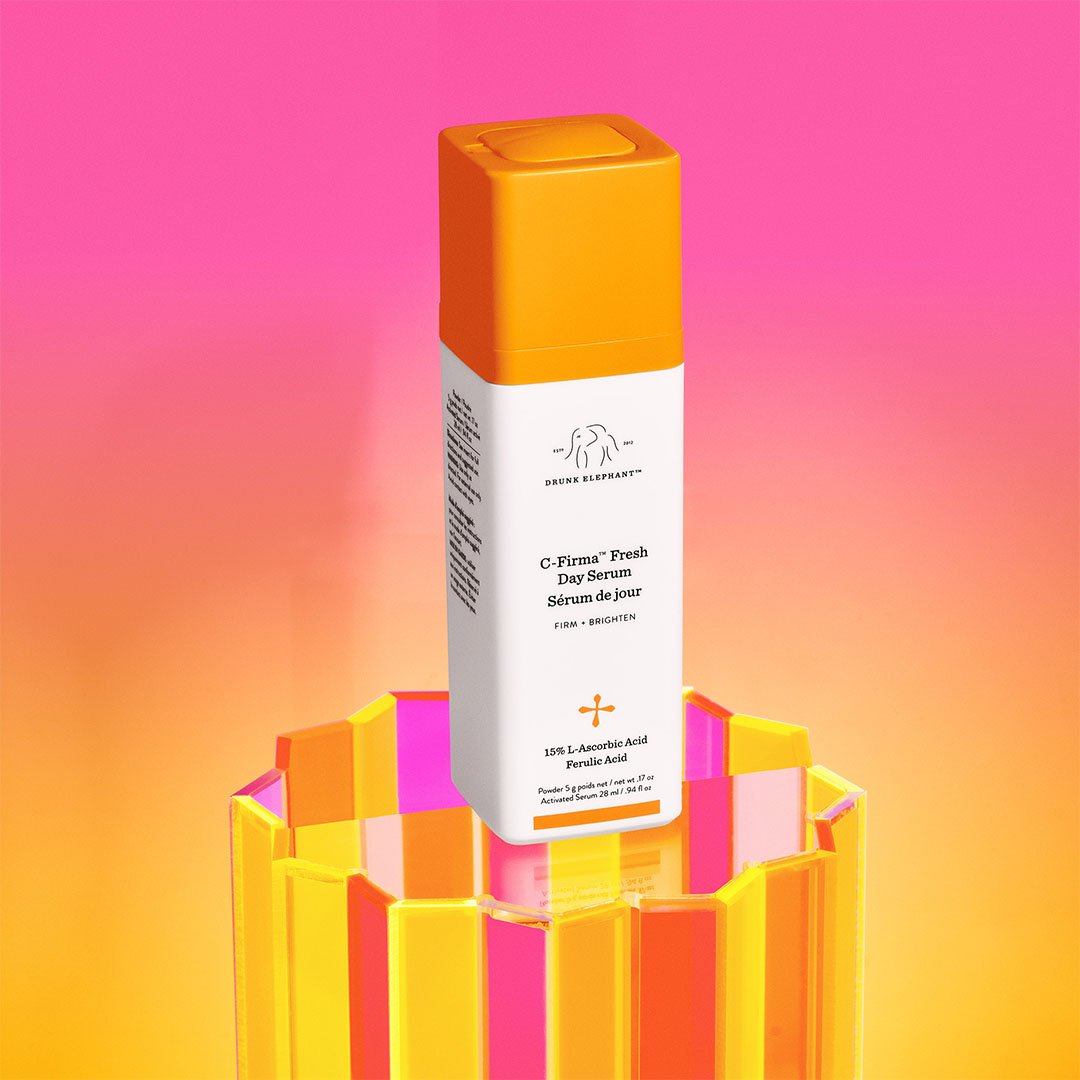

Drunk Elephant C-firma Day Serum 8ml .27 Oz Mini Deluxe Travel Size
Analysis updated August 2026 · How Scout scores
At a glance
Summary
This serum contains a variety of beneficial ingredients such as Vitamin C, glycerin, and marula oil, which are known for their antioxidant and moisturizing properties. The presence of phenoxyethanol, a preservative that can cause irritation in some individuals, slightly detracts from its overall safety profile. Despite this, the product largely consists of natural and effective ingredients, contributing to its favorable rating.
Key ingredients 33
TocopherolVery Good
Tocopherol, or Vitamin E, is an antioxidant that helps protect the skin from free radical damage. It is beneficial for maintaining skin health and improving skin texture. It is commonly used in skincare for its protective and moisturizing properties.
Risks
In rare cases, it may cause skin irritation or allergic reactions.
Benefits
It protects the skin from free radical damage and improves skin texture.
Sclerocarya Birrea Seed OilVery Good
Sclerocarya Birrea Seed Oil, also known as Marula Oil, is rich in antioxidants and fatty acids. It is highly moisturizing and helps in improving skin elasticity. It is valued for its nourishing and protective properties.
Risks
There are minimal risks associated with its use in cosmetics.
Benefits
It is highly moisturizing and improves skin elasticity.
Ferulic AcidVery Good
Ferulic Acid is a powerful antioxidant that enhances the stability and efficacy of other antioxidants like Vitamin C and E. It helps in protecting the skin from free radical damage. It is highly valued in skincare for its protective and anti-aging properties.
Risks
There are minimal risks associated with its use in cosmetics.
Benefits
It enhances the stability of other antioxidants and protects the skin from free radical damage.
Camellia Sinensis Leaf ExtractVery Good
Camellia Sinensis Leaf Extract, or Green Tea Extract, is a potent antioxidant with anti-inflammatory properties. It helps in protecting the skin from environmental damage and soothing irritation. It is highly valued in skincare for its protective and calming effects.
Risks
There are minimal risks associated with its use in cosmetics.
Benefits
It protects the skin from environmental damage and soothes irritation.
Sodium Hyaluronate CrosspolymerVery Good
Sodium Hyaluronate Crosspolymer is a form of hyaluronic acid that provides long-lasting hydration. It helps in maintaining skin moisture and improving skin elasticity. It is highly valued in skincare for its hydrating and plumping effects.
Risks
There are minimal risks associated with its use in cosmetics.
Benefits
It provides long-lasting hydration and improves skin elasticity.
Ascorbic AcidGood
Ascorbic Acid, also known as Vitamin C, is a potent antioxidant that helps in reducing signs of aging and brightening the skin. It is a well-researched ingredient with proven benefits for skin health. It is highly valued in skincare for its ability to improve skin texture and tone.
Risks
In rare cases, it may cause irritation or allergic reactions.
Benefits
It reduces signs of aging, brightens the skin, and improves skin texture and tone.
GlycerinGood
Glycerin is a humectant that attracts moisture to the skin, keeping it hydrated. It is widely used in skincare for its moisturizing properties. It helps in maintaining the skin's natural barrier.
Risks
There are minimal risks associated with glycerin in cosmetics.
Benefits
It attracts moisture to the skin, keeping it hydrated and maintaining the skin's natural barrier.
Lactobacillus/Pumpkin Ferment ExtractGood
This ingredient is used for its exfoliating and skin-renewing properties. It helps in improving skin texture and promoting a healthy complexion. It is considered beneficial for skin health.
Risks
There is a low risk of irritation for sensitive skin types.
Benefits
It exfoliates the skin and promotes a healthy complexion.
Dipotassium GlycyrrhizateGood
Dipotassium Glycyrrhizate is derived from licorice root and is known for its soothing and anti-inflammatory properties. It helps in reducing redness and irritation. It is beneficial for sensitive and irritated skin.
Risks
There are minimal risks associated with its use in cosmetics.
Benefits
It soothes the skin and reduces redness and irritation.
Glycyrrhiza Glabra (Licorice) Root ExtractGood
Licorice Root Extract is known for its skin-brightening and anti-inflammatory properties. It helps in reducing hyperpigmentation and soothing irritated skin. It is beneficial for improving skin tone and texture.
Risks
There are minimal risks associated with its use in cosmetics.
Benefits
It brightens the skin and reduces hyperpigmentation.
Vitis Vinifera (Grape) Juice ExtractGood
Grape Juice Extract is rich in antioxidants and helps in protecting the skin from environmental damage. It is beneficial for maintaining skin health and improving skin texture. It is valued for its protective and nourishing properties.
Risks
There are minimal risks associated with its use in cosmetics.
Benefits
It protects the skin from environmental damage and improves skin texture.
Phyllanthus Emblica Fruit ExtractGood
Phyllanthus Emblica Fruit Extract, also known as Amla, is rich in Vitamin C and antioxidants. It helps in brightening the skin and reducing signs of aging. It is beneficial for improving skin tone and texture.
Risks
There are minimal risks associated with its use in cosmetics.
Benefits
It brightens the skin and reduces signs of aging.
Lactobacillus/Punica Granatum Fruit Ferment ExtractGood
This ingredient is used for its exfoliating and skin-renewing properties. It helps in improving skin texture and promoting a healthy complexion. It is considered beneficial for skin health.
Risks
There is a low risk of irritation for sensitive skin types.
Benefits
It exfoliates the skin and promotes a healthy complexion.
GluconolactoneGood
Gluconolactone is a polyhydroxy acid (PHA) that provides gentle exfoliation and hydration. It helps in improving skin texture and reducing signs of aging. It is beneficial for sensitive skin due to its mild nature.
Risks
There are minimal risks associated with its use in cosmetics.
Benefits
It provides gentle exfoliation and hydration, improving skin texture.
Sodium HyaluronateGood
Sodium Hyaluronate is a form of hyaluronic acid that attracts and retains moisture in the skin. It helps in keeping the skin hydrated and plump. It is highly valued in skincare for its hydrating and anti-aging properties.
Risks
There are minimal risks associated with its use in cosmetics.
Benefits
It attracts and retains moisture, keeping the skin hydrated and plump.
Oryza Sativa (Rice) Bran ExtractGood
Rice Bran Extract is rich in antioxidants and helps in nourishing and protecting the skin. It is beneficial for improving skin texture and tone. It is valued for its soothing and moisturizing properties.
Risks
There are minimal risks associated with its use in cosmetics.
Benefits
It nourishes and protects the skin, improving texture and tone.
Leuconostoc/Radish Root Ferment FiltrateGood
This ingredient is used for its antimicrobial and moisturizing properties. It helps in preserving the product and maintaining skin hydration. It is considered beneficial for skin health.
Risks
There are minimal risks associated with its use in cosmetics.
Benefits
It has antimicrobial properties and helps maintain skin hydration.
Water/Aqua/EauNeutral
Water is a common solvent used in cosmetics to dissolve other ingredients. It helps in the application and absorption of the product. It does not have any direct benefits or risks.
Risks
There are no significant risks associated with water in cosmetics.
Benefits
Water helps in the application and absorption of the product.
Dimethyl IsosorbideNeutral
Dimethyl Isosorbide is used as a solvent to enhance the penetration of active ingredients. It helps in improving the efficacy of the product. It is generally considered safe for use in cosmetics.
Risks
There are minimal risks associated with its use in cosmetics.
Benefits
It enhances the penetration of active ingredients, improving product efficacy.
Laureth-23Neutral
Laureth-23 is an emulsifier and surfactant used to stabilize formulations. It helps in mixing oil and water-based ingredients. It is generally considered safe for use in cosmetics.
Risks
There is a low risk of skin irritation with prolonged use.
Benefits
It stabilizes formulations and helps in mixing oil and water-based ingredients.
PropanediolNeutral
Propanediol is used as a solvent and humectant in cosmetics. It helps in improving the texture and feel of the product. It is generally considered safe for use in cosmetics.
Risks
There are minimal risks associated with its use in cosmetics.
Benefits
It improves the texture and feel of the product.
Glutamylamidoethyl ImidazoleNeutral
Glutamylamidoethyl Imidazole is used as a skin-conditioning agent in cosmetics. It helps in improving the texture and feel of the product. It is generally considered safe for use in cosmetics.
Risks
There are minimal risks associated with its use in cosmetics.
Benefits
It improves the texture and feel of the product.
TetrahydrobisdemethoxydiferuloylmethaneNeutral
This ingredient is a derivative of curcumin and is used for its antioxidant properties. It helps in protecting the skin from free radical damage. It is generally considered safe for use in cosmetics.
Risks
There are minimal risks associated with its use in cosmetics.
Benefits
It protects the skin from free radical damage.
TetrahydrodemethoxydiferuloylmethaneNeutral
This ingredient is a derivative of curcumin and is used for its antioxidant properties. It helps in protecting the skin from free radical damage. It is generally considered safe for use in cosmetics.
Risks
There are minimal risks associated with its use in cosmetics.
Benefits
It protects the skin from free radical damage.
TetrahydrodiferuloylmethaneNeutral
This ingredient is a derivative of curcumin and is used for its antioxidant properties. It helps in protecting the skin from free radical damage. It is generally considered safe for use in cosmetics.
Risks
There are minimal risks associated with its use in cosmetics.
Benefits
It protects the skin from free radical damage.
Pentylene GlycolNeutral
Pentylene Glycol is used as a solvent and humectant in cosmetics. It helps in improving the texture and feel of the product. It is generally considered safe for use in cosmetics.
Risks
There are minimal risks associated with its use in cosmetics.
Benefits
It improves the texture and feel of the product.
Caprylhydroxamic AcidNeutral
Caprylhydroxamic Acid is used as a preservative in cosmetics. It helps in preventing the growth of bacteria and mold in the product. It is generally considered safe for use in cosmetics.
Risks
There are minimal risks associated with its use in cosmetics.
Benefits
It prevents the growth of bacteria and mold in the product.
Caprylyl GlycolNeutral
Caprylyl Glycol is used as a humectant and skin-conditioning agent in cosmetics. It helps in improving the texture and feel of the product. It is generally considered safe for use in cosmetics.
Risks
There are minimal risks associated with its use in cosmetics.
Benefits
It improves the texture and feel of the product.
Chondrus Crispus (Carrageenan) ExtractNeutral
Carrageenan Extract is used as a thickening agent in cosmetics. It helps in improving the texture and stability of the product. It is generally considered safe for use in cosmetics.
Risks
There are minimal risks associated with its use in cosmetics.
Benefits
It improves the texture and stability of the product.
EthylhexylglycerinNeutral
Ethylhexylglycerin is used as a preservative and skin-conditioning agent in cosmetics. It helps in improving the texture and feel of the product. It is generally considered safe for use in cosmetics.
Risks
There are minimal risks associated with its use in cosmetics.
Benefits
It improves the texture and feel of the product.
Sorbic AcidBad
Processed additive flagged under Scout's ingredient doctrine.
Risks
There are minimal risks associated with its use in cosmetics.
Benefits
It prevents the growth of mold and yeast in the product.
PhenoxyethanolBad
Phenoxyethanol is used as a preservative in cosmetics. It helps in preventing the growth of bacteria and mold in the product. However, it can cause skin irritation and allergic reactions in some individuals.
Risks
It can cause skin irritation and allergic reactions.
Benefits
It prevents the growth of bacteria and mold in the product.
Sodium BenzoateBad
Synthetic preservative that can form benzene in the presence of vitamin C.
Risks
There are minimal risks associated with its use in cosmetics.
Benefits
It prevents the growth of bacteria and mold in the product.
Get the full breakdown in the Scout appTake Scout shopping
Scan any product to see lab results, healthy alternatives, and your personalized analysis.
Download on theApp Store GET IT ONGoogle Play